
“I’m really interested in the objects we keep and pass down, and the way that we narrate our lives through things that we collect.” For Goldsmiths’ Stories, writer Francesca Perry speaks to Glasgow-based silversmith Monica Findlay about her work, inspiration and how she is capturing Scottish history and heritage through her series of silver boxes.
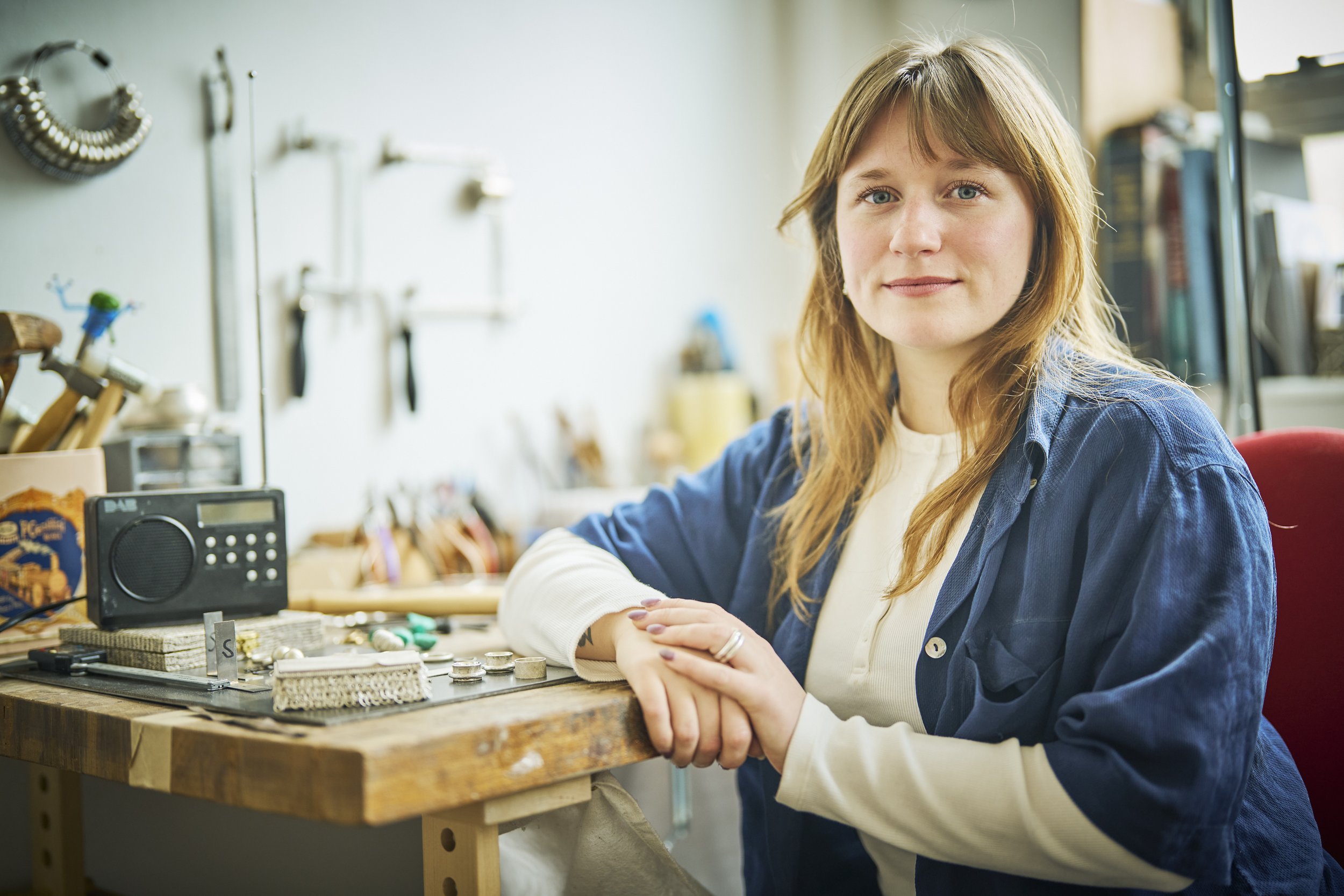
When Monica Findlay moved into her late grandmother’s house in Glasgow six years ago, she spent time sifting through the many “knick-knacks” that had been collected there. “There were hordes of trinkets from all the different trips that she’d been on,” says the 28-year-old silversmith. A particular focus for her grandmother was matchboxes – something that Findlay soon grew to love through this familial collection.
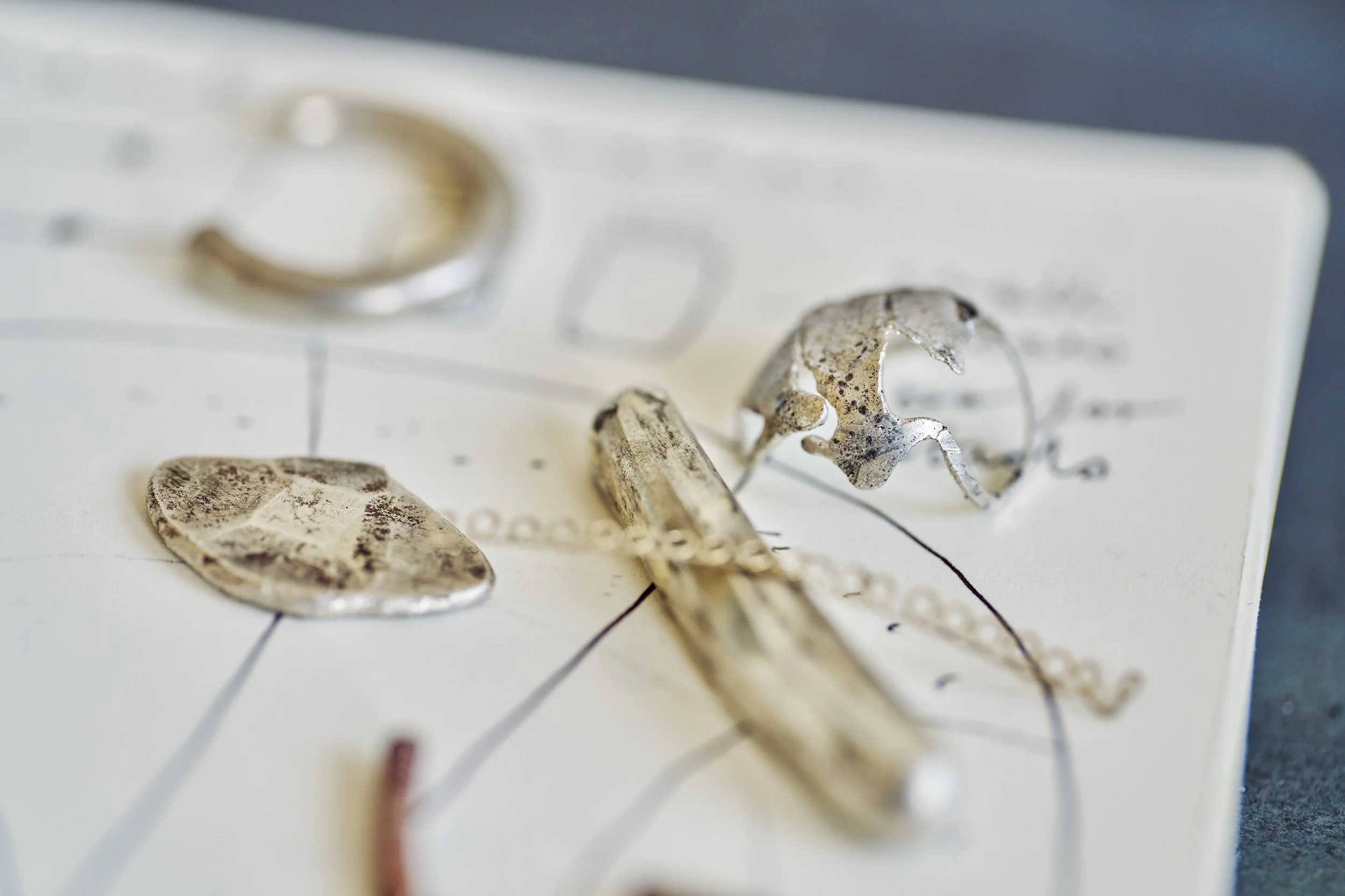
Such trinkets made her reflect on the notion of ritualised objects and reliquaries; collected items as storers of memory and meaning. Findlay went on to make a series of silver matchboxes for her Glasgow School of Art graduation project in 2021, and has since captivated attention for her work that blends soulful box designs with jewellery pieces, all informed by Scottish archaeology, and the country’s rich heritage of silversmithing. “I want them to feel inherently Scottish,” she says of her pieces.
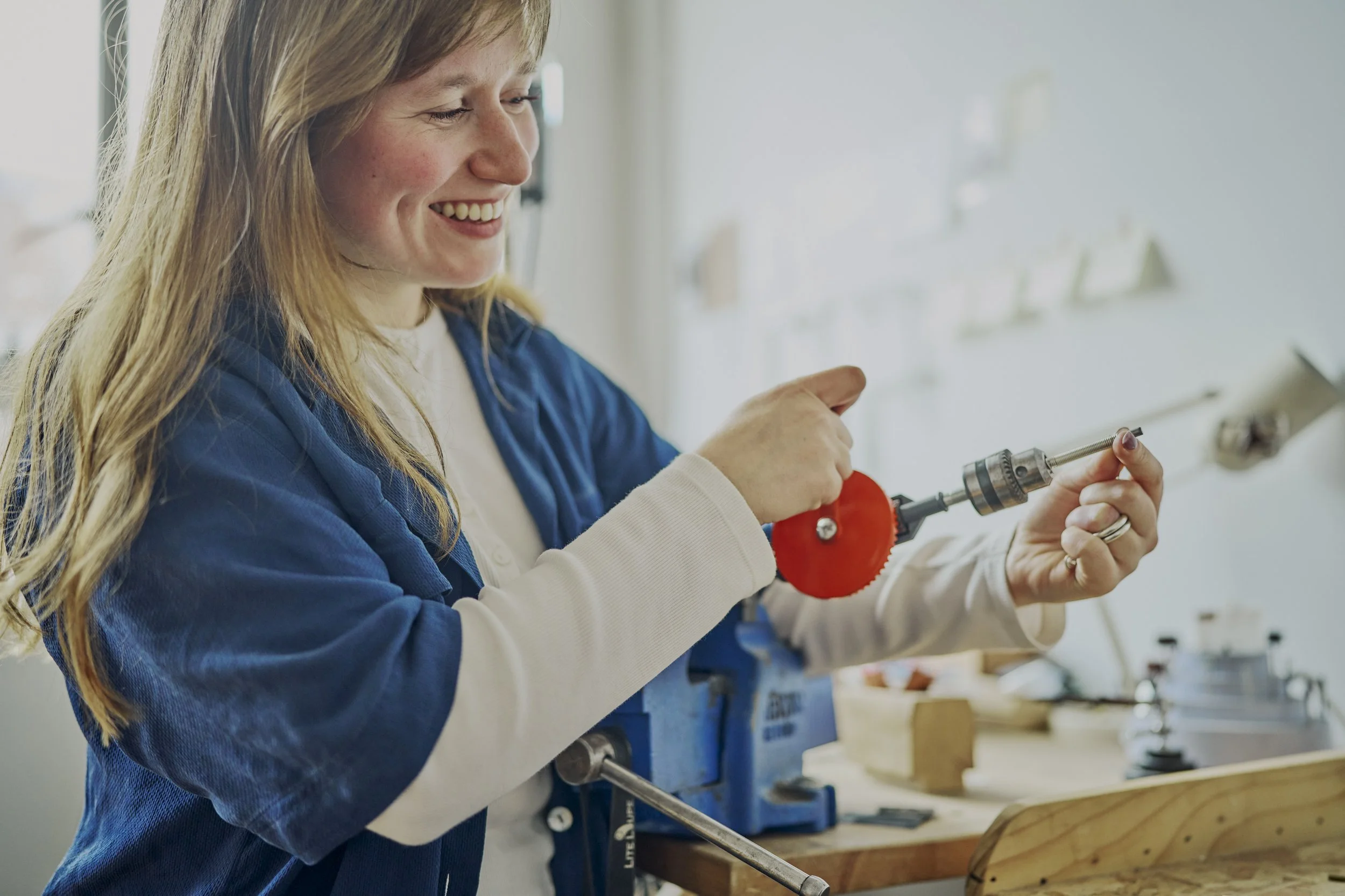
As we sit in a central London park on a pleasantly sunny spring day, Findlay – who was in town to present work with Craft Scotland at the fragrance store Jorum Studio – tells me about her journey to becoming a silversmith. “I think making for me has always been something, even as a child, that I would sit down to do,” she says. At the same time, her grandmother took her on frequent visits to the National Museum of Scotland, where she developed a keen admiration for the silver objects in the basement – mostly Viking-era artefacts, the chunky geometry and robust weightiness of which has clearly influenced her work now.
“Although I didn’t know when I was in high school that I wanted to study jewellery, I did know that was how I liked to pass the time – jewellery is a good combination of art and maths,” she says. Following a multidisciplinary portfolio course at the Tramway Visual Artthe story from Studio, she found herself “always gravitating towards handheld objects” and went to study jewellery and silversmithing at the Glasgow School of Art.
Graduating during the difficulties of the Covid-19 pandemic was a challenge, but Findlay left full of ideas – ideas that she went on to realise through practical development, particularly during a residency at the South House Silver Workshop Trust in the Shetland Islands. Over one month in 2024 and one in 2025, Findlay learned from master silversmith Rod Kelly and engaged deeply with the landscapes of the archipelago.
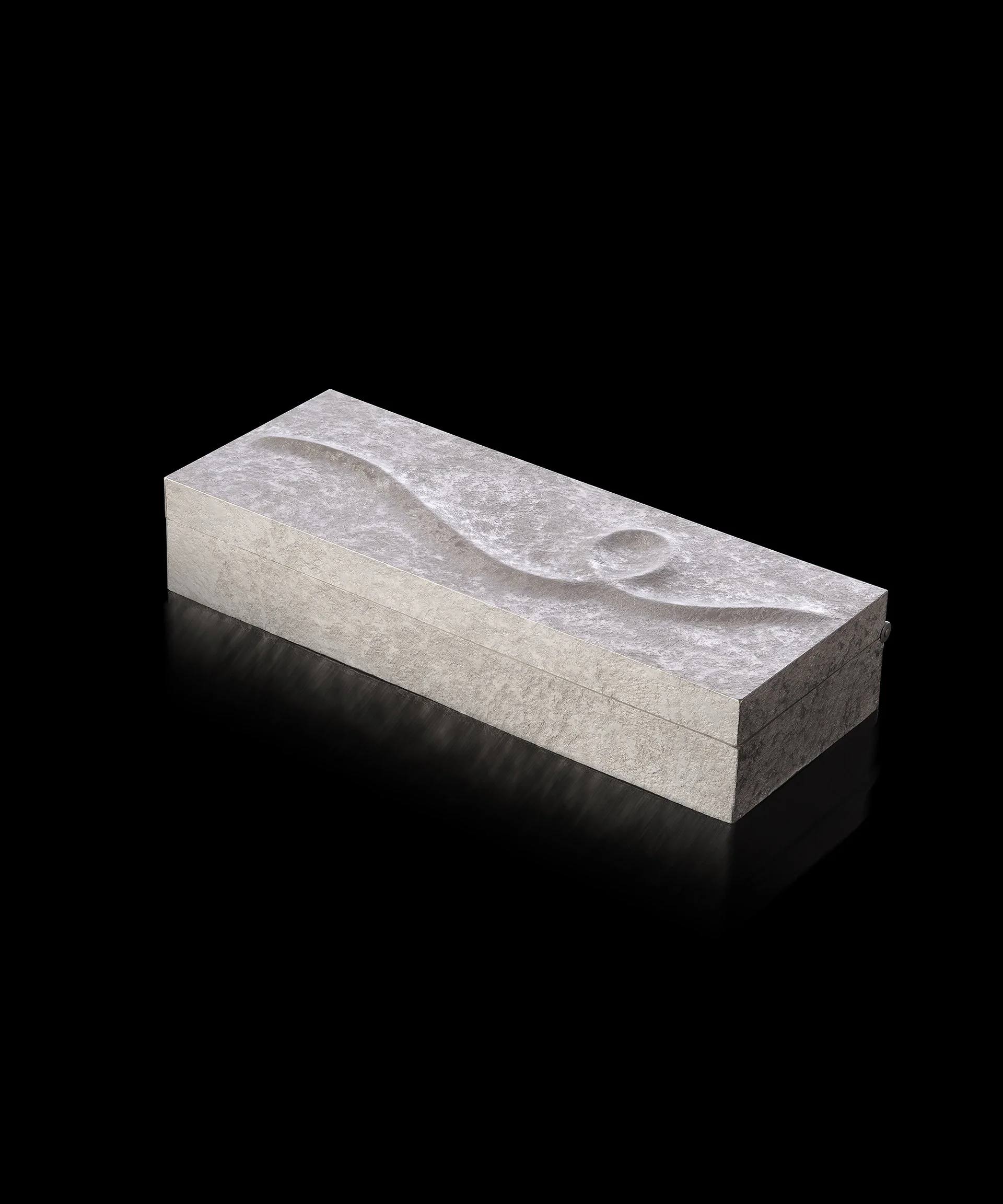
Muckle Box, sterling silver, 2024-5, Goldsmiths’ Fair, photography by Richard Valencia
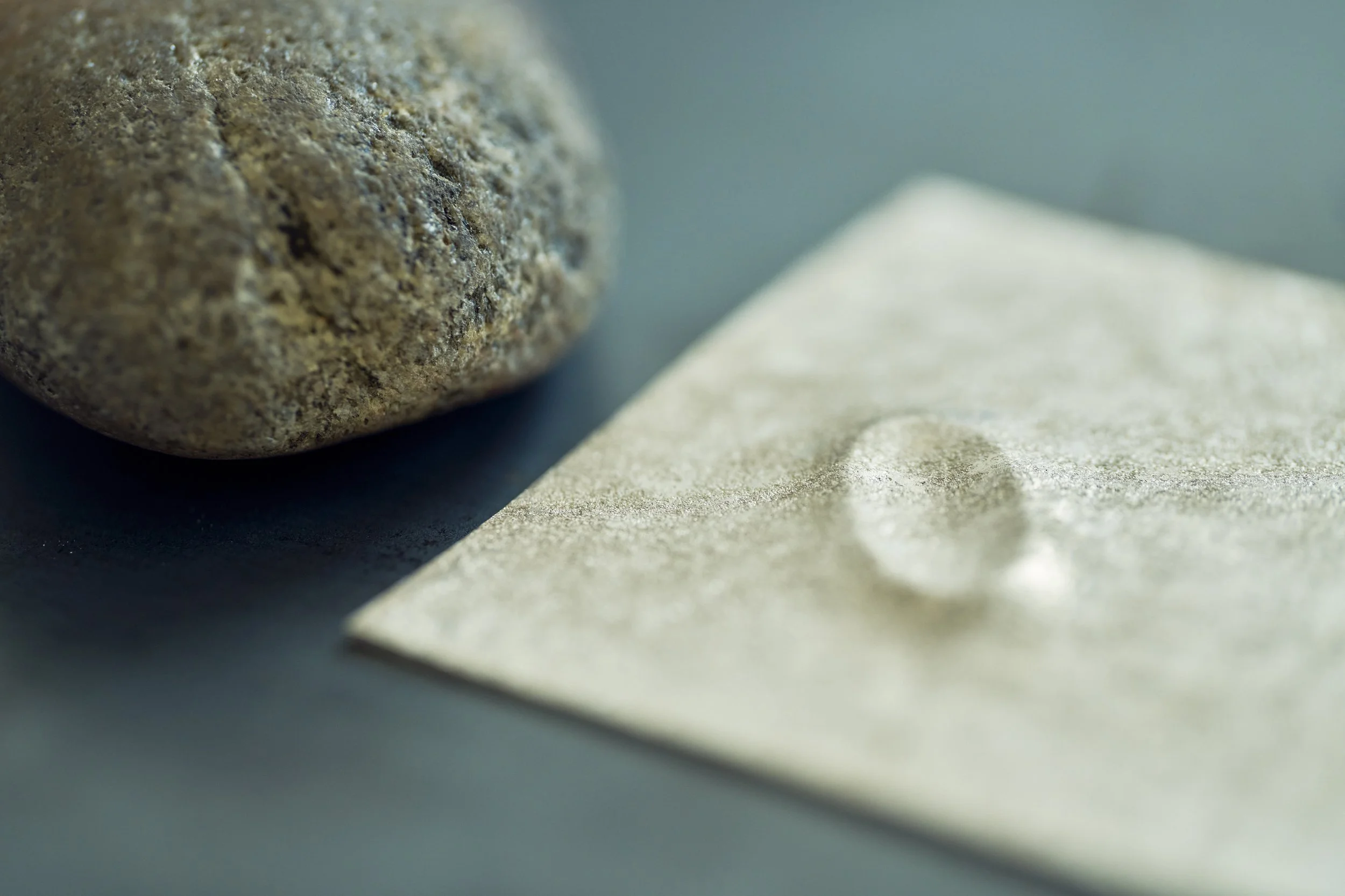
Her “Muckle Box” (2024–5) was made during this residency, and was her first venture into a larger scale of silversmithing. It was presented at the Goldsmiths’ Fair in 2025. Decorated with an elegant loop motif on the top, the surface of the sleek rectangular box is textured with a rock that Findlay sourced from the coast of Muckle Roe, an island in Shetland (she now has a collection of “favourite rocks” she uses to hammer surfaces).
The result is a matte, nuanced, organic finish that speaks directly to the landscape where the box emerged, and the ancient methods Findlay is passionate about. “It almost feels as if it could have been excavated from a hoard, or forgotten about under the ground for years and brought back to life,” she says, evocatively. The loop on the box’s top, leading the eye across the surface, was inspired by ancient motifs carved into Shetland stone, and the uncoiling of wire.
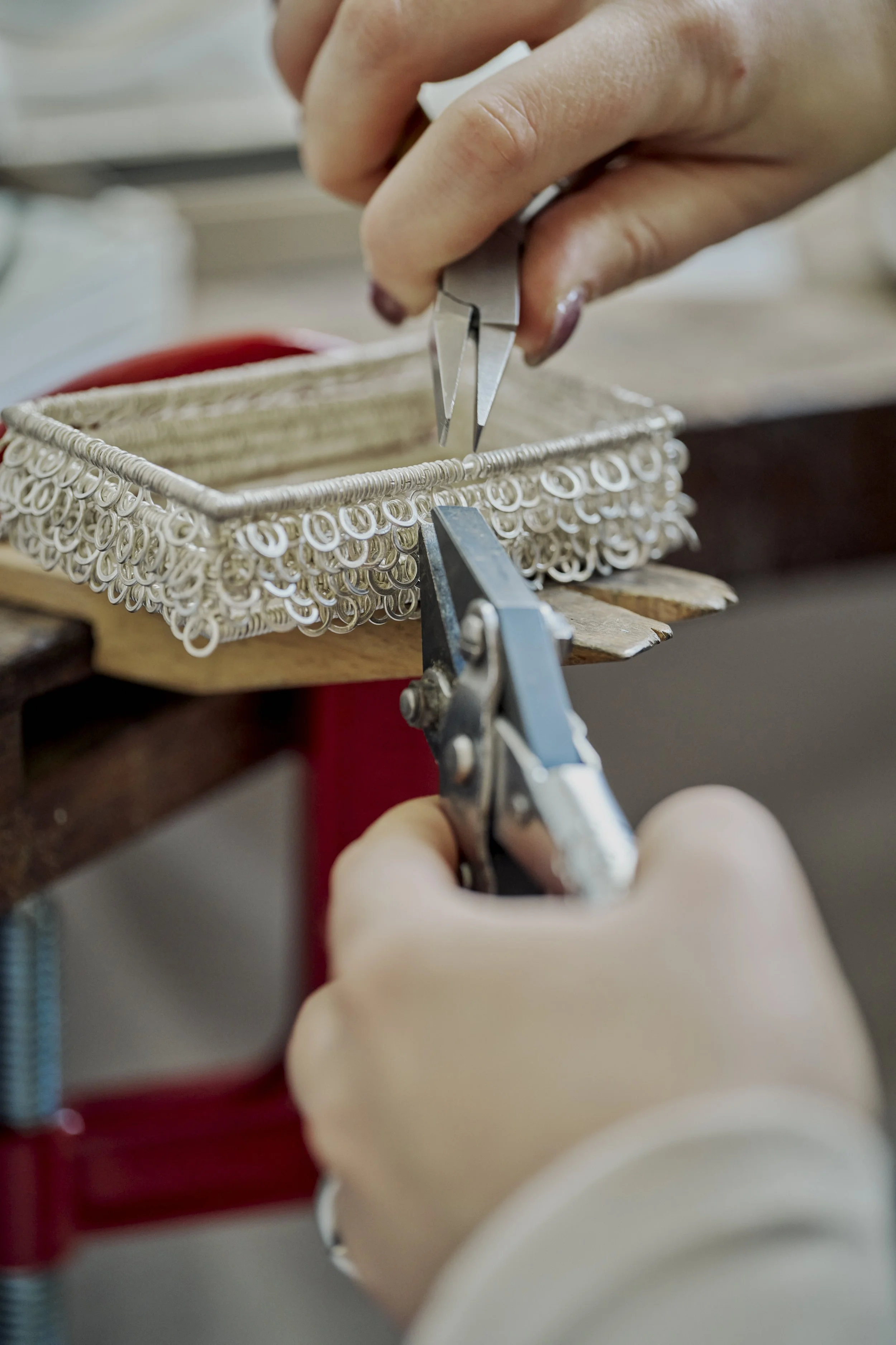
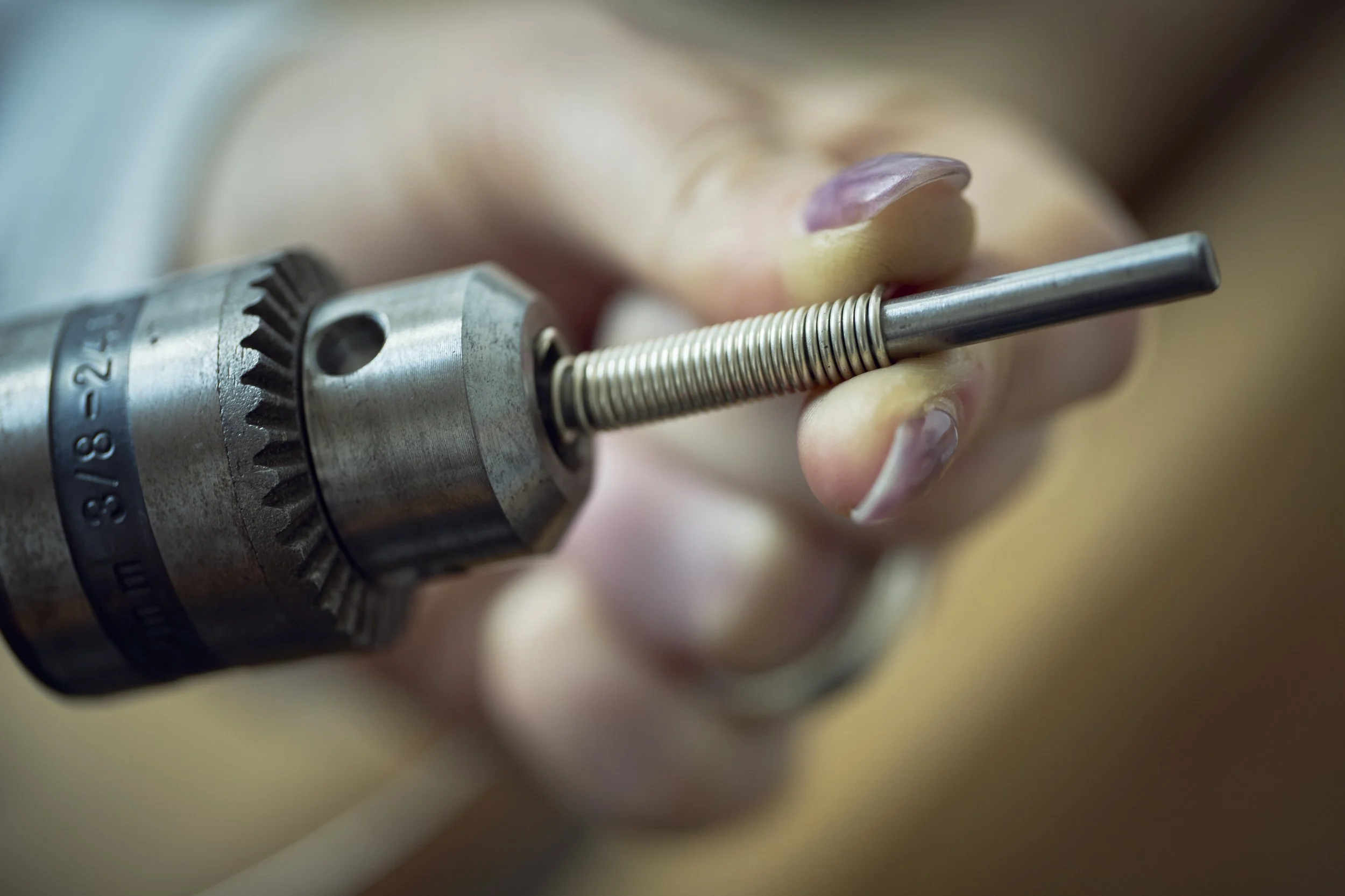
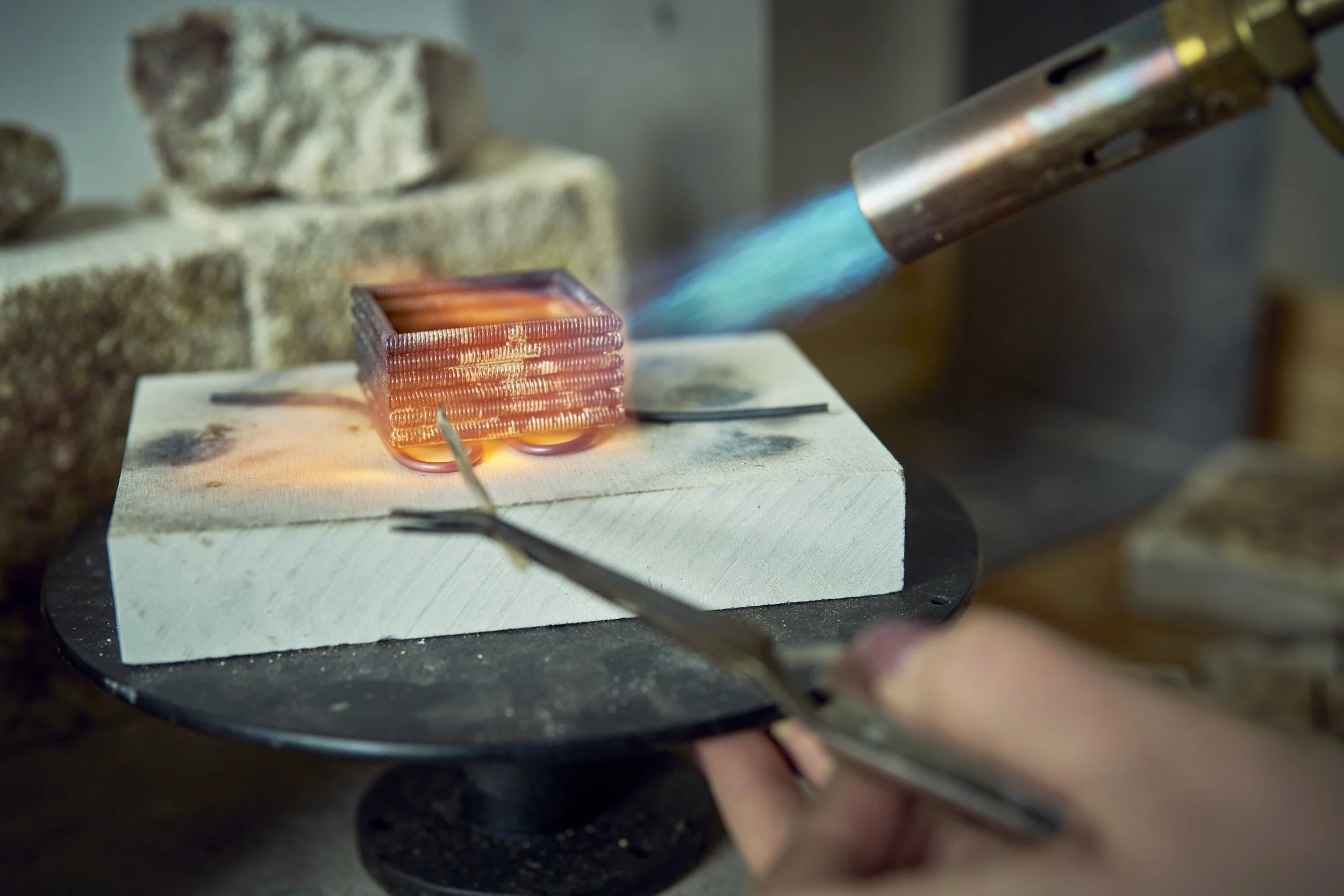
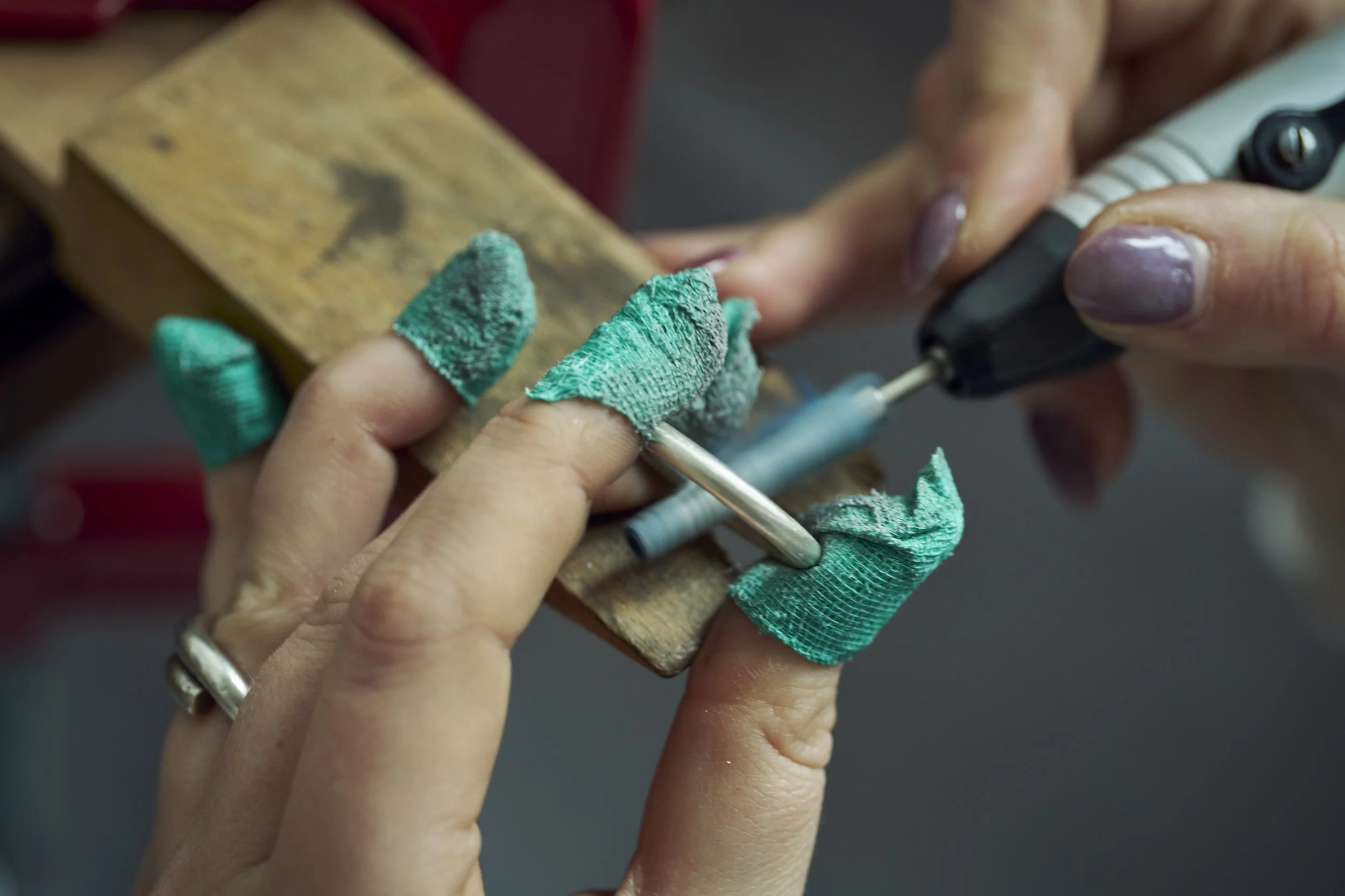
Coiled wire is a key part of Findlay’s design language, influenced by the technique’s historic roots in Viking Age objects. Muckle Box features a seven-knuckle coiled-wire hinge, flooded with solder, that runs its entire length. The act of elevating a functional aspect – the hinge – to a decorative one also reflects Findlay’s intricate approach of care and consideration. “I find it really satisfying when the mechanics of a piece are designed in this way – no detail is left unnoticed,” she says.
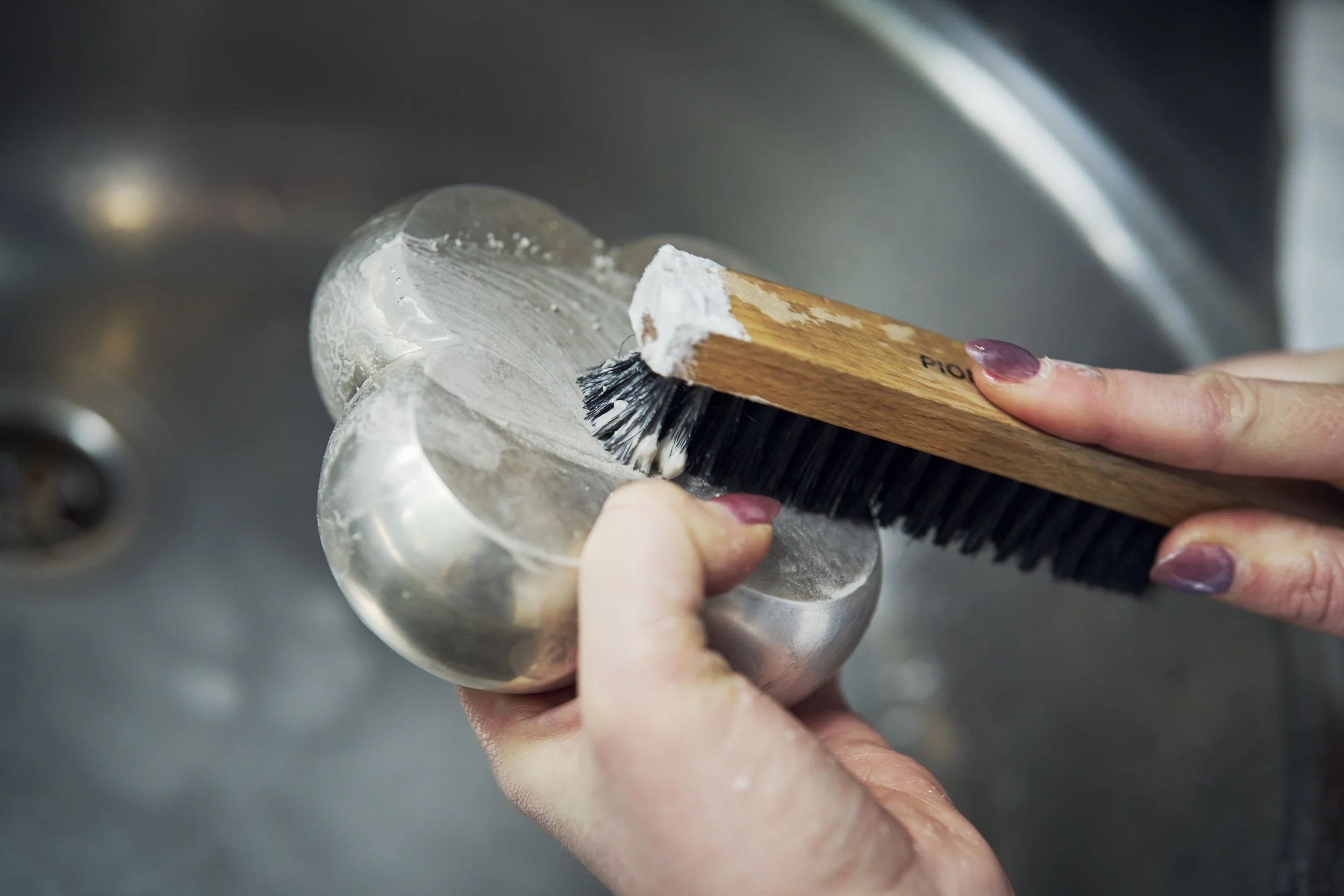
Another object created during her Shetland residency is the “Clover Box” (2025), a gently bulbous design based on the gothic quatrefoil motif often seen in Findlay’s work, and which she says can be seen across Glasgow’s cityscape. The box was made using the sinking technique, and the lid was pressed using a handmade mould for a hydraulic press, resulting in a soft, “pillowy” form with curved edges. It was finished off by planishing over a curved stake to leave a smooth surface, before rounds of filing, emery and pumice to remove create a brushed look.
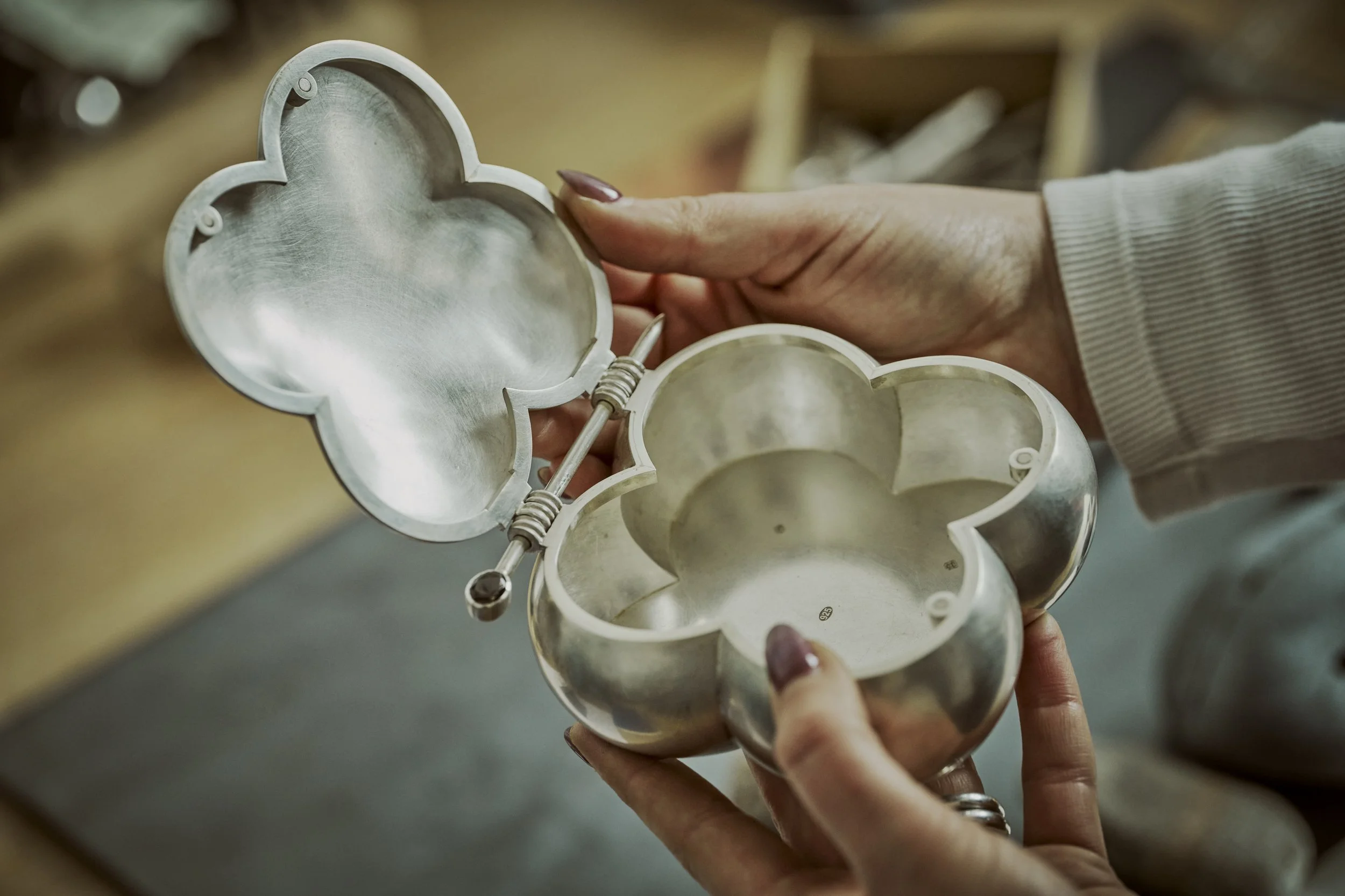
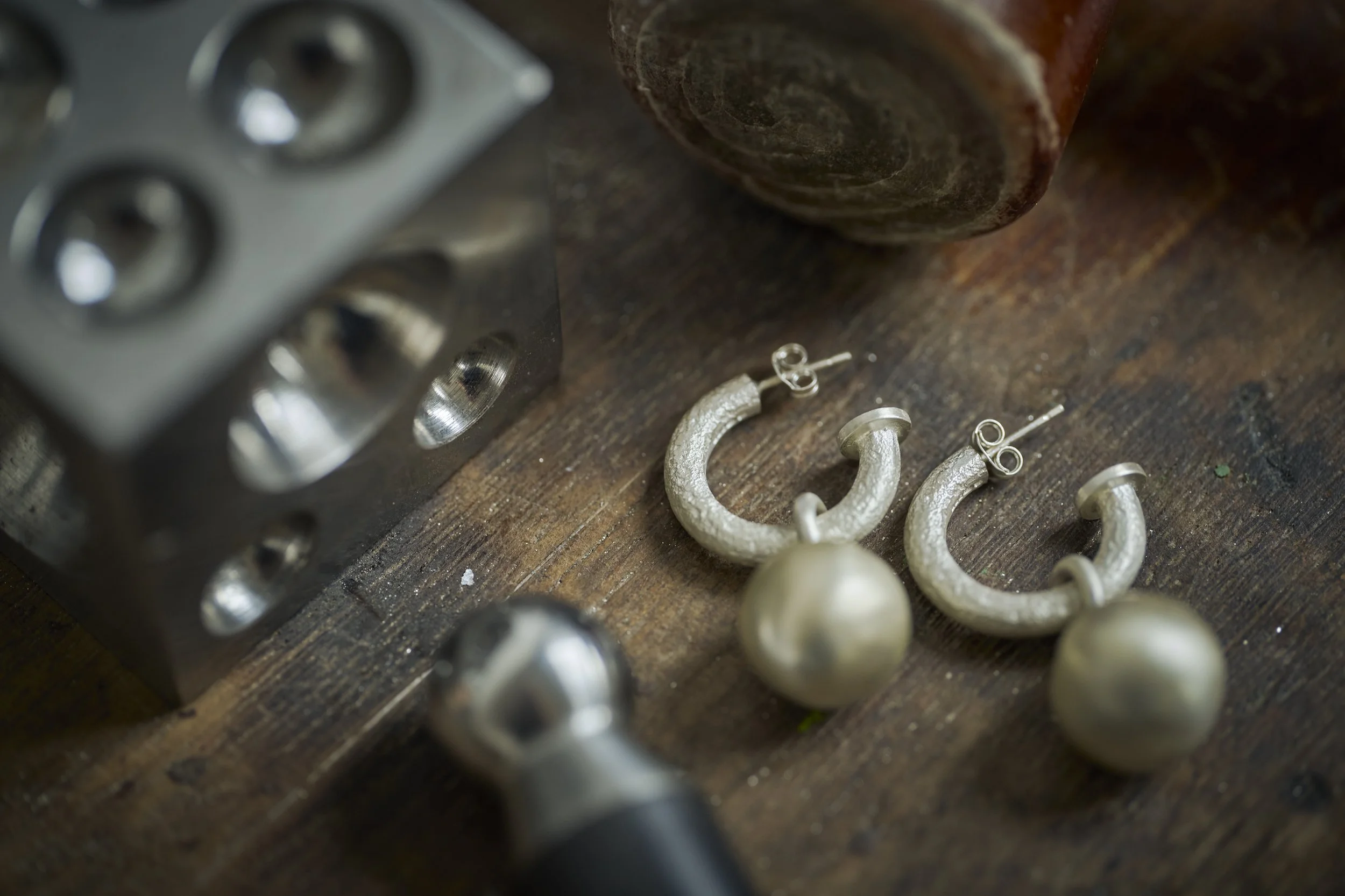
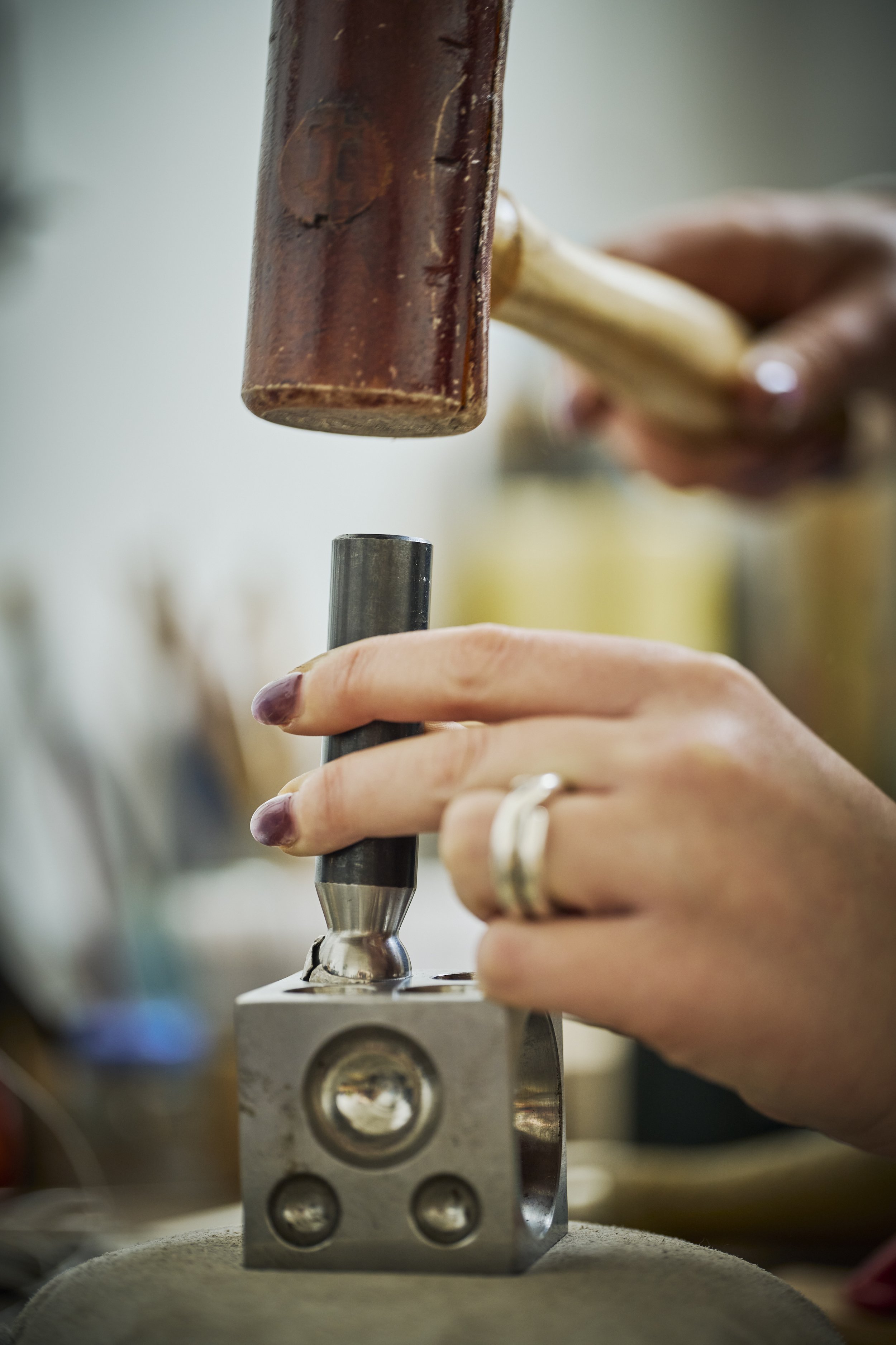
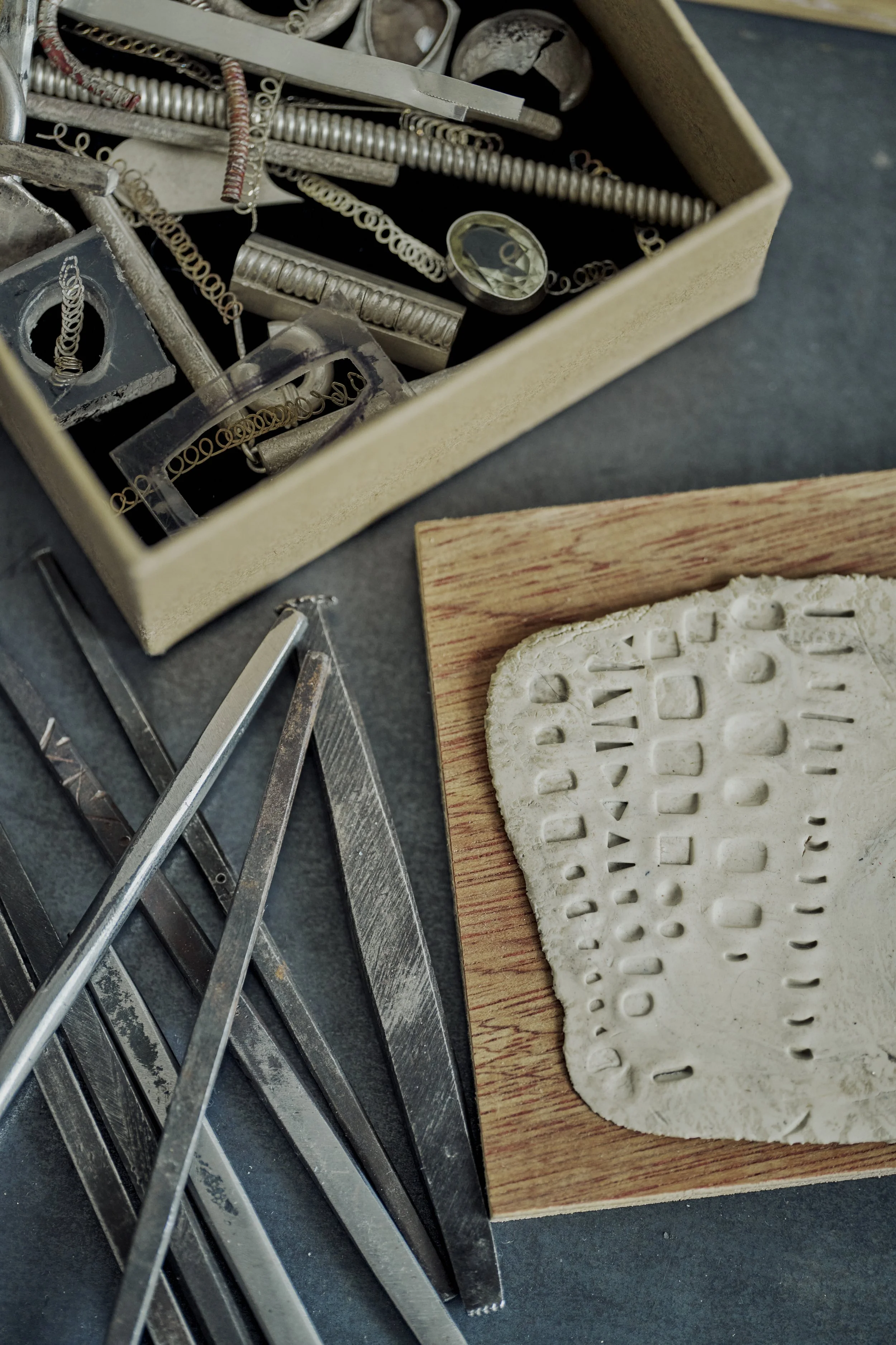
The box has coiled hinges, this time set around a detachable pin bearing a smoky brown quartz sourced directly from the Cairngorms by Renato Forno, who founded the Fife-based organisation Scottish Gemstones and to whom Findlay turns for all her semi-precious stone sourcing. “I like that there’s that transparency from someone going out and collecting stones on a walk – I know where they have come from,” she says. “I think that makes them more precious to me than using, say, a diamond. It’s the story that adds the preciousness to the stone.”
The Clover Box perfectly encapsulates the way Findlay blends references to Scottish landscapes and tradition with a sense of ritualised use. With the four-leafed clover design representing luck, the box is intended as a repository for good-luck charms. “I’d imagine this box to be somewhere that you store an object that’s really precious to you,” she says.
Scotland’s “long legacy of silver” was what initially drew Findlay to the material, and archaeological finds have furthered her fascination with silversmithing. Of particular interest has been the Galloway Hoard, a large collection of Viking Age artefacts in silver and gold discovered in 2014 in the Galloway region of Scotland, and now in the collection of National Museums Scotland. The hoard, thought to be buried around AD 900, includes silver arm-rings, quatrefoil brooches, a cross on a fine spiral chain and a silver lidded vessel, among some 100 other objects.
Findlay is drawn to the mystery and “aura” of such long-forgotten artefacts. “We don't really know what they were used for,” she says. “It's that moment of looking at an object and thinking about how it was made at that time without the technology that we now use, and who was wearing it. I think my practice is, in my head, filling in the blanks to those stories.”
Directly inspired by the Galloway Hoard is Findlay’s “Decoy Box” (2023) – made with funding from Craft Scotland’s Compass award – which references a pectoral cross found in the upper, or “decoy”, layer of the buried hoard. “Hand-drawn wire forms the base of this piece, with hundreds of rings mimicking the abundance of ancient coins found amongst the Galloway treasure,” Findlay says. “Each ‘coin’ has been hand formed, soldered and loosely coiled around a frame to allow for movement and sound.”
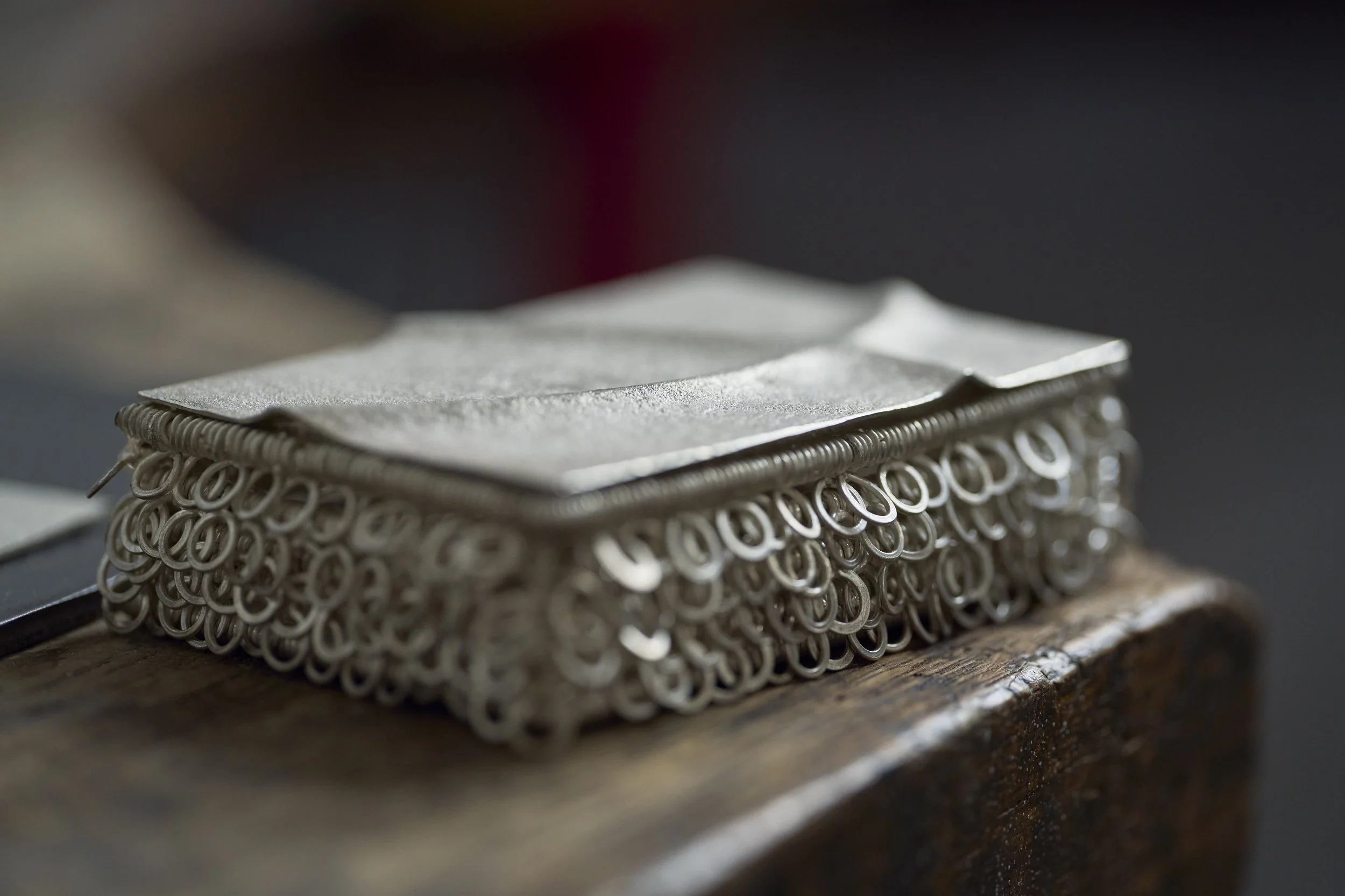
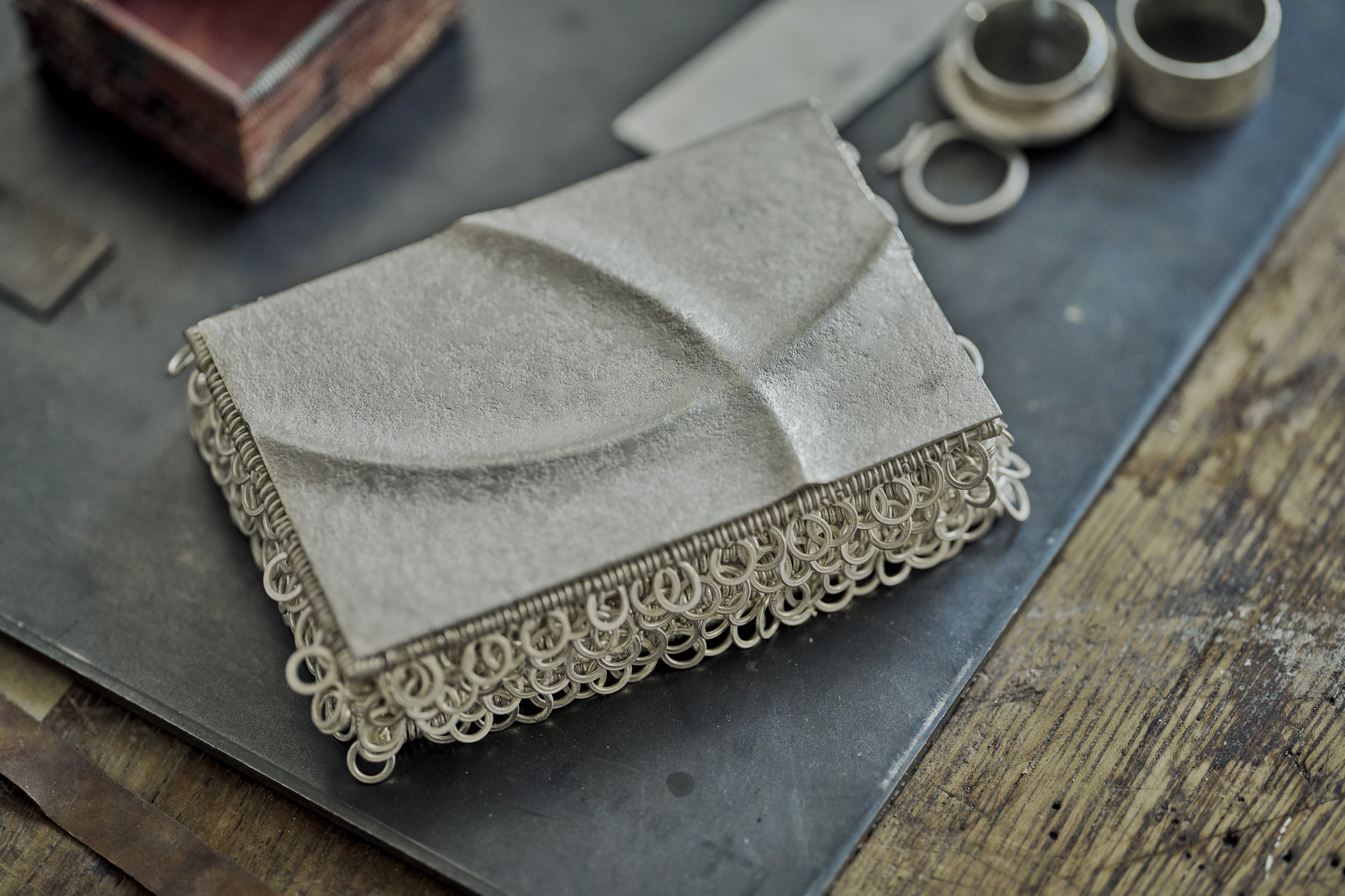
The textured surface of the box’s lid bears a raised cross motif – almost topographical in expression. “The motif hints at something hidden,” she says. “You then lift the lid to discover what lies beneath.” It is this element of discovery that is “so important” to the conceptual side of Findlay’s process, and which she aims to embed in the experience of her objects.
While boxes are a driving focus, Findlay imbues her silver jewellery pieces – rings, brooches, necklaces, earrings – with the same level of narrative poignancy and archaeological spirit.
Her “Impressions Chain” (2021) – a series of large interlocking rings with a T-bar clasp – may speak to the chunky aesthetic of Viking-era jewellery, but has personal resonance too.“At the time of making it I was documenting my grandfather’s empty workshop,” Findlay explains. “Belongings were cleared from the shelves, yet the space was packed with traces of the material past: negative space where tools once filled the walls; hand-inflicted marks on surfaces; scuffs on the floorboards. It was a well-used space, full of memories.”
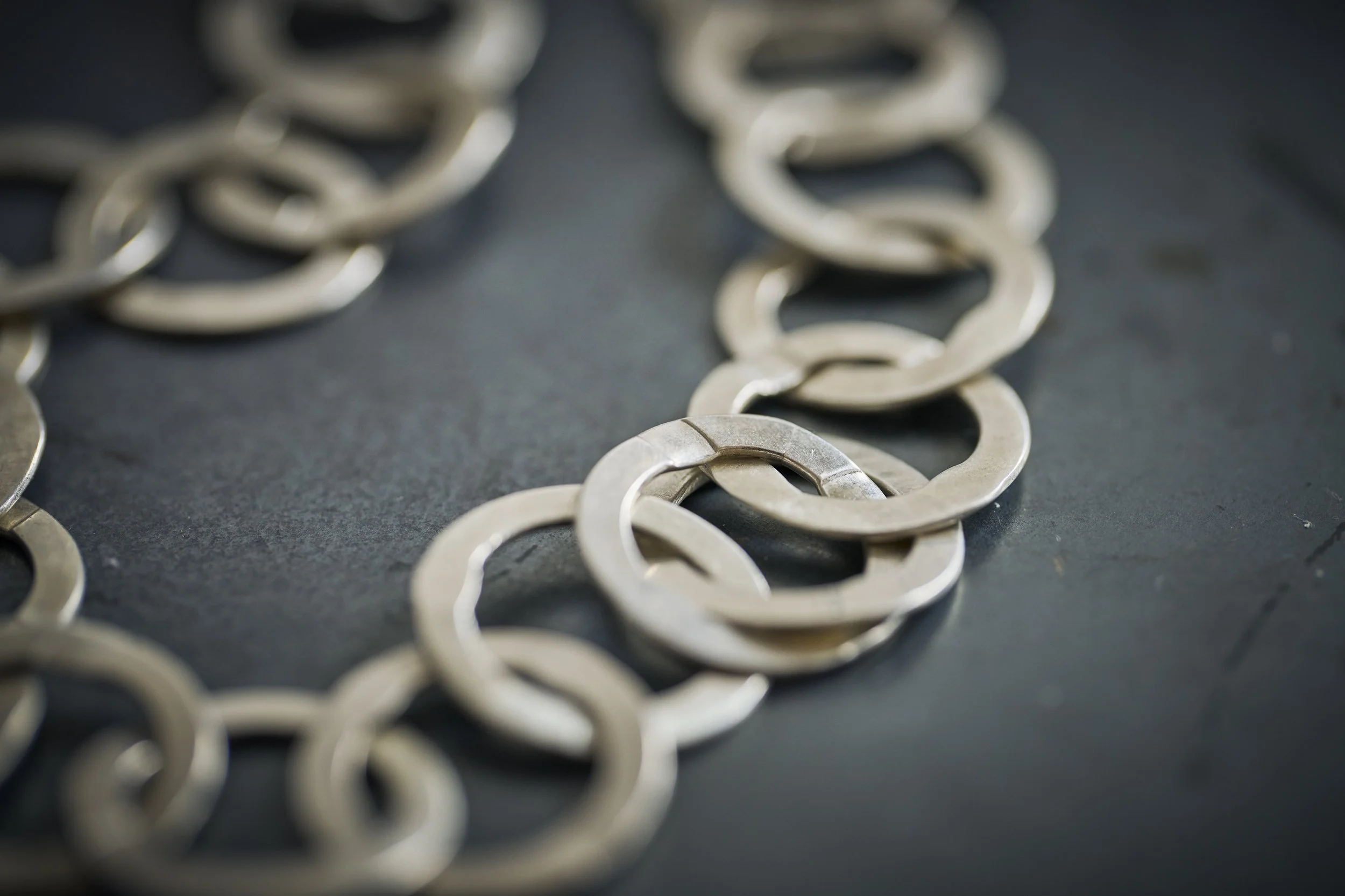
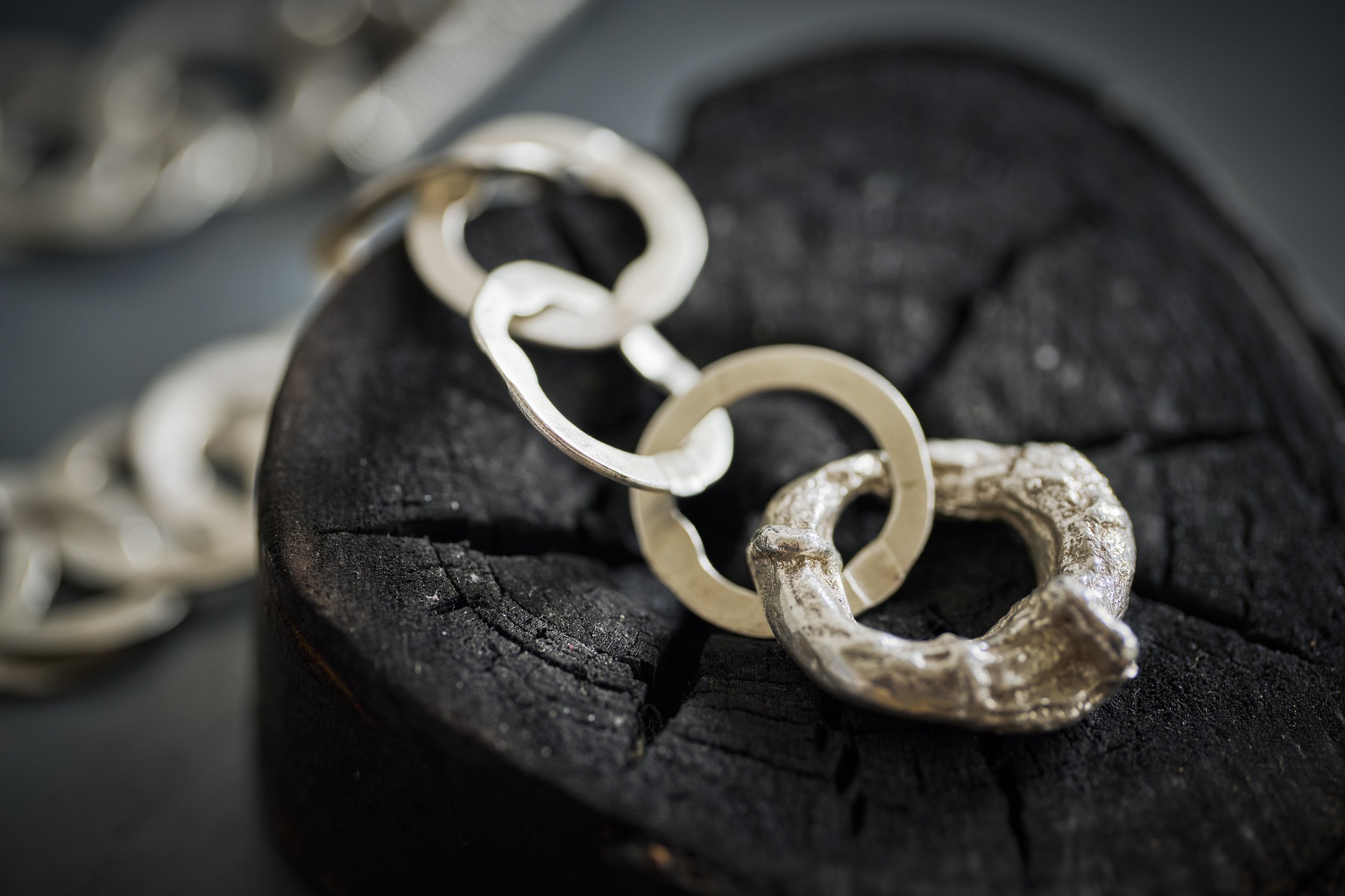
The Impressions Chain, she says, is all about the details. “A traditional interlocking chain acts as the blueprint. The process then uses controlled impact on overlayed links to leave a deliberate indent on each connecting part. The tiny gestures over time leave a tangible, lasting impression.”
Findlay recently moved into a new studio in Glasgow, and as she looks ahead, she is considering increasing the scale of her objects further. “It felt like quite an easy jump to go from weighty jewellery to sculptural boxes,” she says. “I would love in the future to go even bigger again, almost into cabinetry perhaps.”
Reflecting on her journey so far, she highlights the immense benefit of the “apprenticeship format” of the South House Silver Workshop Trust residency. “Learning from all that knowledge and years of experience – you couldn’t get that in a university course,” she says. The co-founders of the trust, she adds, developed the programme to nurture young silversmiths because “they felt like there was a gap in the education now for silversmith training, in terms of not getting hands-on experience.”
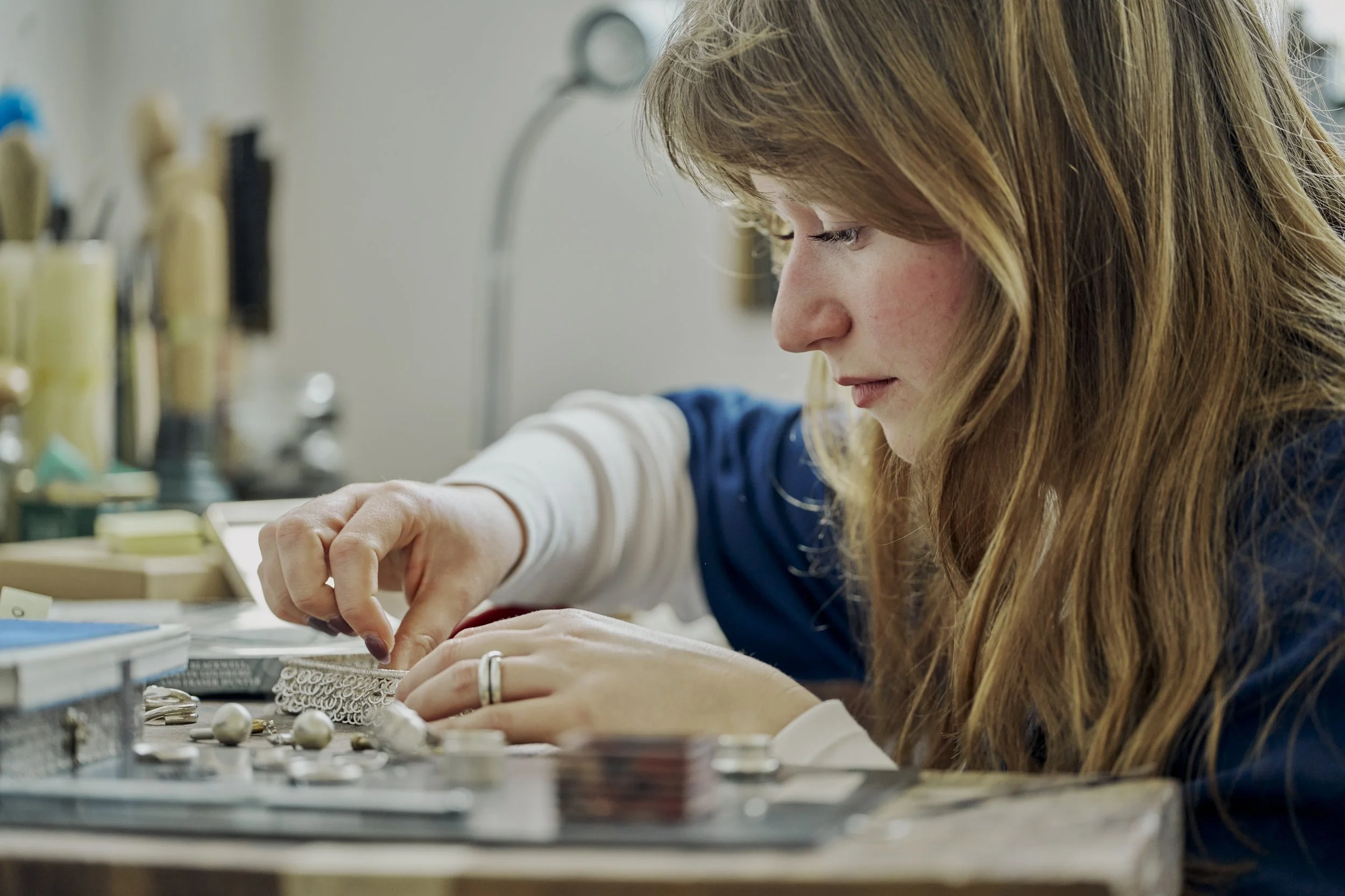
As well as training, there are myriad challenges a young silversmith faces, not least the current high price of silver. And in Scotland, one is far from the dominant market of London. Silversmithing can feel like an “inaccessible thing to get into,” Findlay says. The organisation Craft Scotland, however, has been pivotal. “It’s a really supportive environment for makers.”
That support enables Findlay to continue making objects that blend the contemporary and the timeless; objects she sees as reliquaries and heirlooms. “I’m really interested in the objects we keep and pass down, and the way that we narrate our lives through things that we collect,” she says. Hopefully whoever buys Findlay’s work will cherish it in exactly the same way.
Written by Francesca Perry | Photography of Monica and her studio by Shannon Toft