
“So, even though the pieces themselves might not be necessarily kinetic, if they move the light will change so it feels like something comes alive. And that's something that I'm always interested in when I'm making new work: how’s it going to catch the light? What happens if you angle the facets of the building blocks in different ways?” For Goldsmiths’ Stories, journalist and writer Kate Youde speaks to Jo Hayes Ward about 20 years in the jewellery business and how her structural work plays on light and movement to create dazzling pieces that come alive in a flurry of sparkle and shine.
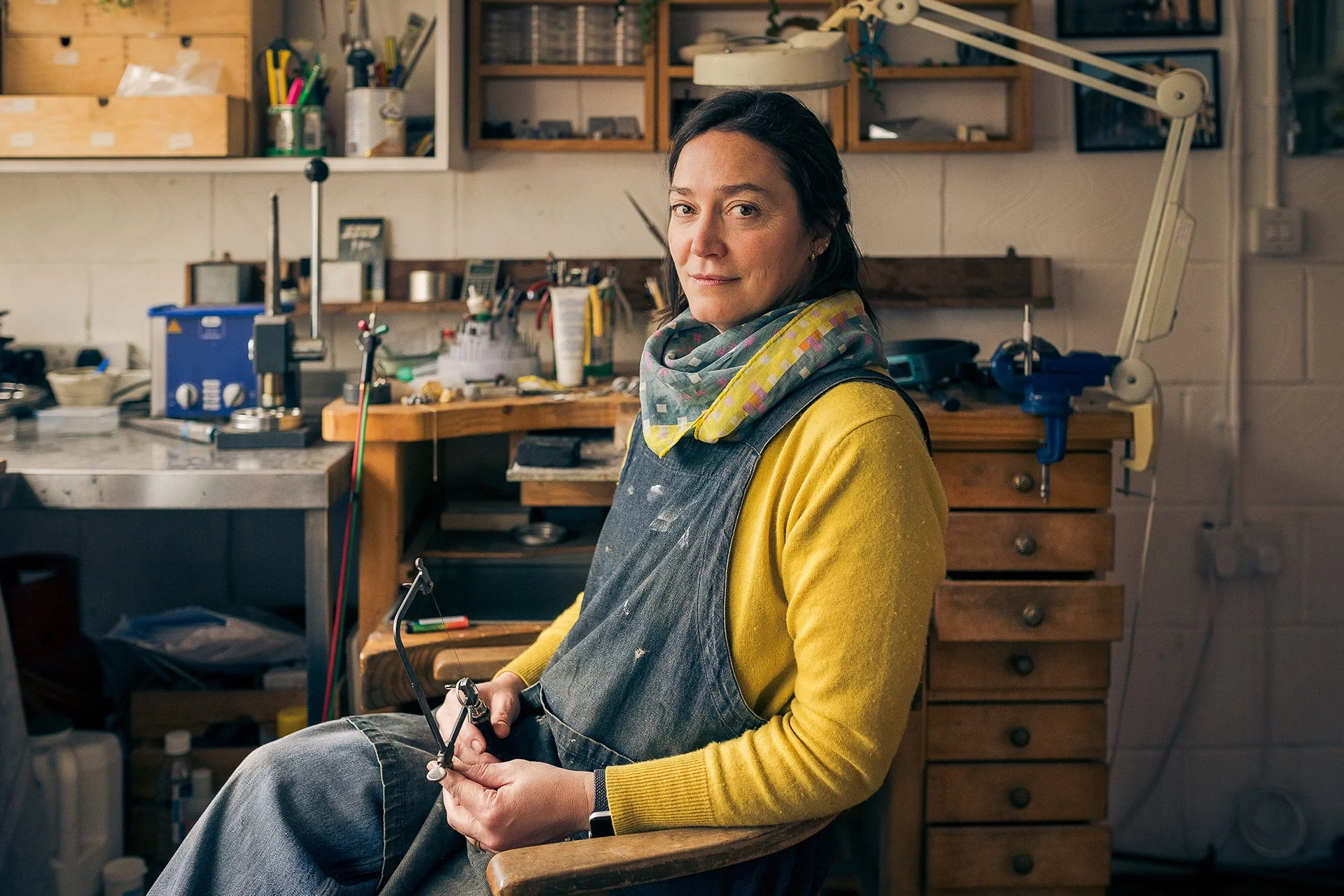
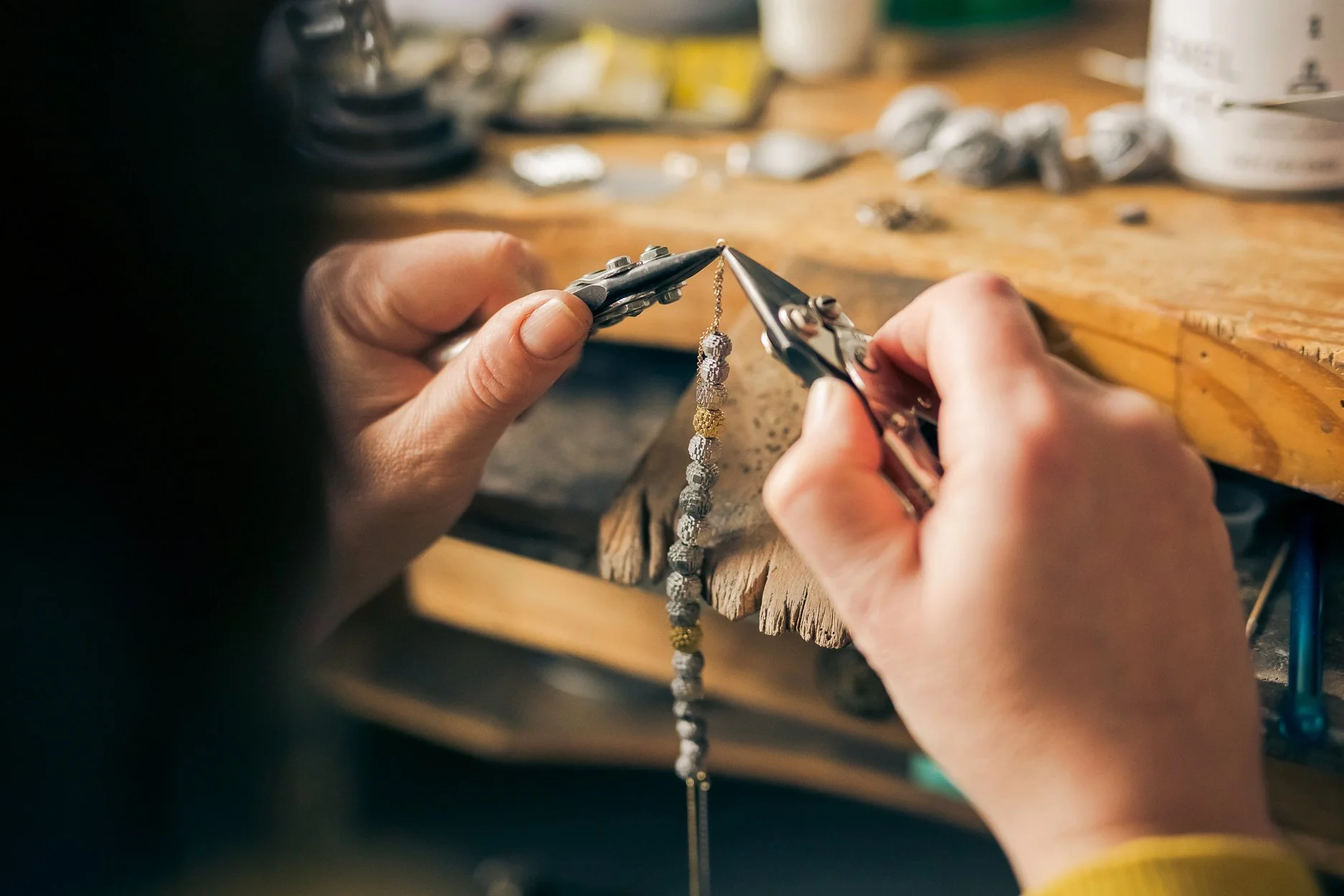
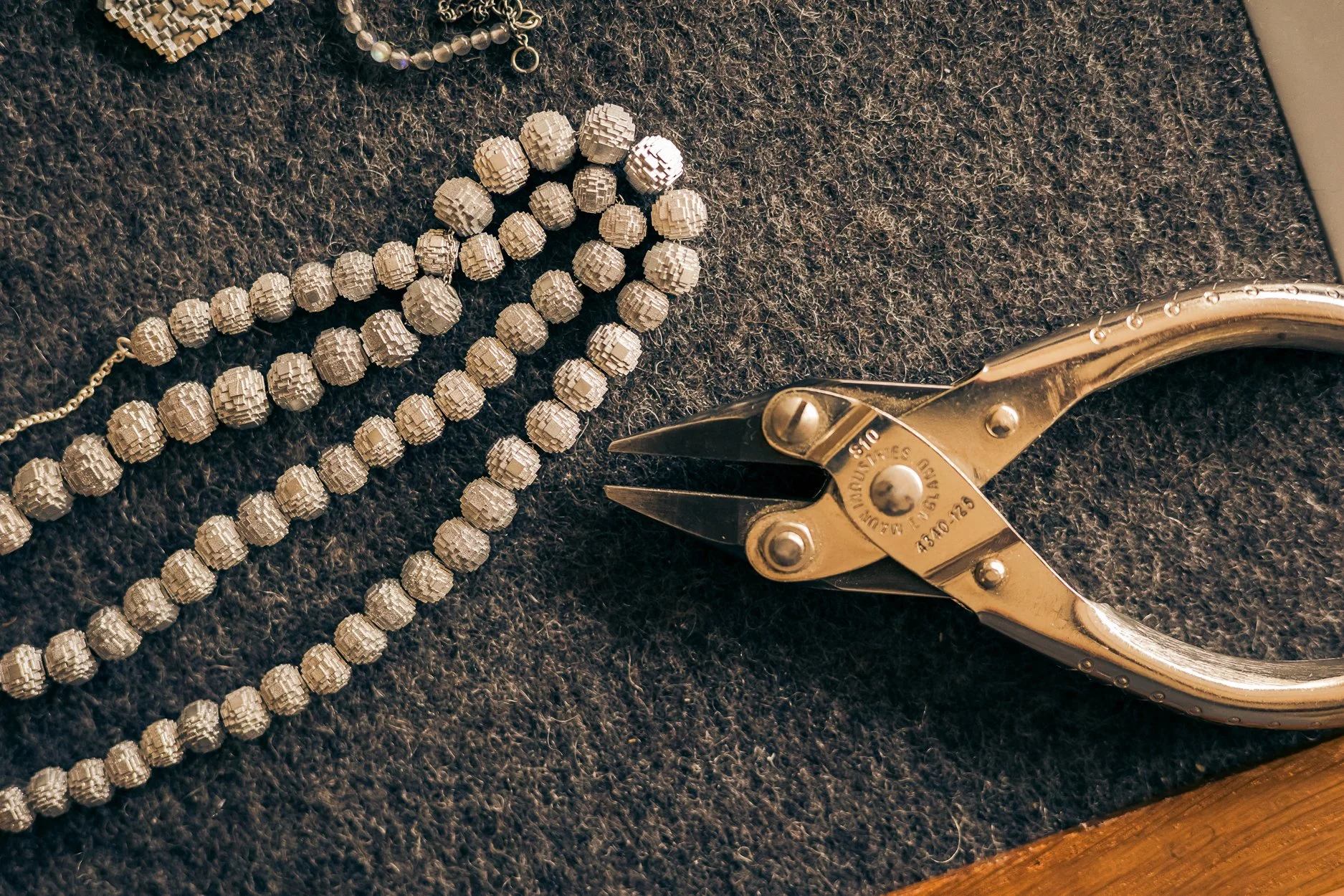
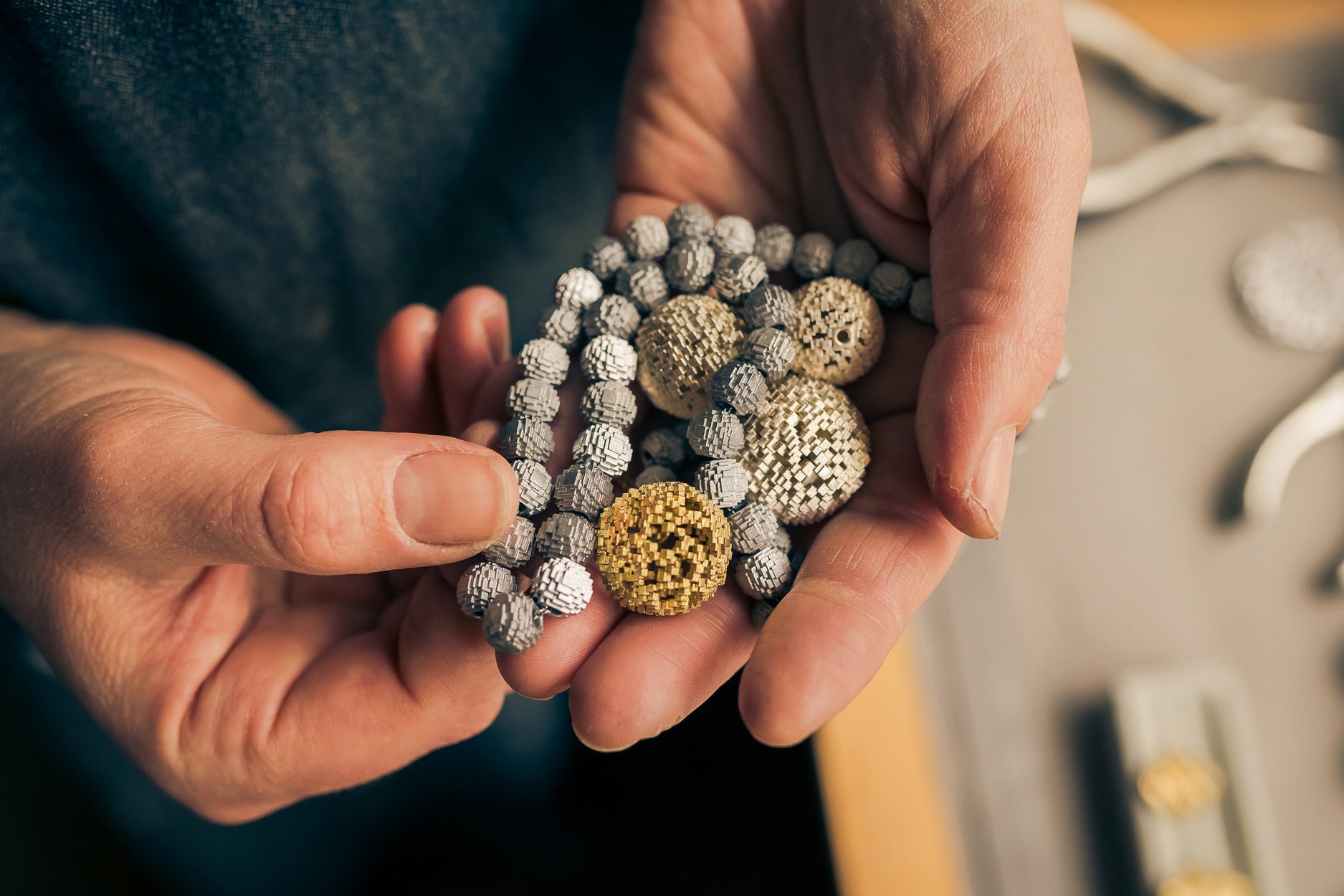
Jo Hayes Ward is standing by the workbench in front of the large windows of her London studio, moving a necklace at different angles to show how its many metal surfaces catch the light. The piece comprises six cast aluminium beads on a stainless steel chain, each made up of hundreds of tiny interlocking cubes. It resembles a strung row of sophisticated disco balls.
The necklace is part of a new eight-piece aluminium collection that Jo has made to show at this year’s Collect art fair in London. Her use of the grey, light metal provided the jewellery designer with the opportunity to experiment with scale. But the preoccupation with light is something that has been ever-present throughout her 20-year career.
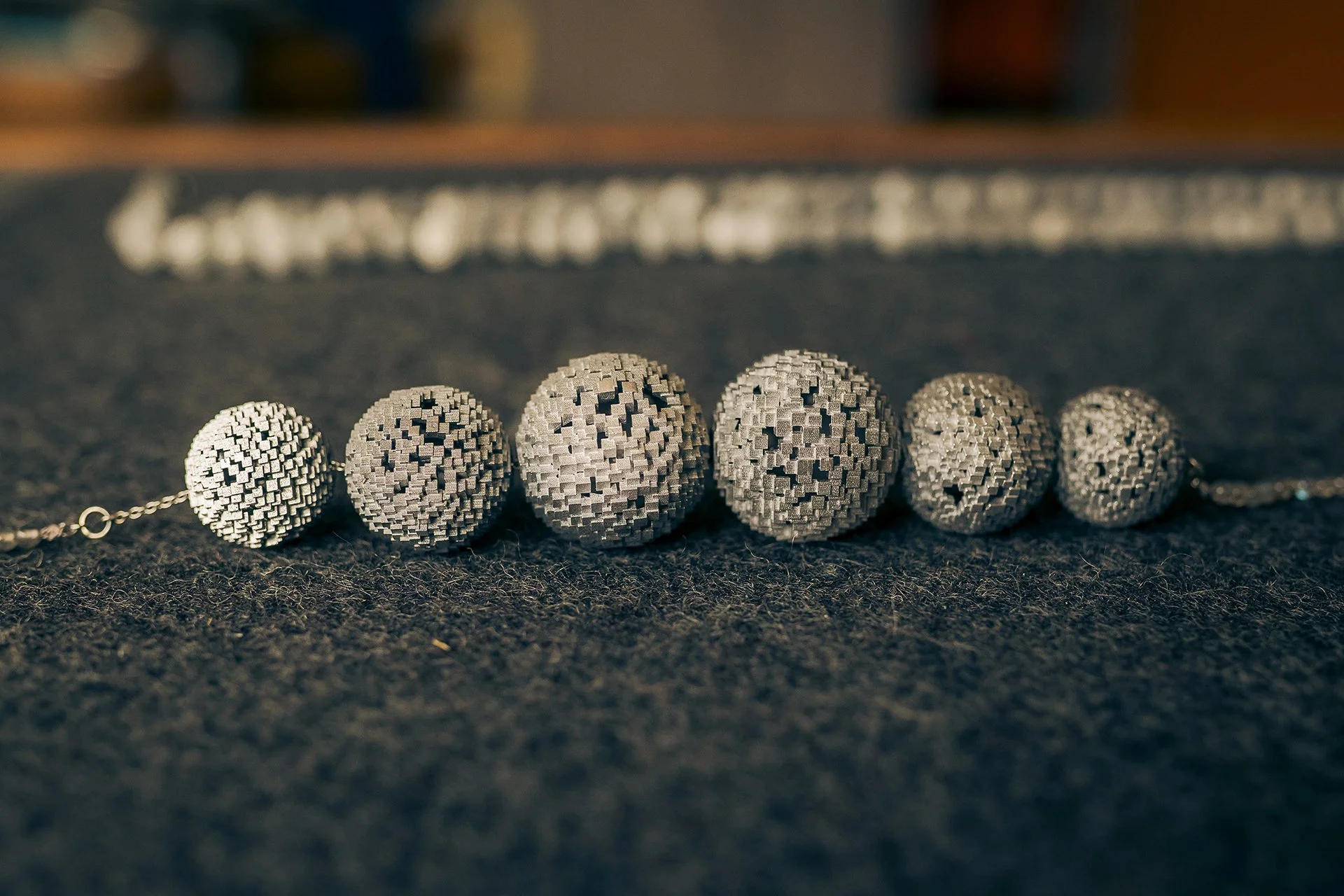
“[My work] is basically all about light and how metal can reflect light in different ways through movement,” says Jo. “So, even though the pieces themselves might not be necessarily kinetic, if they move the light will change so it feels like something comes alive. And that's something that I'm always interested in when I'm making new work: how’s it going to catch the light? What happens if you angle the facets of the building blocks in different ways?”
Her building blocks are delicate shapes of metal, including cubes, rectangles, hexagons and squares, which she combines to form patterns inspired by geology, architecture, and structures in knitwear and fabric. The sculptural nature of the resulting pieces reflects her route into jewellery.
As a child Jo loved making, borrowing her stepfather’s soldering iron to craft jewels that she now suspects were probably toxic. After failing her A-Levels at school in Hackney, she enrolled on a foundation course across the river at Camberwell College of Arts in south London. A taster session during that year encouraged her to stay on to study for a BA degree in metalwork and silversmithing. It was during that course she discovered computer-aided design (CAD), an integral part of her jewellery making today.
Jo was creating small sculptures during her degree; one piece featured milled aluminium shards that could be connected like a jigsaw puzzle, but in different ways so that the viewer was making the work of art. “I was making quite geometric things that fitted together so the essence of what I do now was all the way back in those pieces,” she says.
Her first jewellery training came after graduation, when she got jobs working one or two days a week for each of Jane Adam, Scott Wilson and Disa Allsopp at Cockpit Bloomsbury. (Today, Jo works from a studio in Cockpit Deptford). She learnt different skills from each of the designers, from production work and selling from Jane; to the fashion side of the business from Scott; and an “organic way of working” from Disa.
On the back of that hands-on experience, she successfully applied to the Royal College of Art for the MA in goldsmithing, silversmithing, metalwork and jewellery. “I went in as as silversmith,” says Jo, “but I left as a jeweller.”
She launched her business on her graduation in 2006, working at the same time at Electrum Gallery in London, which gave her insight into what was selling in contemporary jewellery. Her initial choice of jewellery as a career was somewhat pragmatic; she felt it would give her an outlet to be creative and make sculptural work but in what she saw as a more forgiving market than fine art.
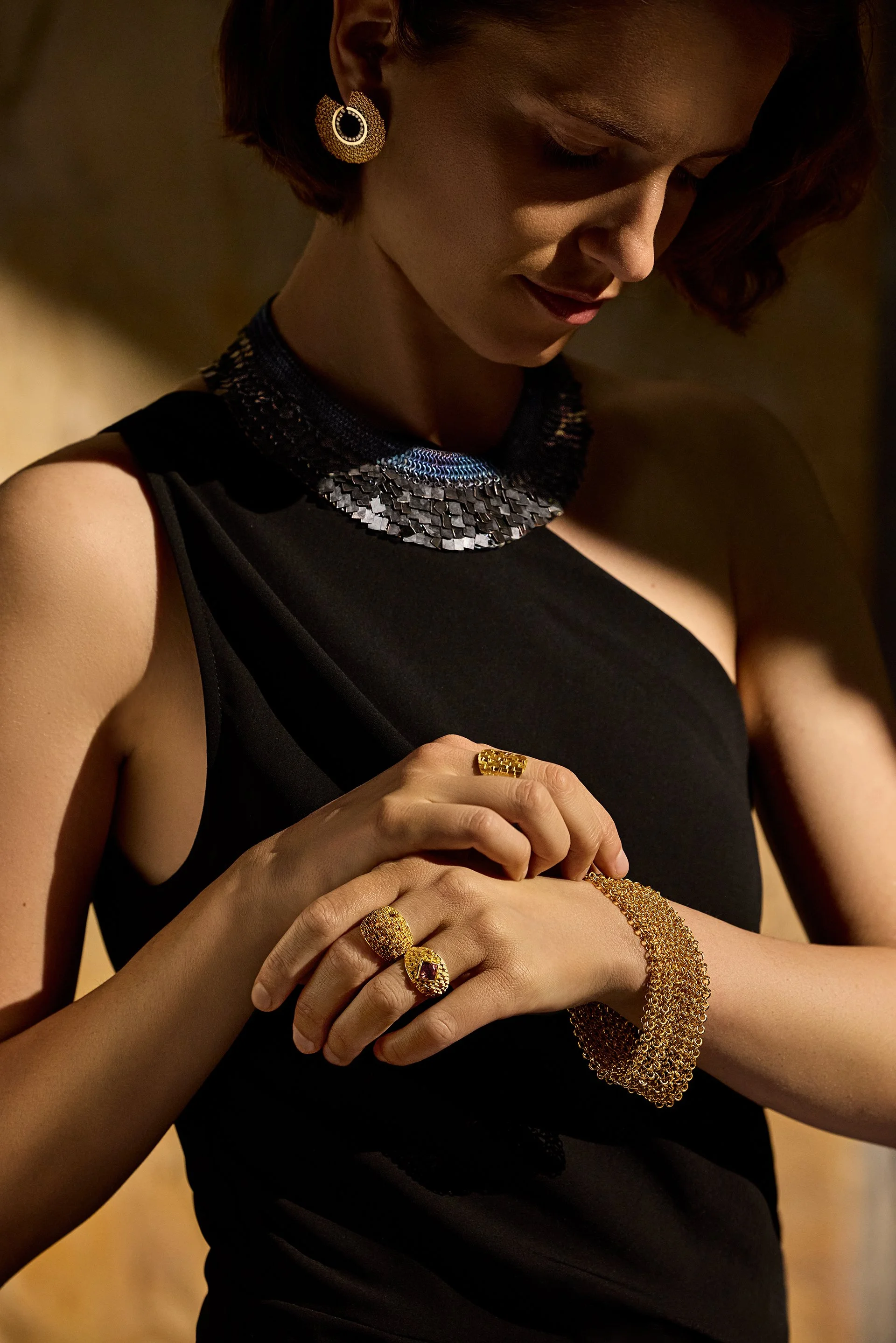
“But I think I've been led into it because there is something wonderful about loving an object and wearing it,” she says. “And it becomes such a personal thing. It’s like a second skin and there's an emotional attachment to jewellery, which means that it's a lovely thing to make for people.” Much of her work now is repurposing jewels, turning family heirlooms into new bespoke pieces.
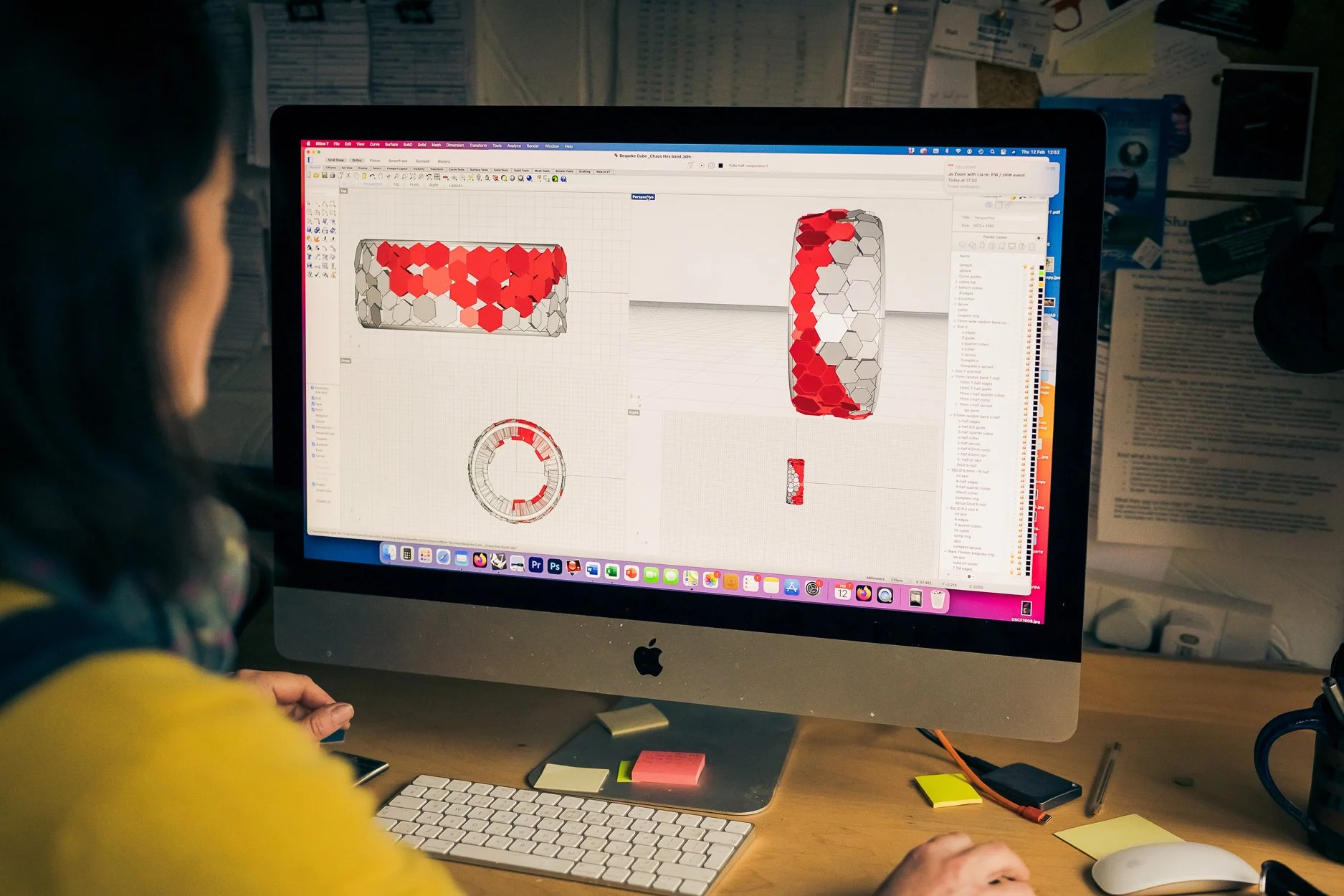
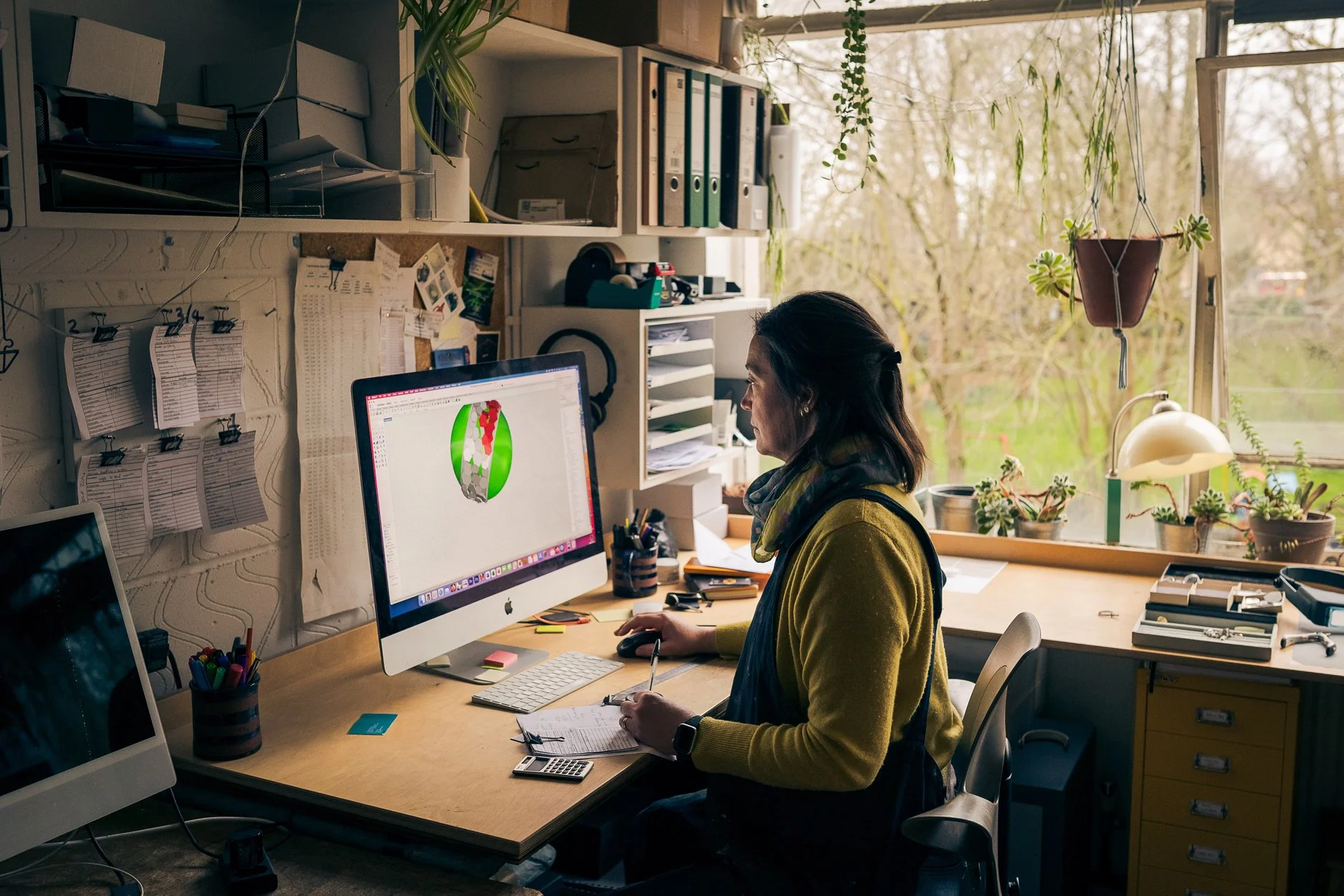
Jo crafts her designs, which have been predominantly gold, “in a digital universe”. This method is different to the more traditional approach favoured by many fine jewellers, but it is one that suits her. "I think in 3D and that's one of the reasons probably why, although I don't think I'm naturally good [with] computers, the 3D design programme that I use is a bit like my brain… so it's been very intuitive to work with,” she explains.
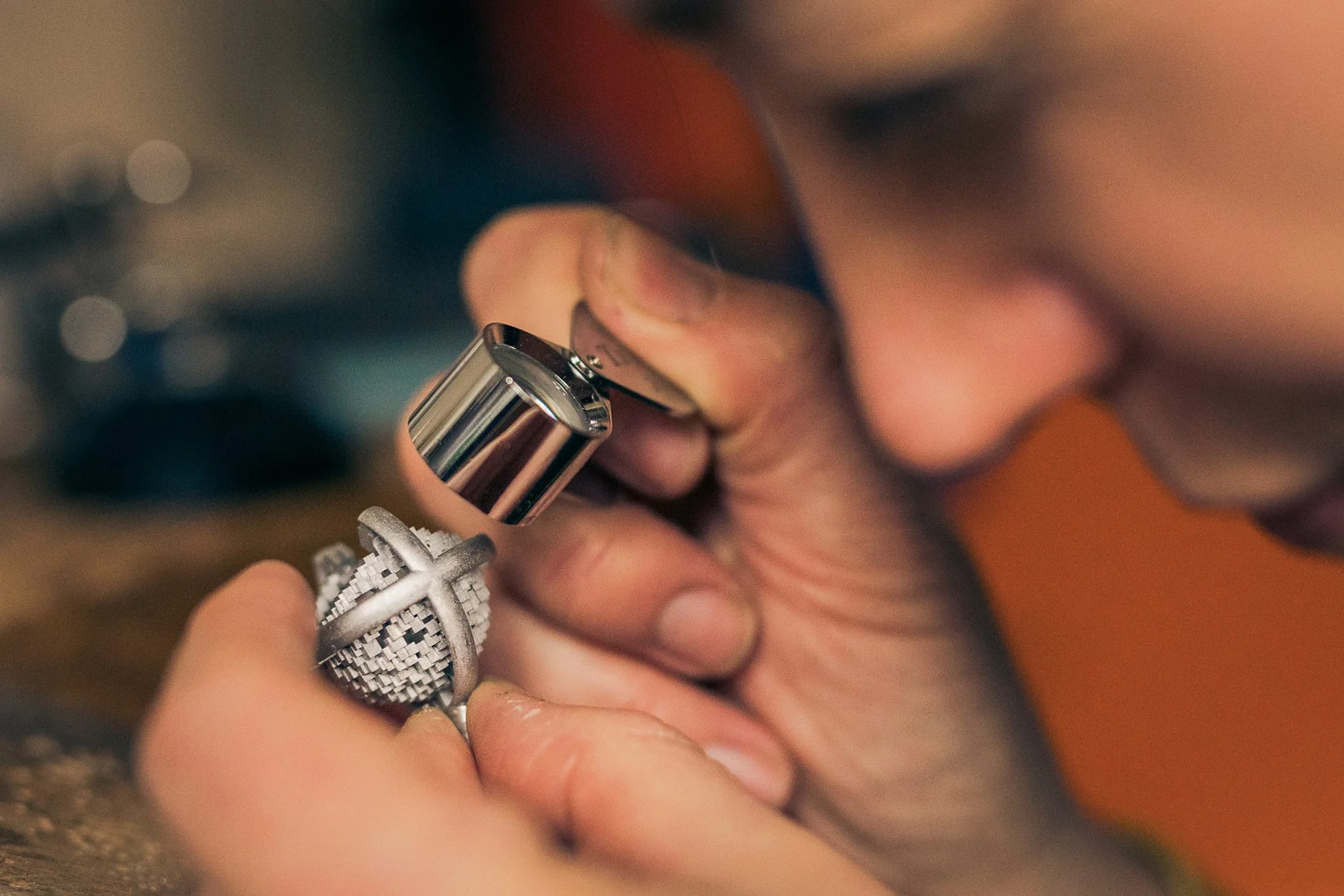
She might take photographs for inspiration, but most of Jo’s design process involves sketching on the computer. She might print off a sketch and draw by hand on top of it however, combining the analogue with the digital. She makes many refinements to her digital design and produces prototypes along the way to reaching the desired outcome. It is a precise process, as she works within points of a millimetre, and one that requires patience: it can take Jo weeks, or in some cases years, to perfect a design.
Once she is happy with her CAD model — a digital object — she sends the file to an external workshop to be 3D printed in wax. This wax mould then goes off to be cast in metal.
“Some of the pieces could definitely be made by hand but you wouldn't have the same effect because they would have a handmade aesthetic, which is quite different to what happens when you build it in the computer,” says Jo, who works around the school day; she has three sons. “Although I would say some of the work that I make does have an organic feel because I like to control the way facets are pointing, and the way the light changes and the pattern works, in each piece.”
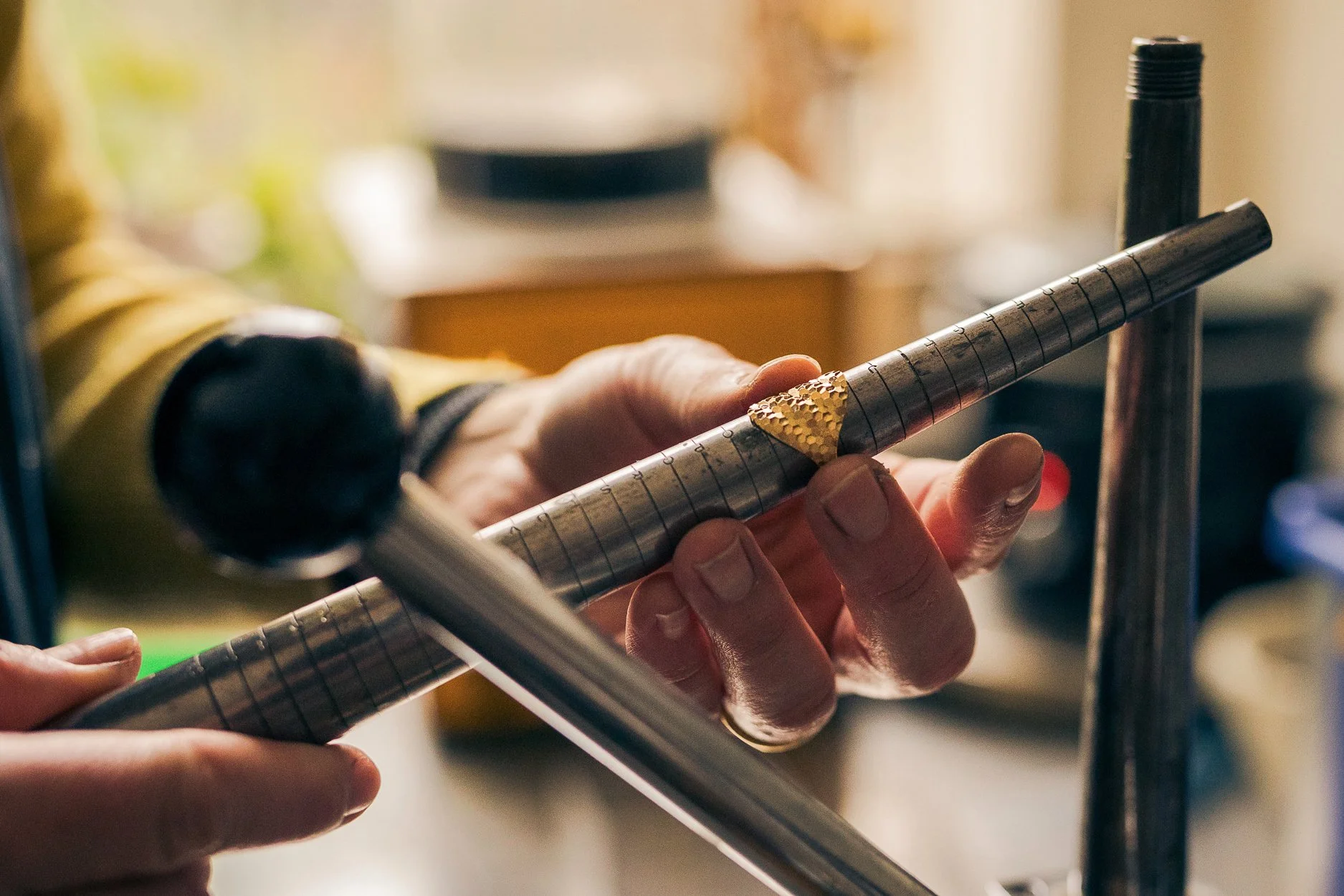
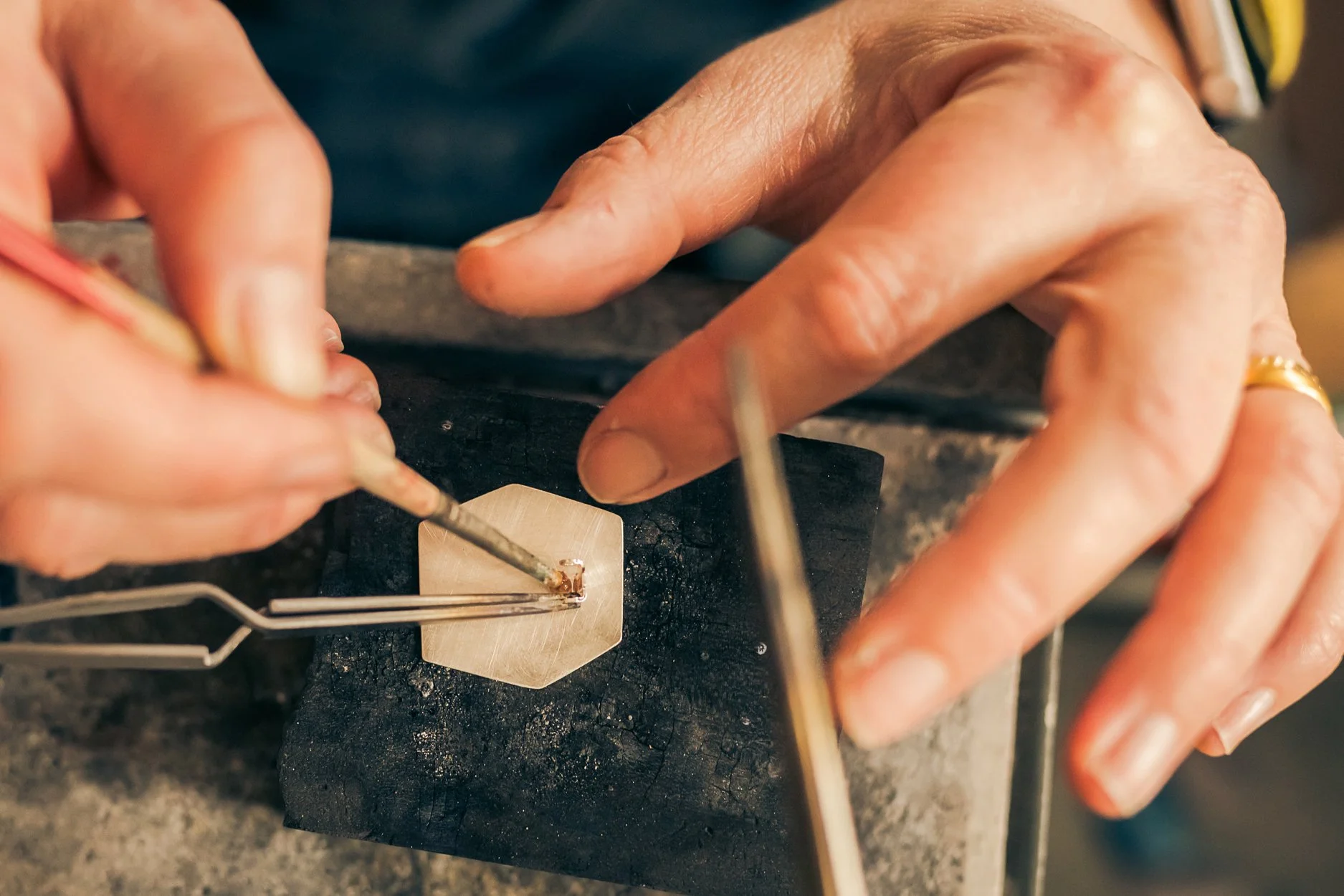
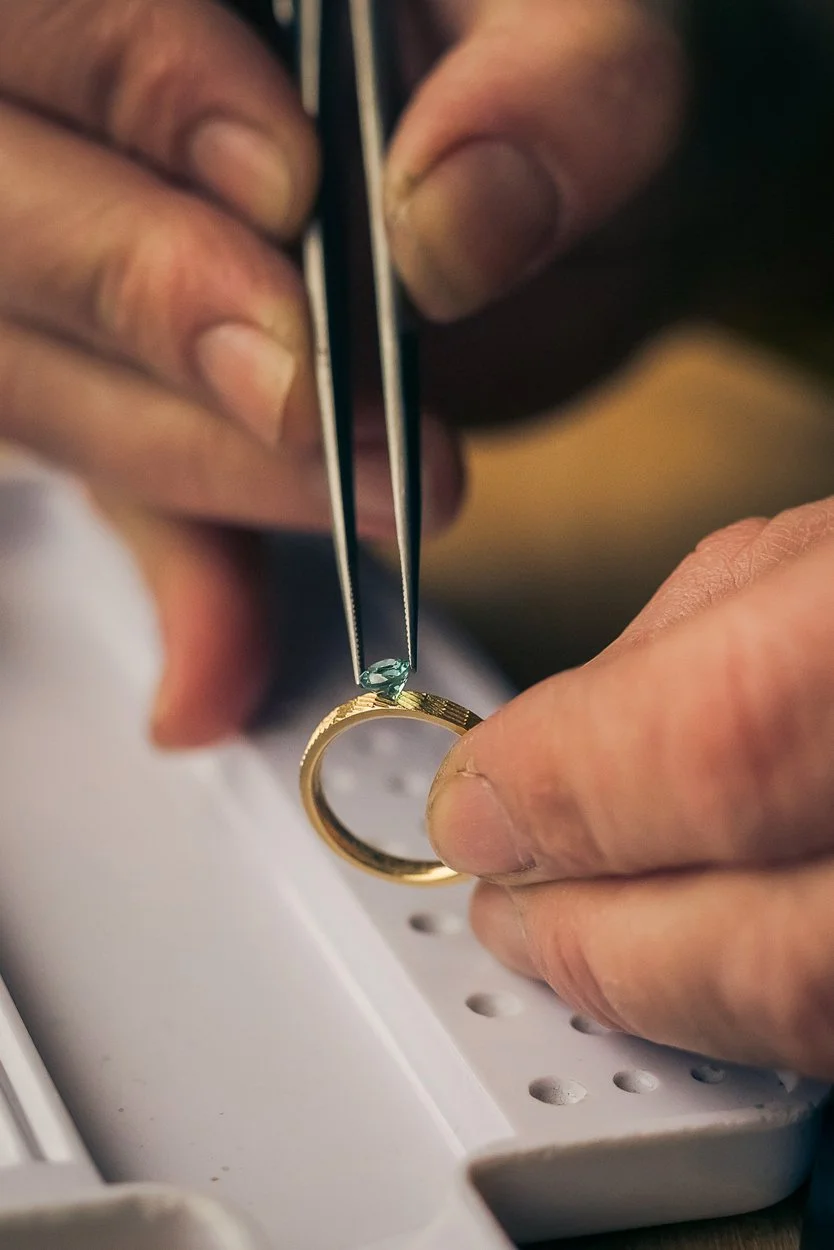
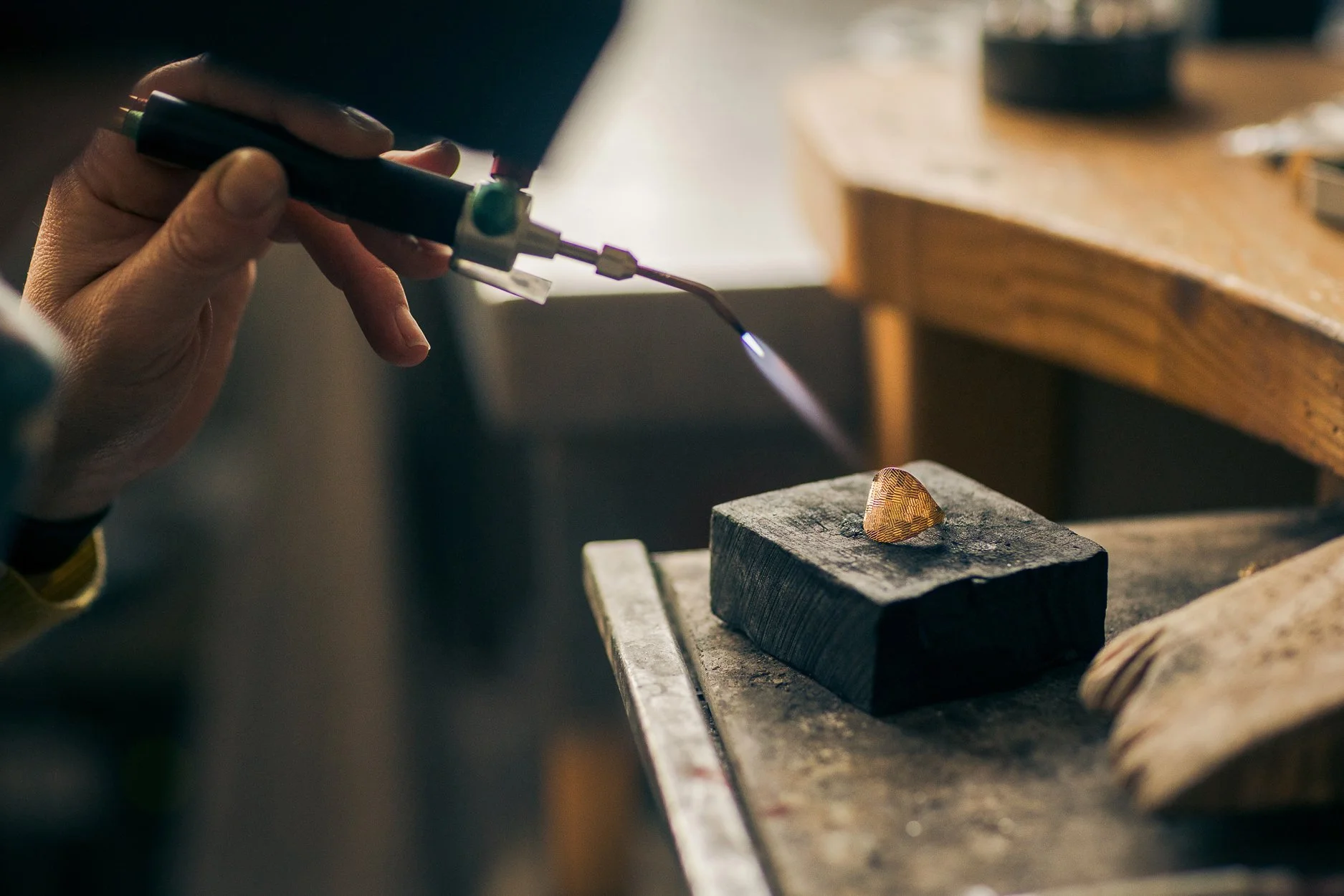
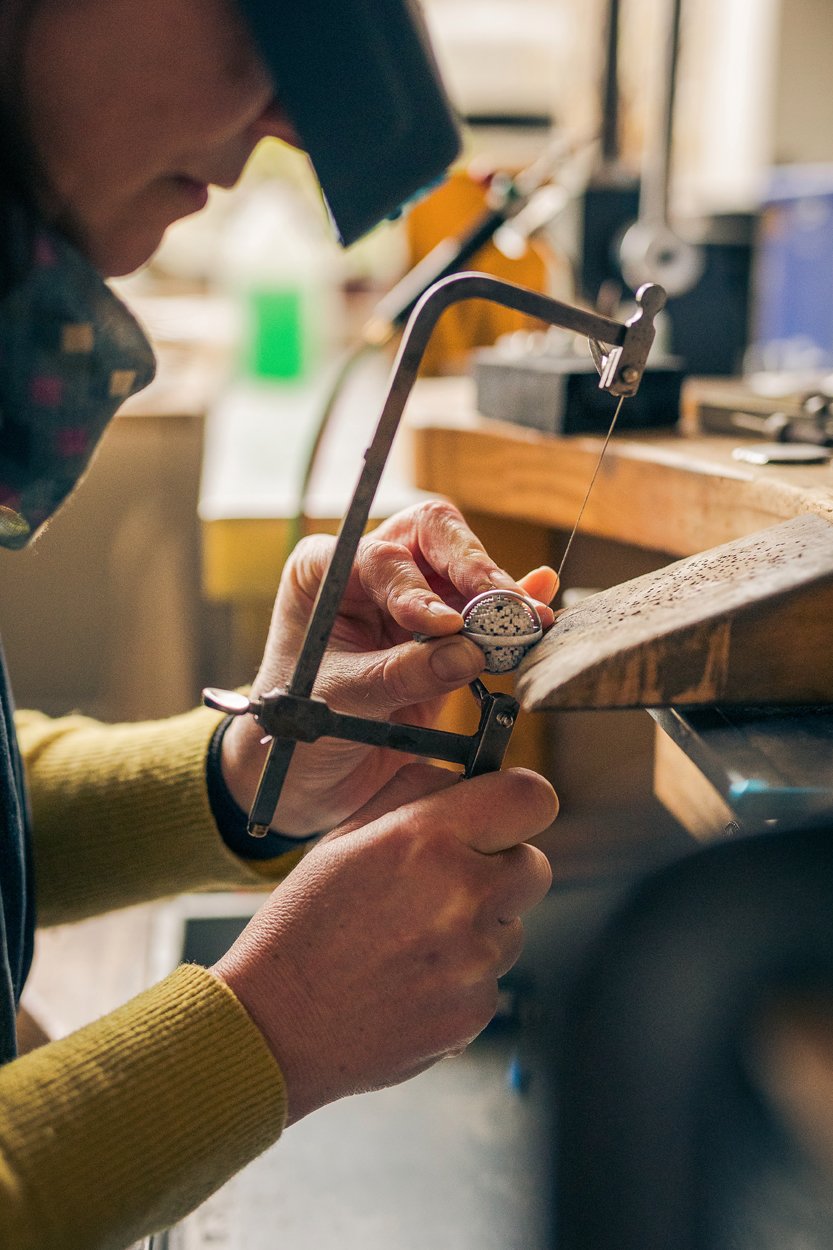
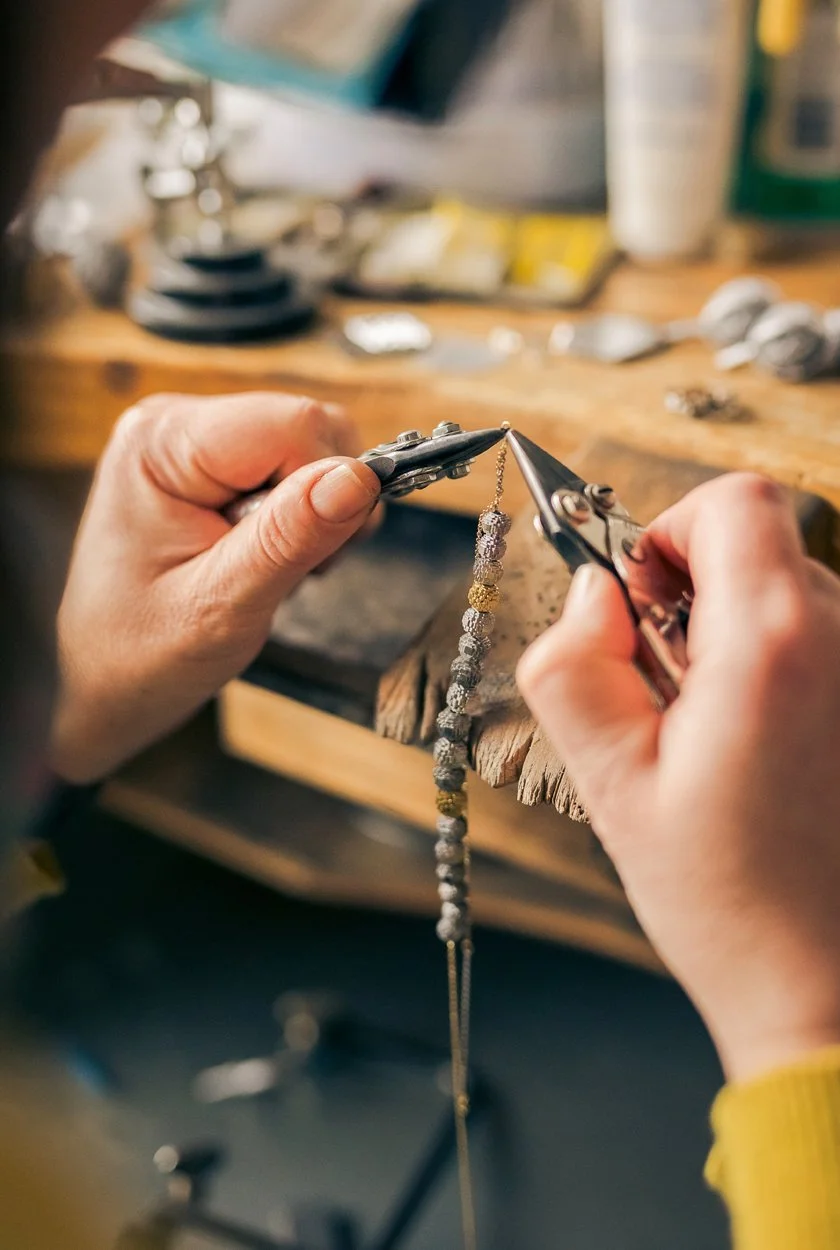
While she is not hand crafting her jewellery, there is still plenty of work for Jo to do by hand at her bench, whether soldering to assemble the various components of her pieces, removing sprues from the casting process, or cleaning and polishing the metal. She works with an external setter on her gem-set pieces.
She still makes a few ring designs from her first collection, Structural, which also featured a couple of “enormous” bangles. Jo recalls that her caster accidentally produced one of these bangles in gold rather than silver and she couldn’t afford to pay for it. Six months on, when the heavy piece hadn’t sold, the caster wanted the gold back. But, in what Jo describes as “a lovely turn of events”, the Goldsmiths’ Company bought it. The 18-carat yellow gold Three Edge Lace Bangle (2006) is now one of four designs by Jo in the Company’s permanent collection. Another is a gold and aluminium brooch.
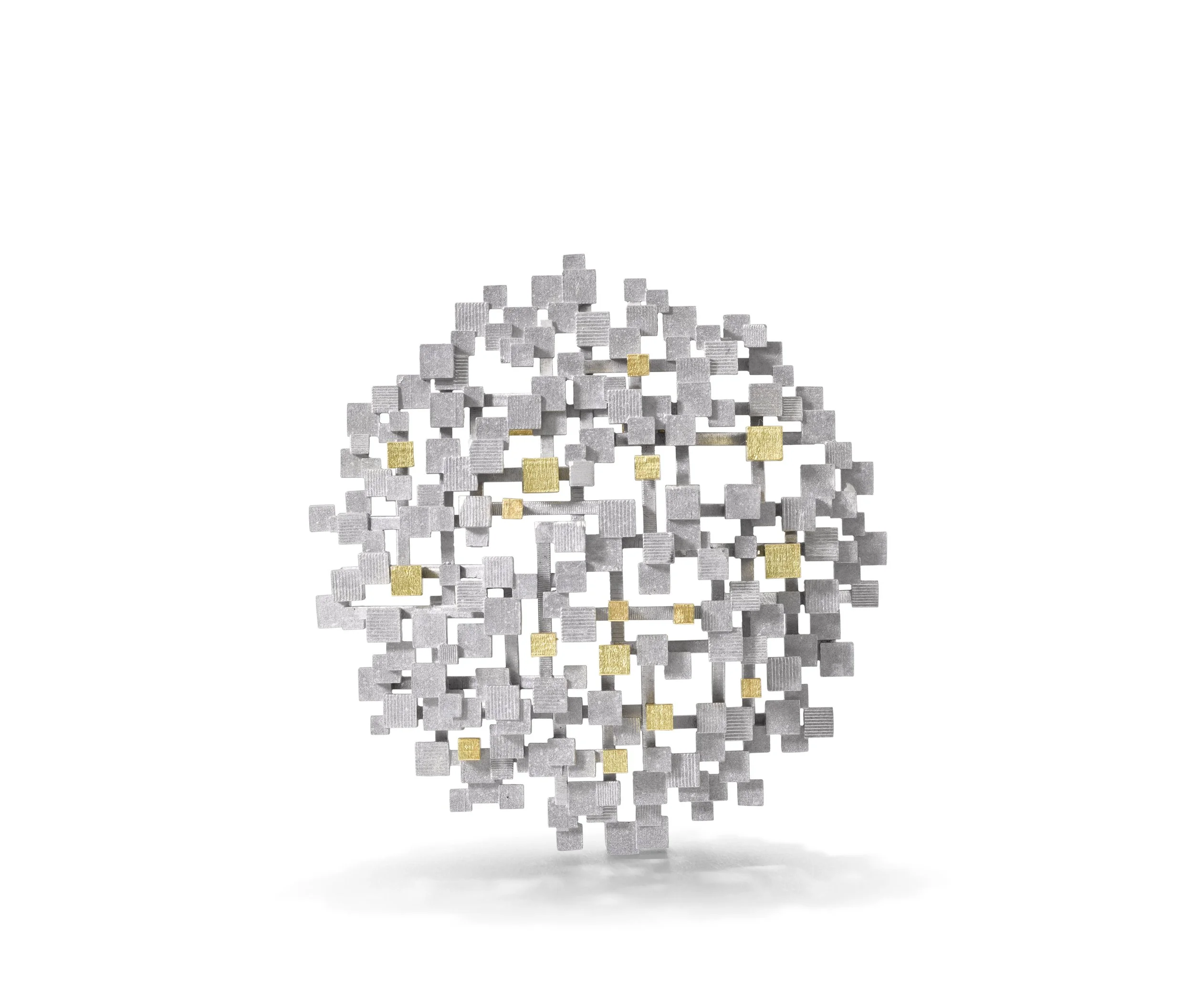
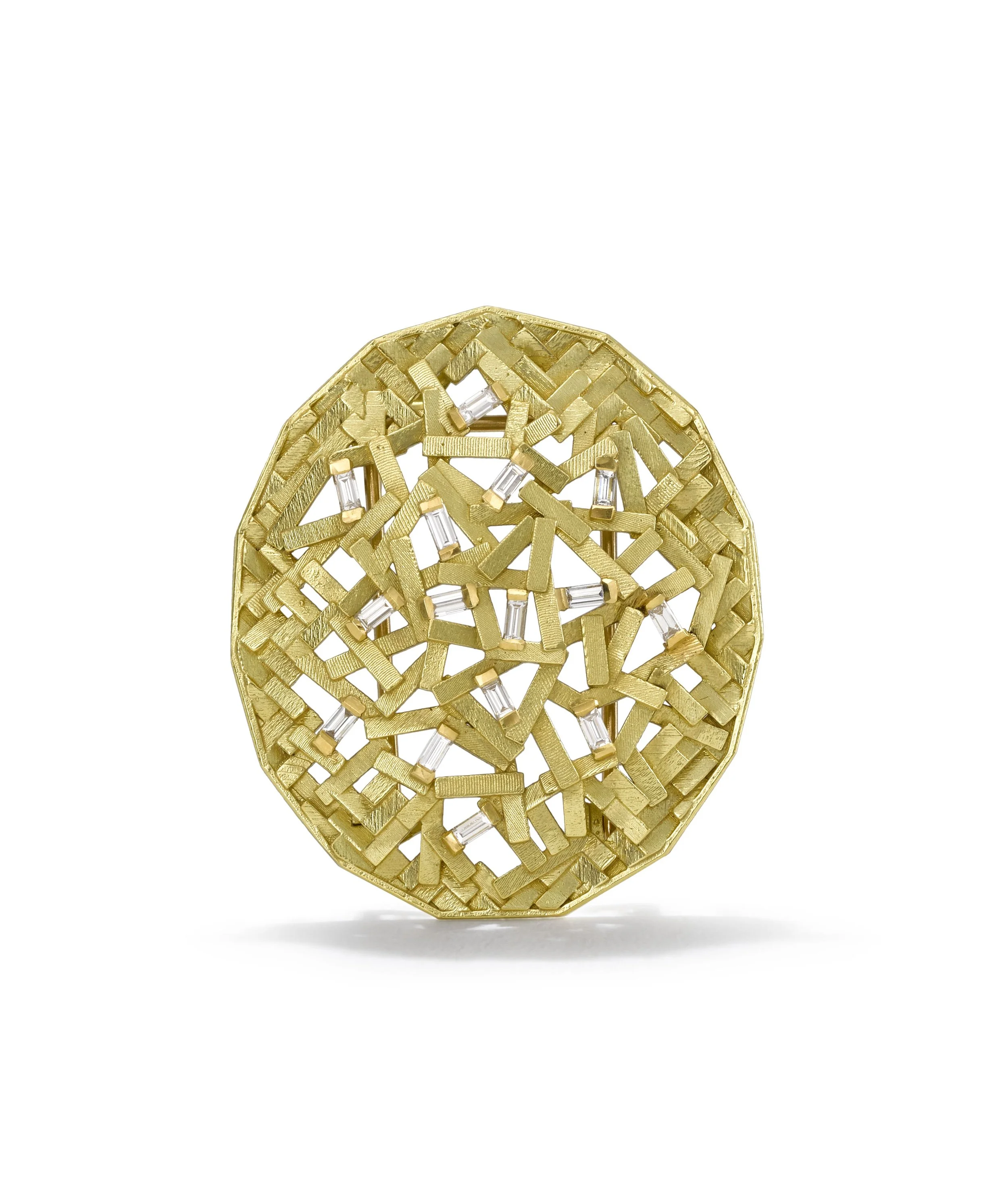
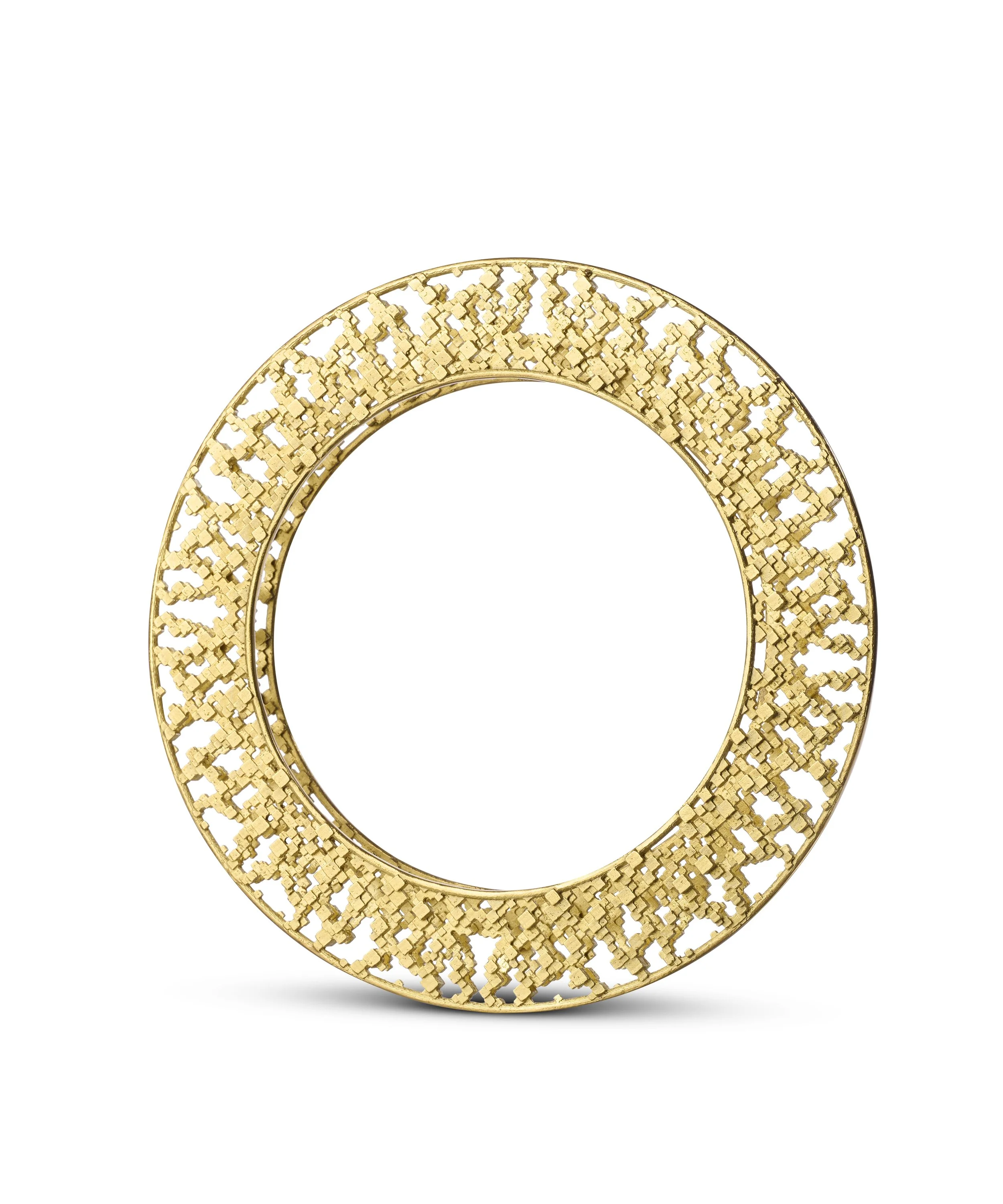
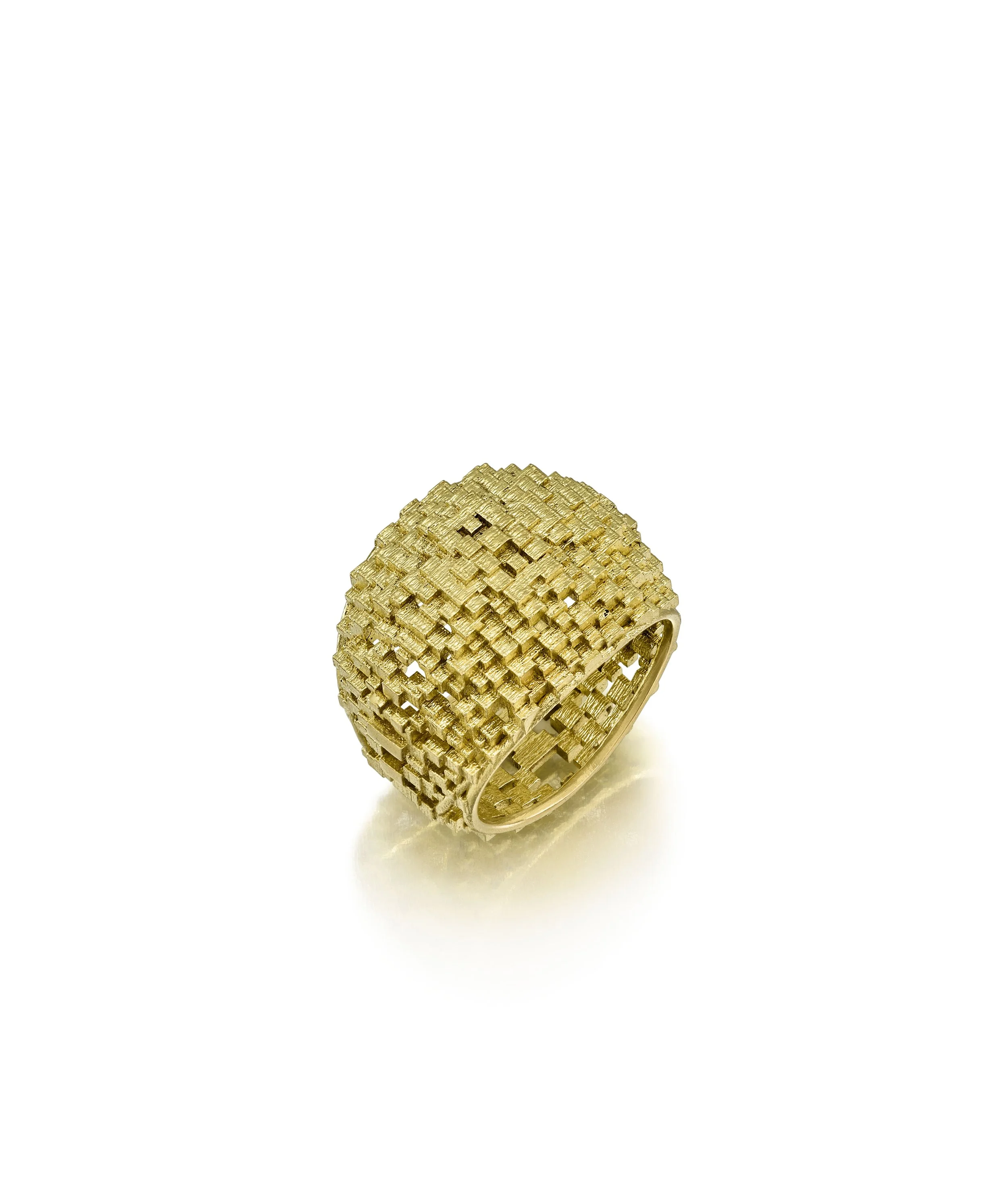
(Left to right) ‘Random Master’ brooch, 18ct gold, aluminium, stainless steel. 'Chaos Parquet Koin' brooch-pendant, 2018, 18ct gold and diamond. 'Lace Edge' bangle, 2006, 18ct gold. 'Oval Lace' ring, 2013, 18ct gold. The Goldsmiths’ Company Collection. Photography by Clarissa Bruce and Richard Valencia.
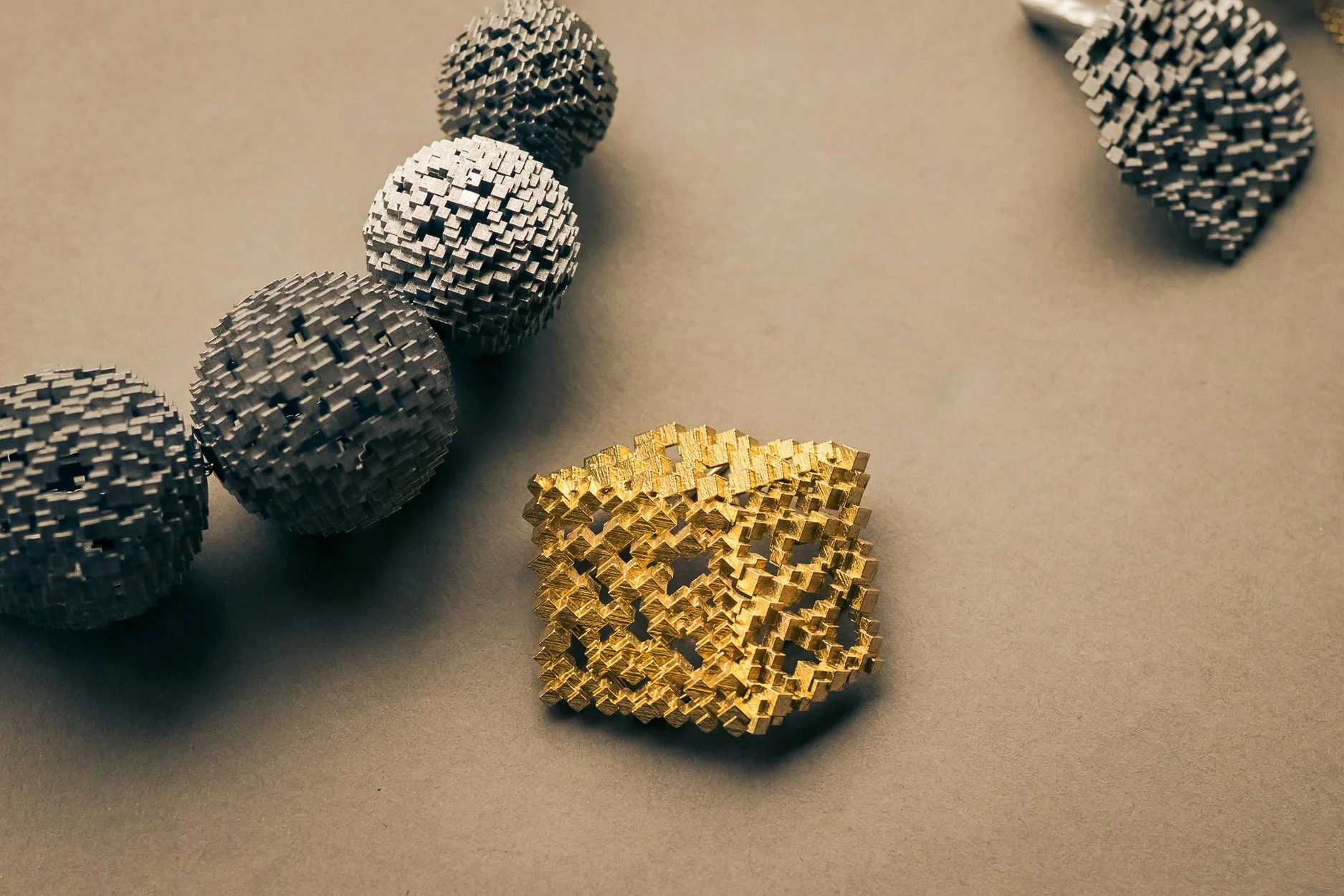
Jo has experimented with various metals over the years but kept returning to gold, which she says “almost emits light”. However, following the recent surge in the price of the precious metal, she decided to take the opportunity to make a full collection in cast aluminium for this year’s Collect as part of a curation of contemporary jewellery by Goldsmiths’ Fair. She wants to “show it off as a precious thing in its own right”, though some of the pieces do also feature 18-carat yellow gold. The lightness of aluminium has enabled her to make larger works that wouldn’t be possible in gold.
The new pieces take inspiration from and are a continuation of her Structural collection. Jo says the small cubes that make up the designs point in the same direction so as to give an eye-catching “on/off flash of light” when they move, responding to the brief set by Goldsmiths’ Fair to explore how texture and light interact.
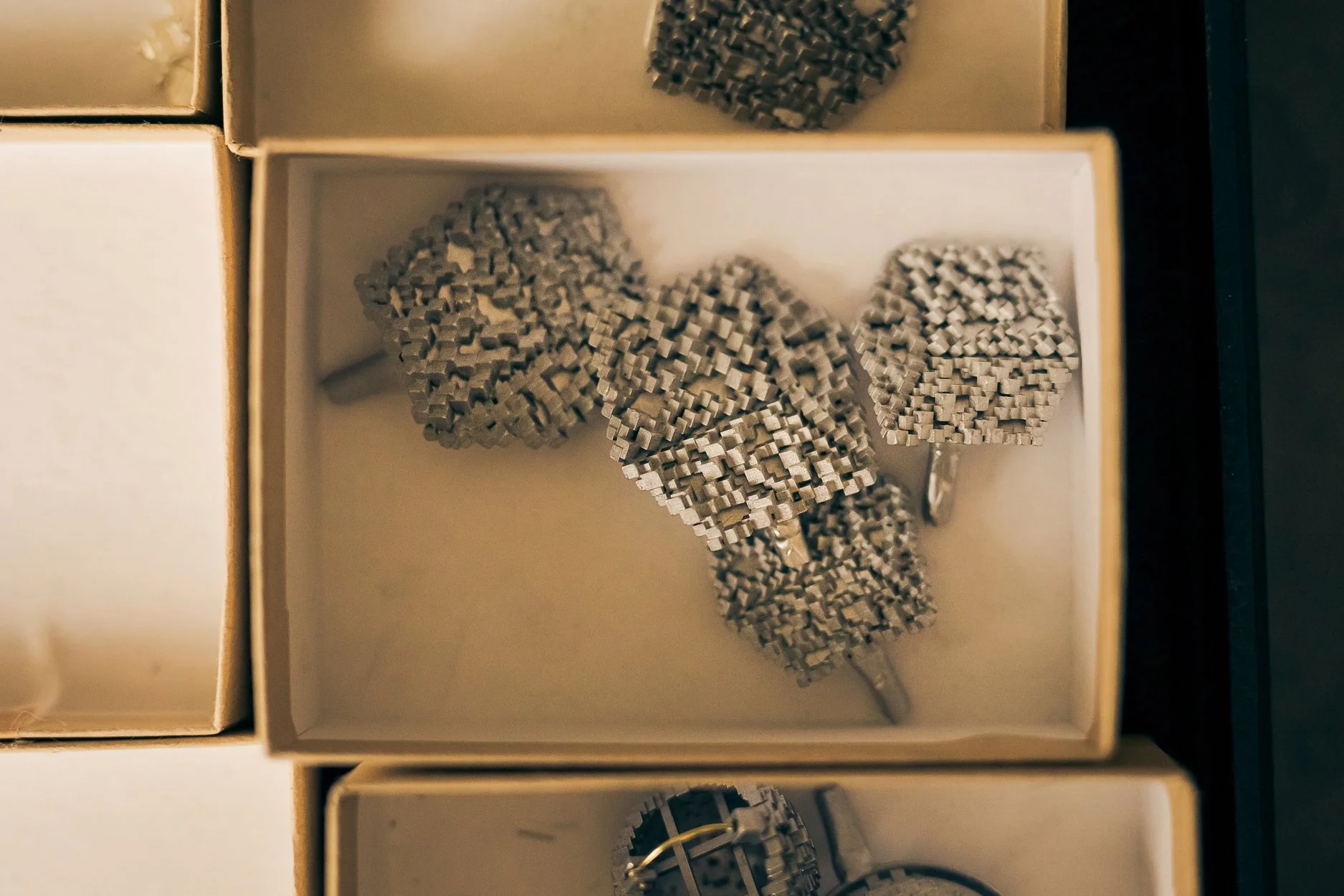
Looking back on her 20 years in jewellery, Jo feels her work has become more refined since her early large, bold pieces. “Being able to make things that are still sculptural but fine has been quite an important curve for the business,” she says. “Some of my biggest sellers are stacking rings, for example, which are tiny, but you can build up the patterns with different bands. It’s quite a nice way of having a small bit of sculpture in a small piece of jewellery.”
One of her proudest career accomplishments to date is designing the public artwork that adorns the facade of Riverside Studios in Hammersmith, west London. Like her jewellery, the different facets of the steel sculpture point in different directions. “So as you move around the building, and as the light changes around the building, you see slightly different things,” she says. The piece features a golden cube, made from cast aluminium bronze.
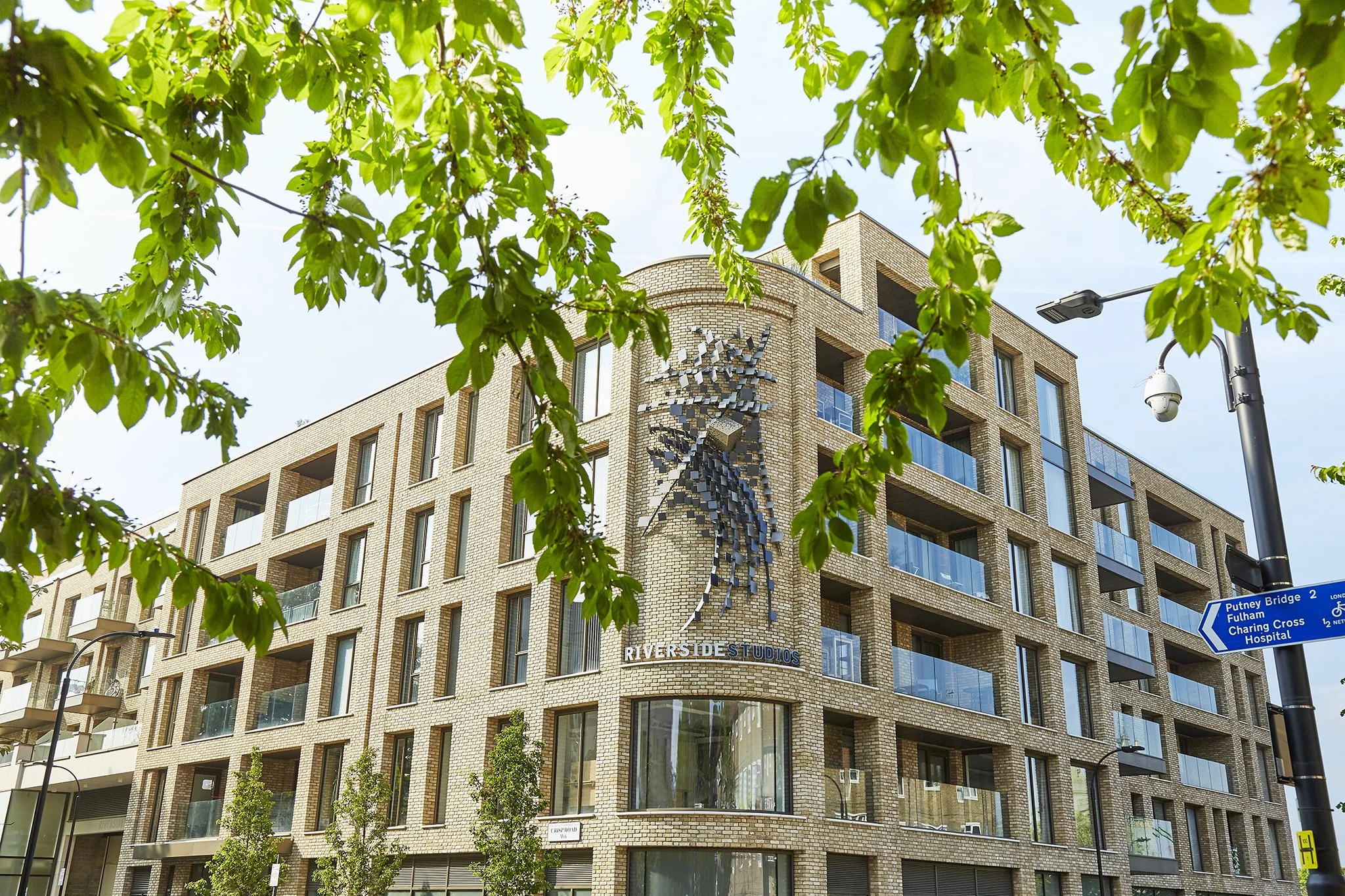
Riverside Studios in Hammersmith ©Ron Bambridge
Moving forward, Jo suspects she won’t stick to designing only jewellery. Although she has no concrete plans, she likes the idea of working on some interiors products when she has more time. She and her husband Laszlo, a cabinet maker, have designed everything from lighting solutions to homeware objects for their own house.
For now, however, she is concentrating on jewellery and ensuring that every piece she makes has the “transformative nature” she considers important. “The main thing is having almost like a wow factor when you’re wearing the work, that it will change,” she says.
Written by Kate Youde | Photography of Jo and her studio by Paul Read | Photograph of model wearing Jo’s rings by Petr Krejčí