
Charlotte De Syllas - Shape is everything
Charlotte De Syllas is a jeweller who has helped redefine the art of stone carving, constantly exploring its beauty and potential and pushing the boundaries of established traditions. The result is a glorious body of work — sculptural and full of colour and technical mastery. For Goldsmiths’ Stories, writer Caroline Palmer sat down with Charlotte to talk about her career and love for colour.
Charlotte’s career spans the decades of contemporary jewellery, starting in the 1960s when artistry and new techniques were changing the look and approach to the making of modern British jewellery.
Throughout this period the quality of De Syllas’s work has made her one of the most significant jewellers of her generation. Yet she is not as well known as she might have been as throughout her career most of her jewellery has been made to commission, rather than selling through exhibitions and galleries.
Yet this has enhanced her jewellery. It has given her space and freedom and added an extra dimension to her work in the way it reflects the obviously sensitive, close connections she builds with her clients, which adds a narrative warmth to her jewellery — each piece speaking to aspects of the lives of its wearer. There is a generosity to it.
“This is the way I have wanted to work,” she says. “There’s a lot of good things about being slow, there really are, and it’s something that I wish, that I were a bit slower at times.”
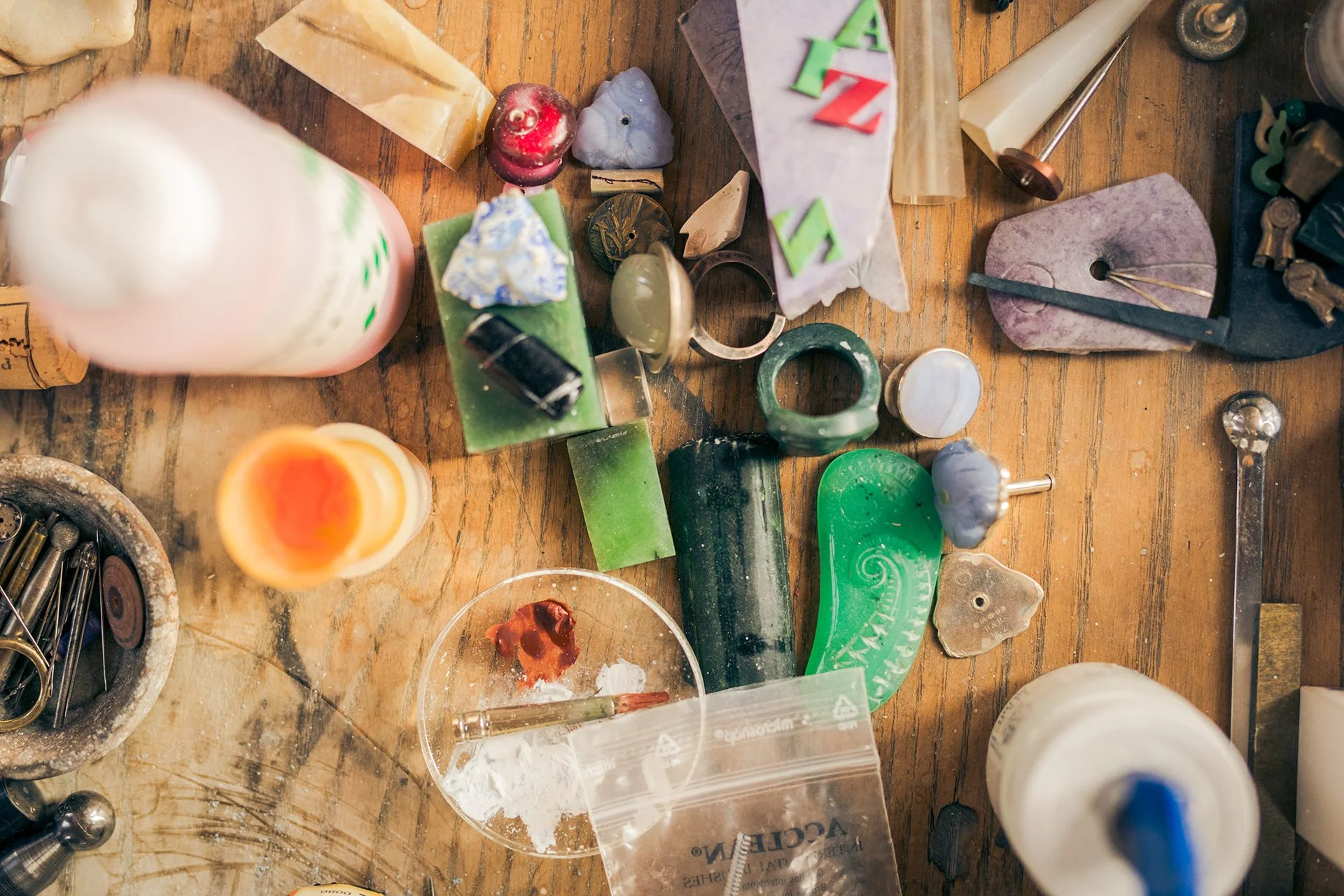
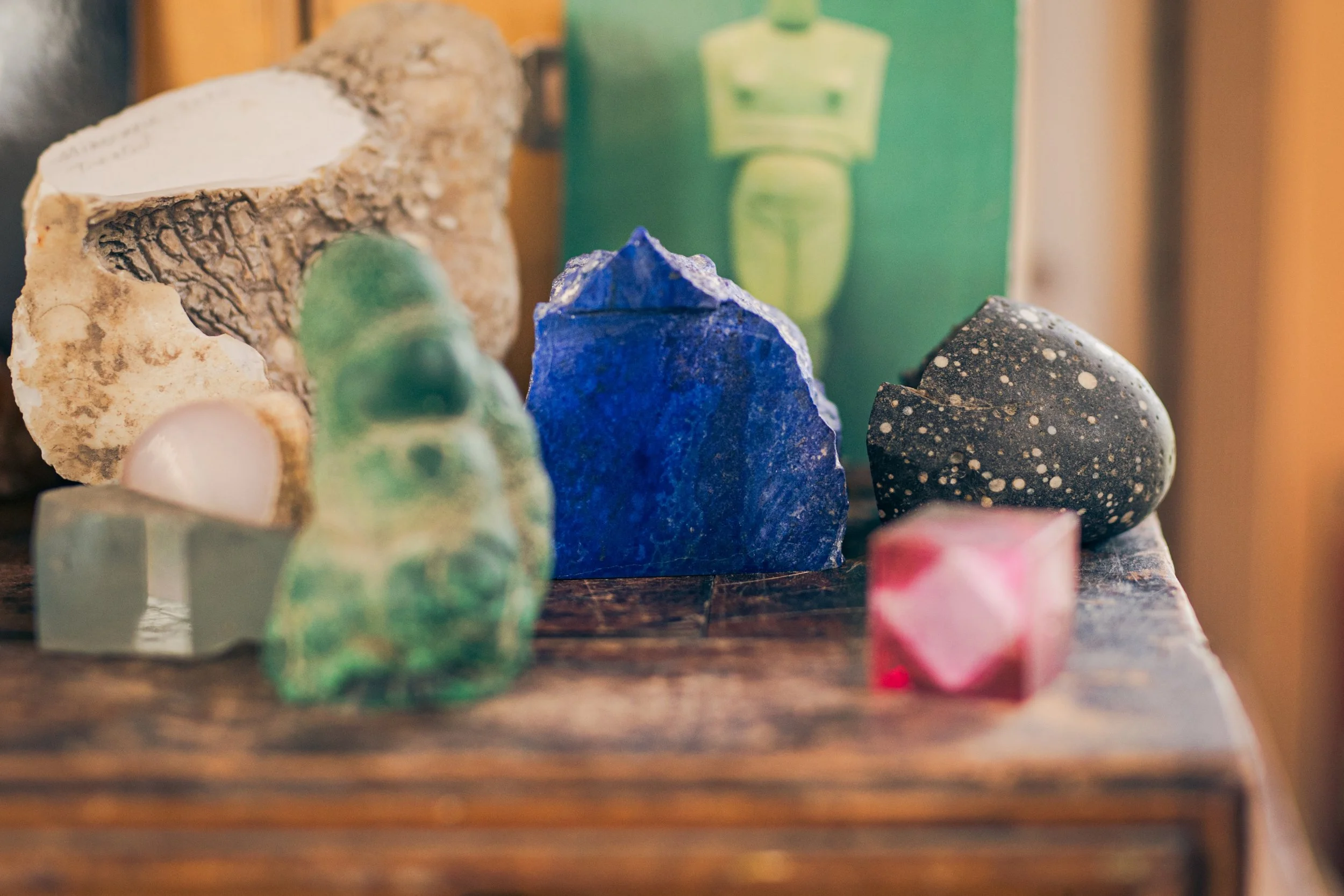
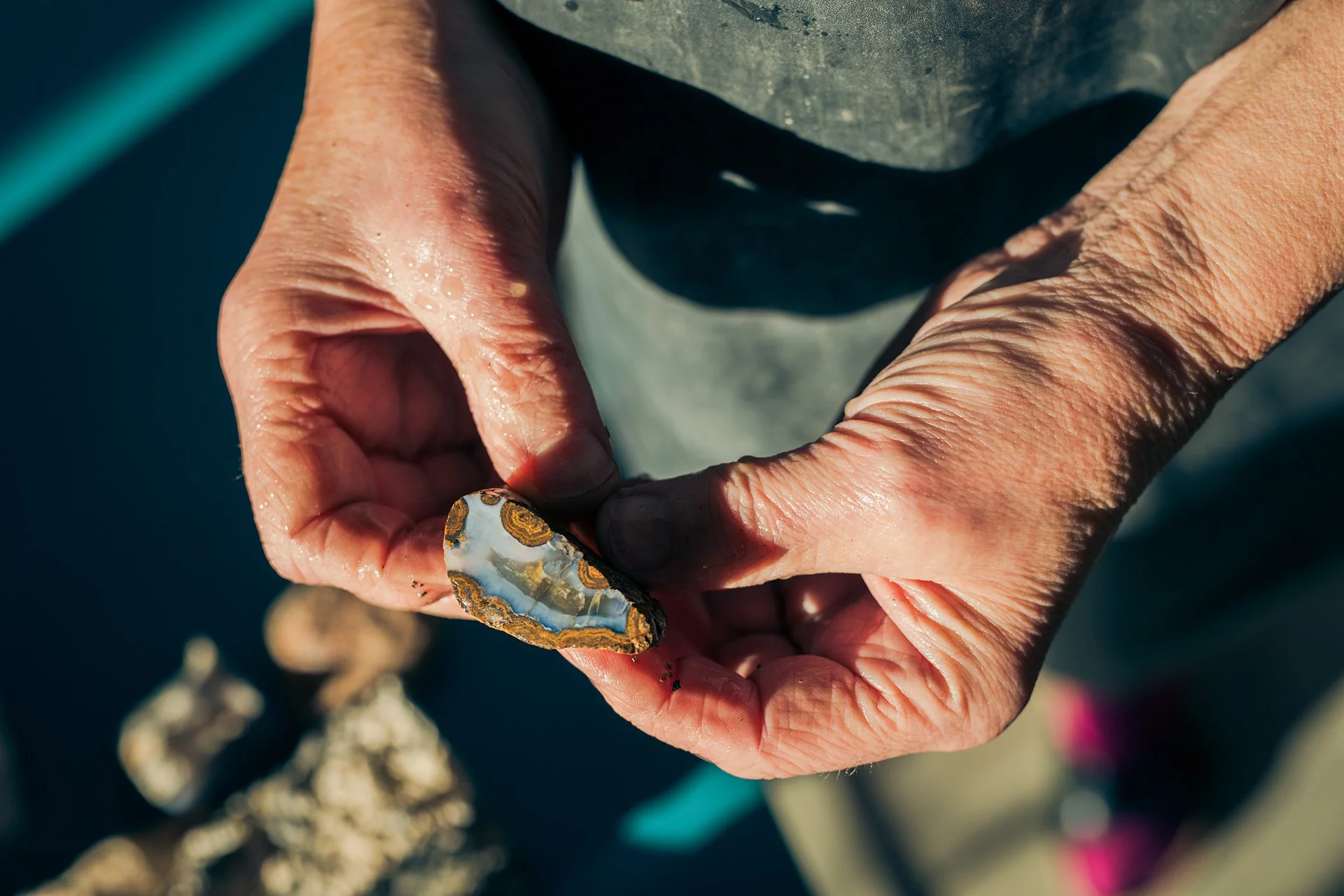
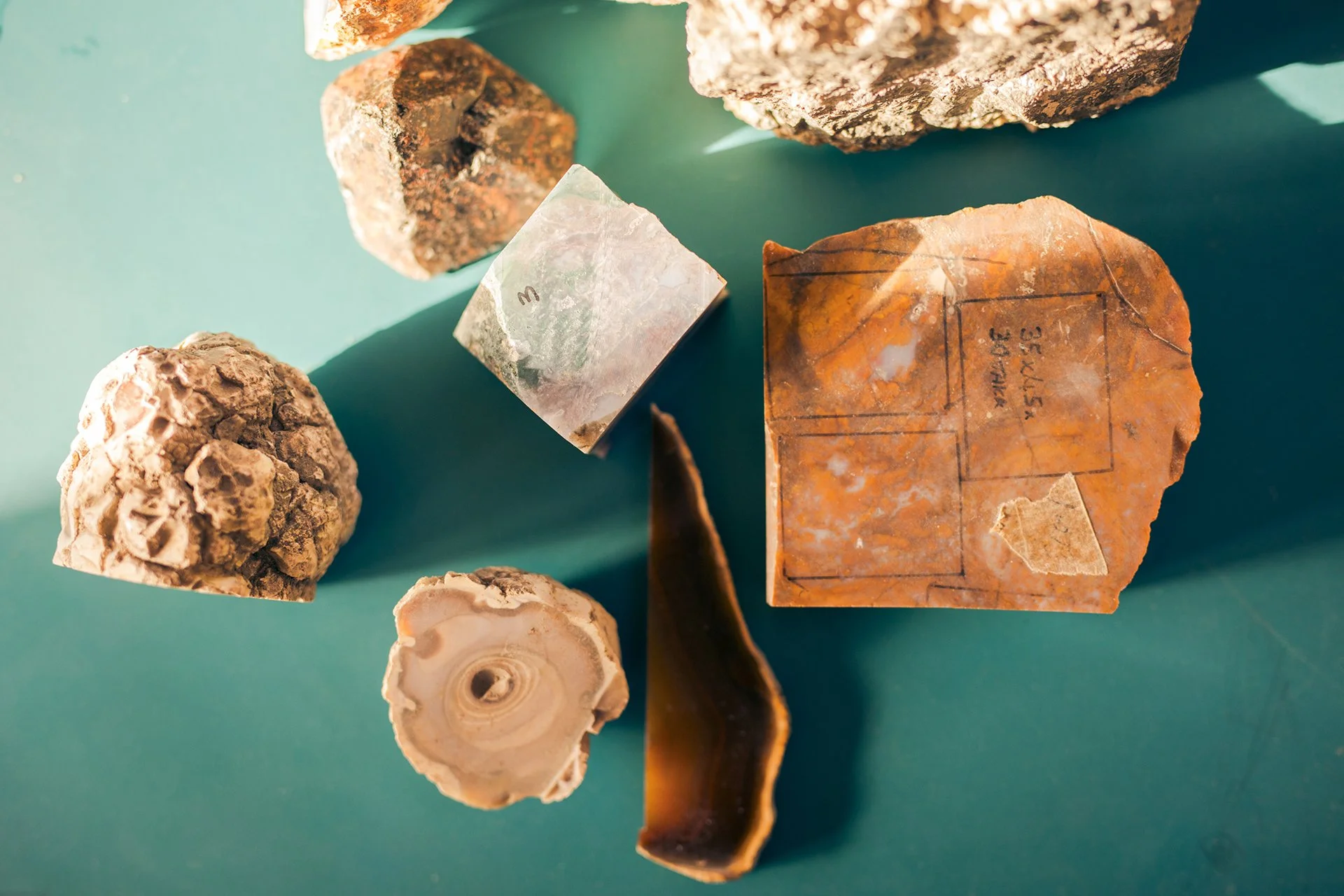
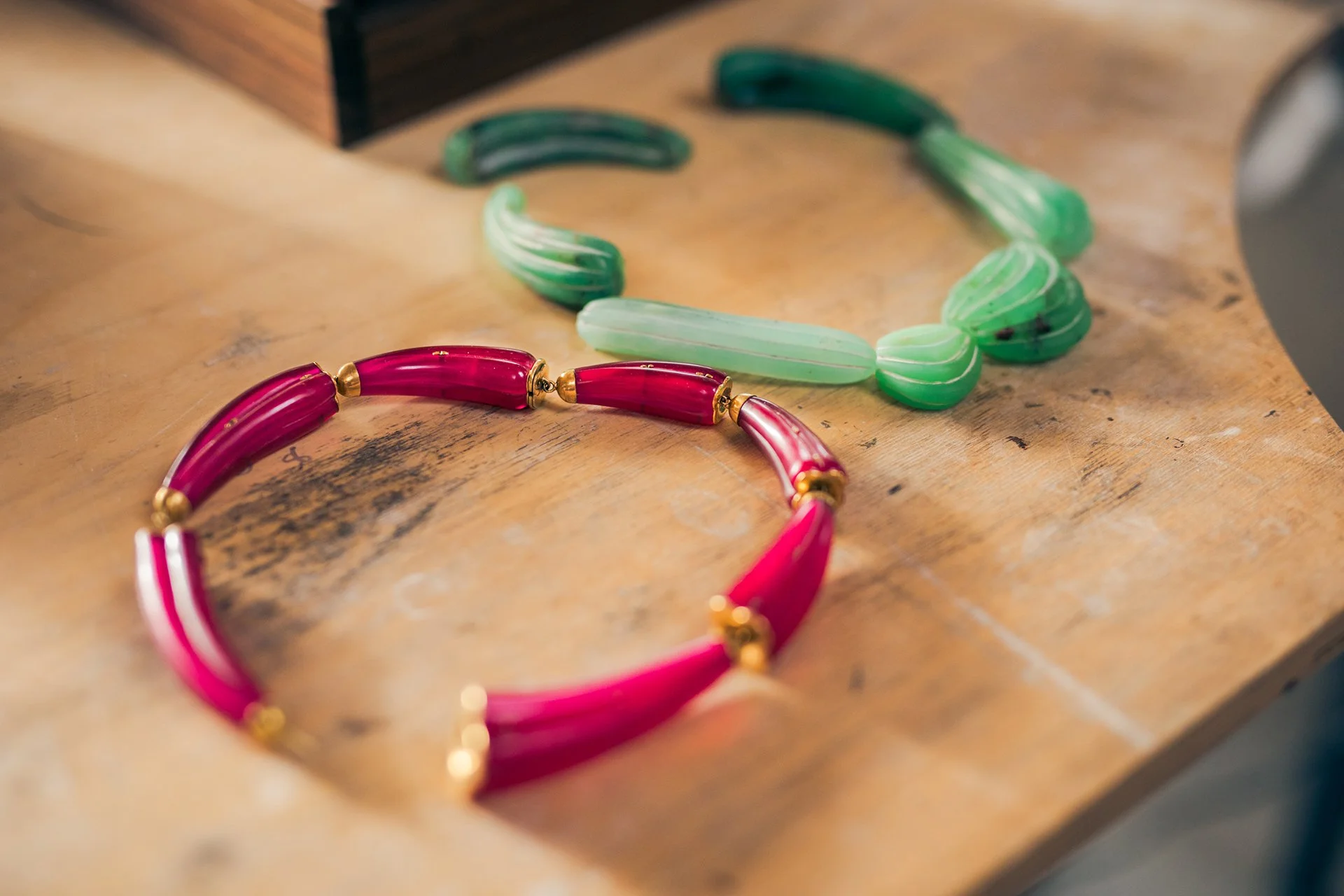
Then there are the materials with which she has developed a special relationship — opal, coral, pearl, lapis, aquamarine, tourmaline, chalcedony, cacholong, glass. But most significantly jade.
“I would love to have more white jade but it’s becoming harder to find and it’s very pricey. And its Russian and of course there is all the problems with Russia. And because China is rich, all the white jade is going there now. But I was really lucky to work in a pocket of time when it was more freely available.”
Her white jade carving is shown off at its best in her Flight necklace, in the collection of the Goldsmiths’ Company. She said of this piece in the catalogue that accompanied her 2016 retrospective exhibition at the Goldsmiths’ Company that it was a pleasure to make “as birds are an endless fascination of mine. Flight is also a comment on our times … I keep thinking of refugees ‘in flight’ longing for wings.” Today she adds: “I love making necklaces,” and in many ways this necklace encapsulate so much that is at the heart of her practice. Most importantly, its form.
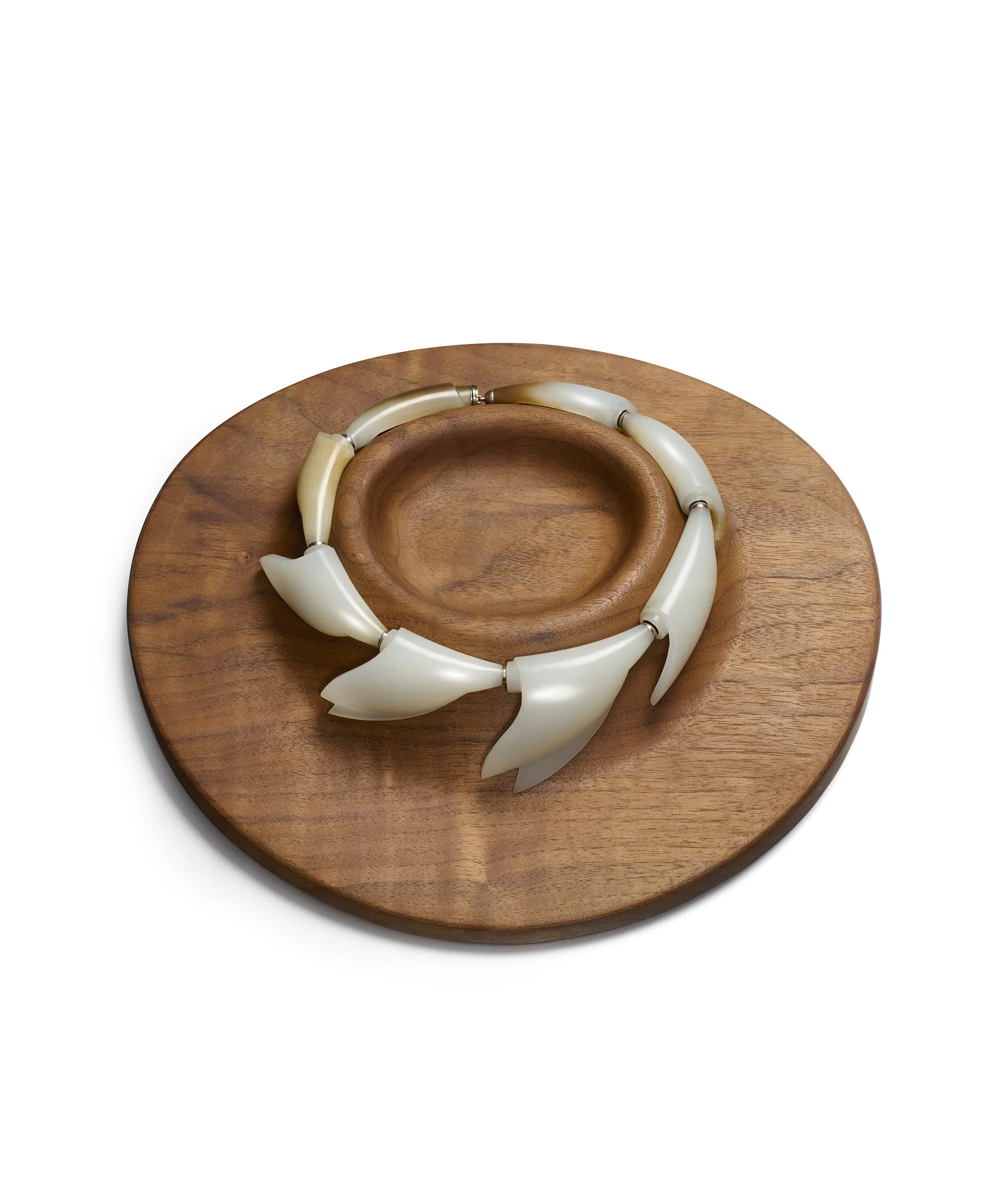
Flight, necklace, white nephrite jade and 18ct white gold; eight hand-carved jade pieces in the form of stylised birds' wings connected by gold joints and box clasp. Accompanied by bespoke wooden stand. The Goldsmiths’ Company Collection.
“Someone once commented about my work on Instagram saying ‘Form is everything to Charlotte’ and that is absolutely the case,” she says. “Also, I have got simpler and simpler over time.”
Reverential comments about fluidity and movement are not appreciated by a jeweller who is both technically exacting and down to earth, with a love of nature and people, and a healthy irreverence towards the status quo — she was once reprimanded after giving a lecture at an art school in the 1970s when she showed the class a beautifully carved little hash box she had made for her mother-in-law. “If I had called it a snuff box, nobody would have minded. The kids just giggled.”
Her technical skills have been honed over many decades and are rooted in a perfectionism but also her early training at Hornsey College of Art in the 1960s, where she studied under the pioneering jeweller Gerda Flöckinger, on a new experimental course. “She was an amazing teacher,” says De Syllas, “but she was tough, although she doesn’t like me saying that. She completely changed my vision from a sort of Victorian idea of jewellery to modern — which my father would have been very pleased about; he was a modernist architect.
“We just made and made and made and we experimented and we melted things. But there was also a technician who had worked in the trade, so they knew how to make things.”
She remembers when she went on to teach at the Royal College of Art, she asked Patrick White to write out a detailed description of how to make a proper box catch. “Because we had learnt how to solder so well, I could follow all the instructions. I didn’t have a lot of skills but we certainly could solder.”
She continued making her own catches until about ten years ago or so. Now she uses jeweller Steve Rider to make her findings, but also as a collaborator to create the masterfully engineered joints that connect the carved elements in her necklaces. While the silk kumihimo braid on which some of her carvings hang are made for her by goldsmith Catherine Martin.
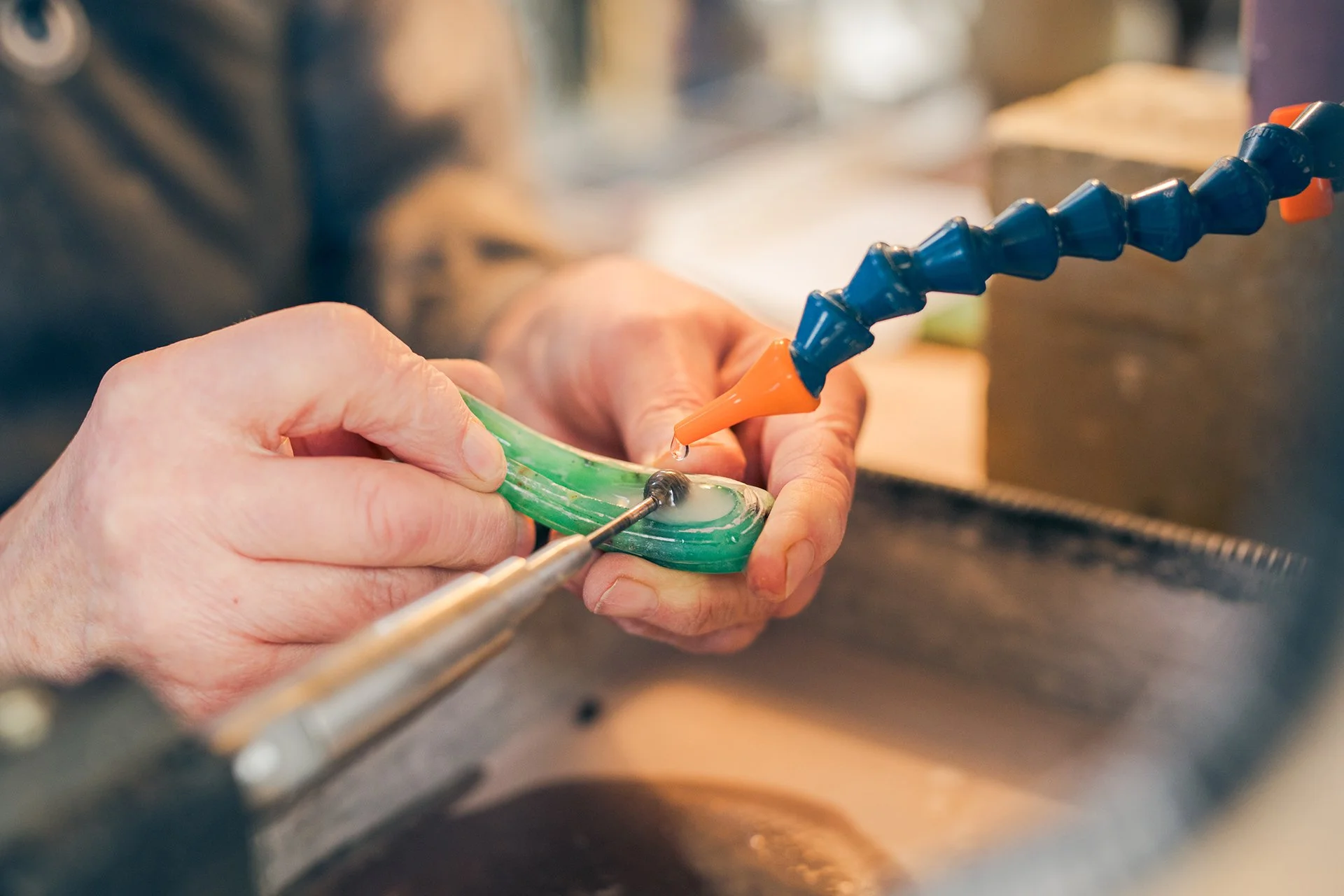
She is happy to delegate these elements of her work nowadays, “I am so busy with carving”. In her 80th year, De Syllas is as busy as she has ever been. She has just had a selling exhibition in Milan and is now putting together a selling exhibition in Denmark, rare events for her.
One aspect of this she finds hard is knowing how to price her work. “I’m the worst at pricing anything,” she says. “What I do is I get people who are jewellers and good friends like Yeena Yoon and Lin Cheung in to help me.”
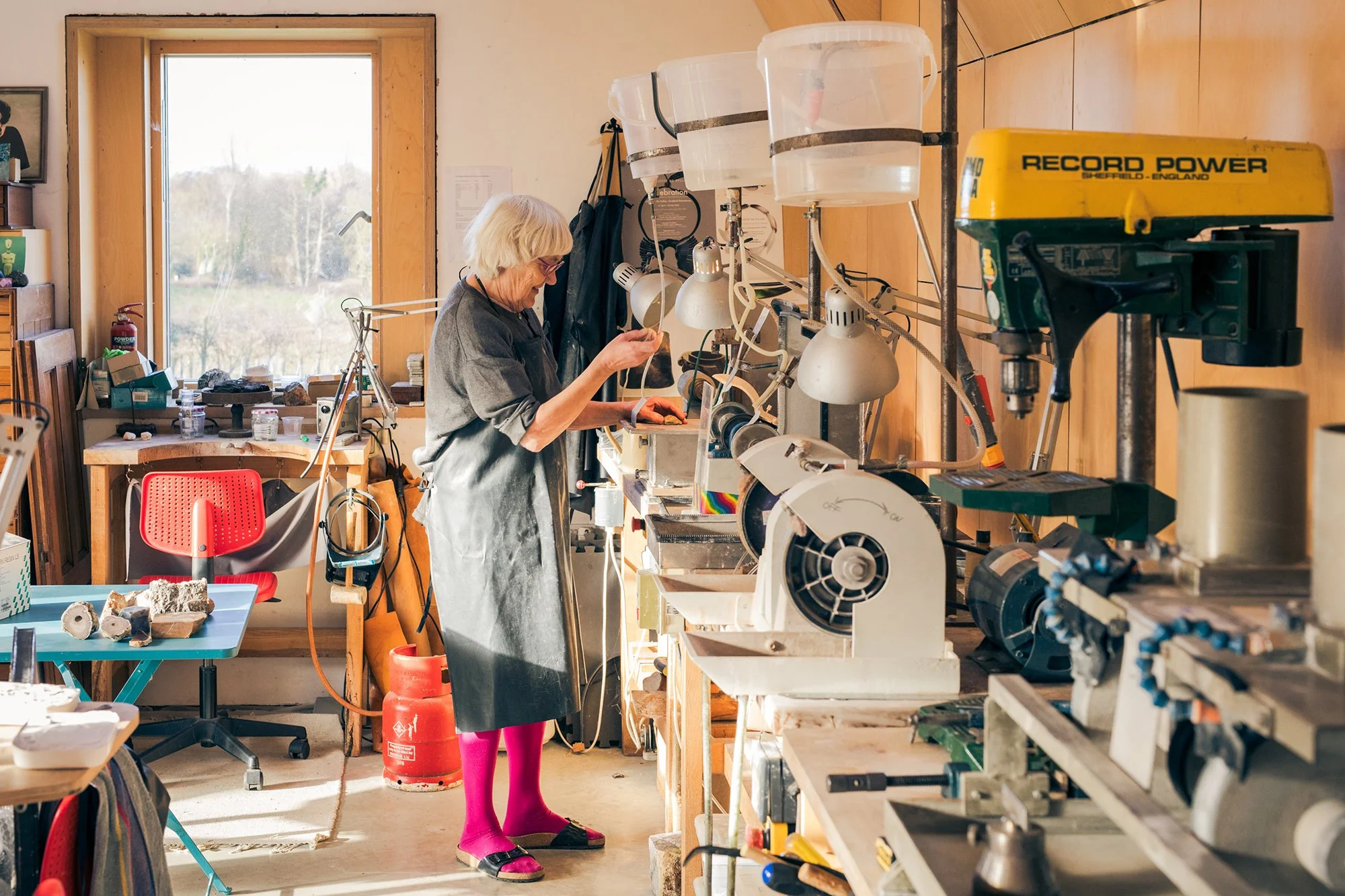
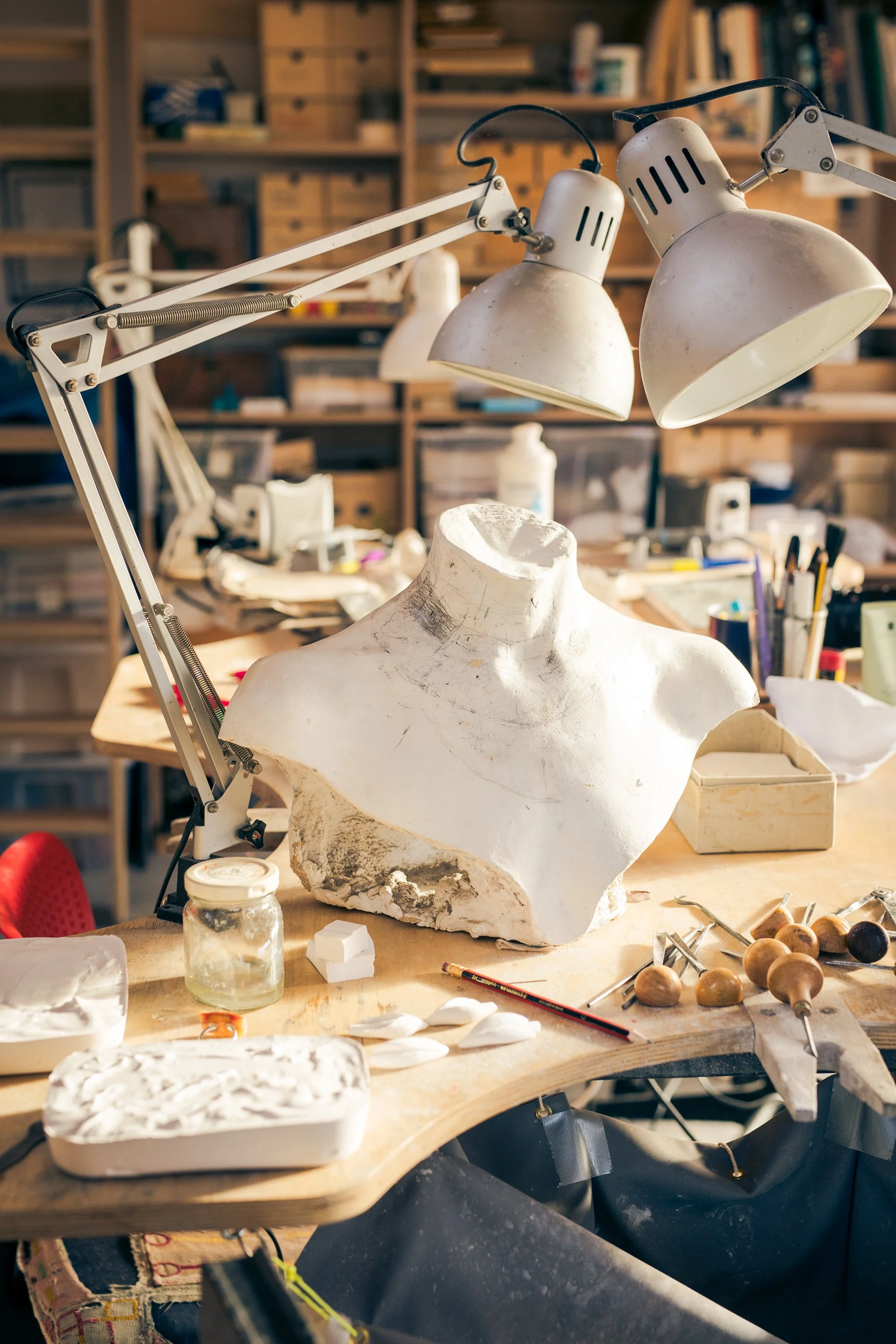
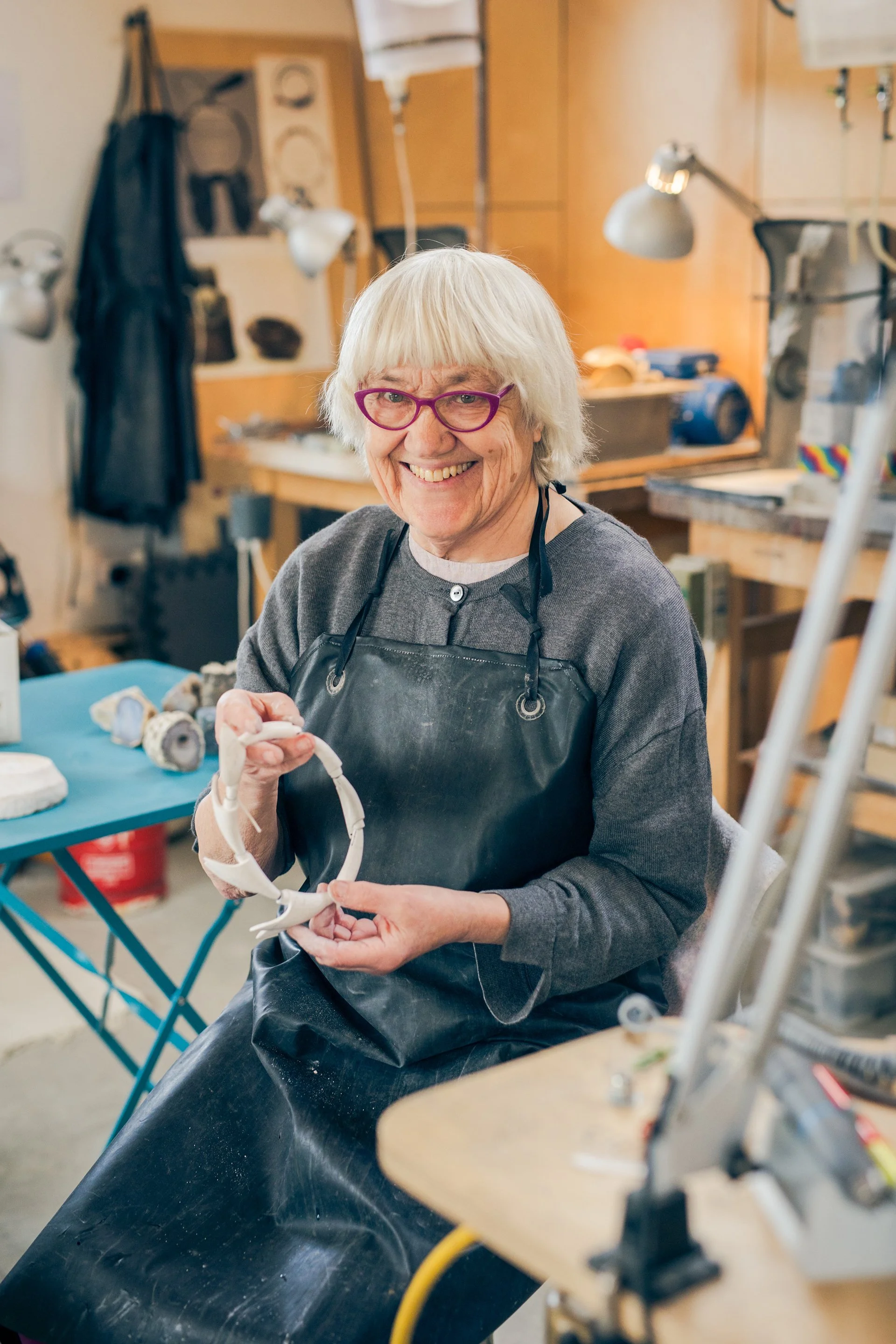
She is also organising the short courses in stone carving she teaches every year from her workshop in Norfolk — a large, light-filled space that is attached to the modern wood and glass house in the countryside, built by her late husband, the architect Jasper Vaughan.
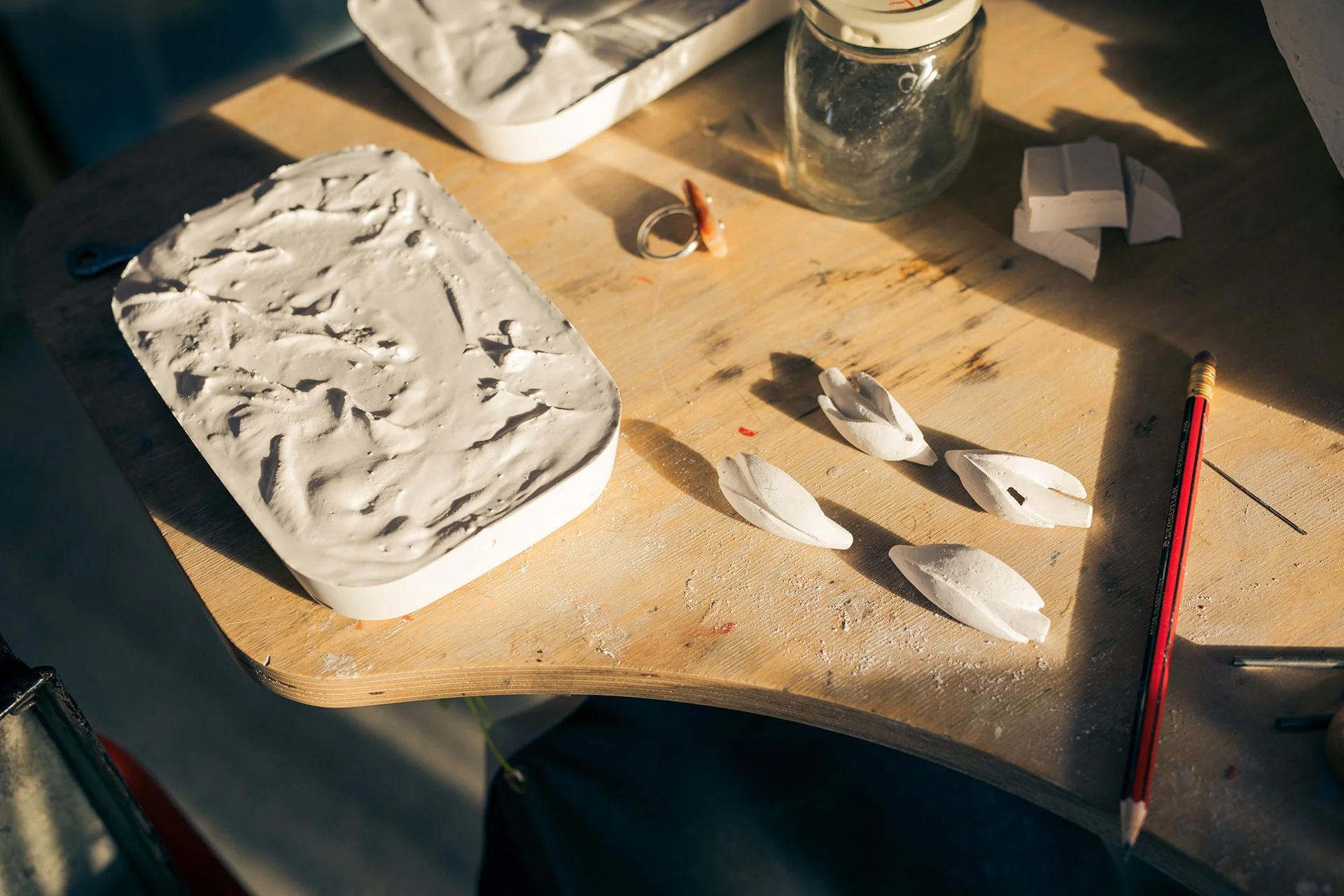
Here she has her horde of rough stones that she has accumulated over the years from gemstone fairs and dealers. Here also are the elaborate maquettes she creates, all part of the painstaking process that can take years. She likes to take her time, making and remaking until she is happy with the result. She points to a chrysoprase necklace that she started years ago “and everybody is begging me to finish it”. Her advice to those embarking on stone carving: “Never judge a piece of carving halfway through because you are always going to think it’s awful.”
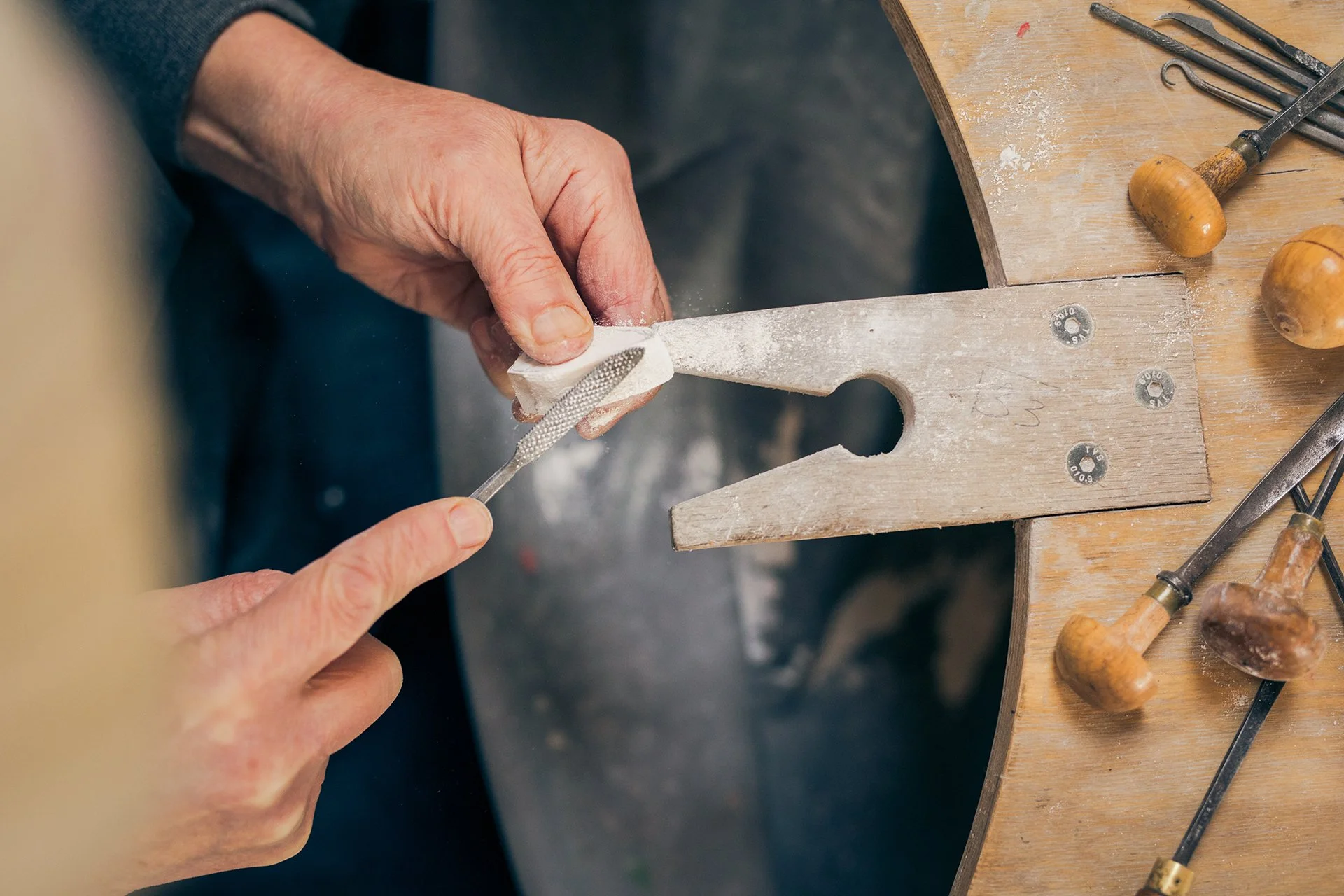
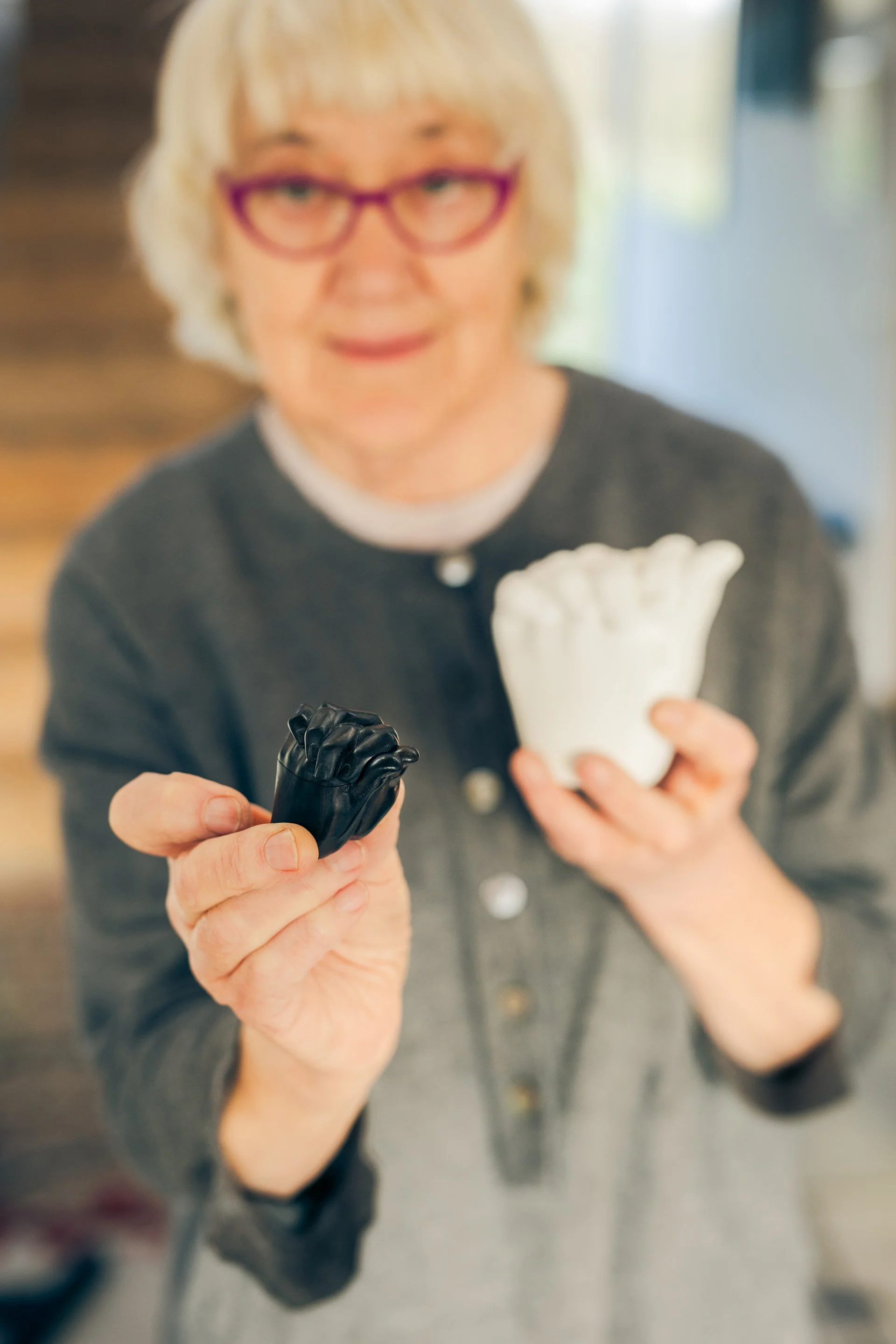
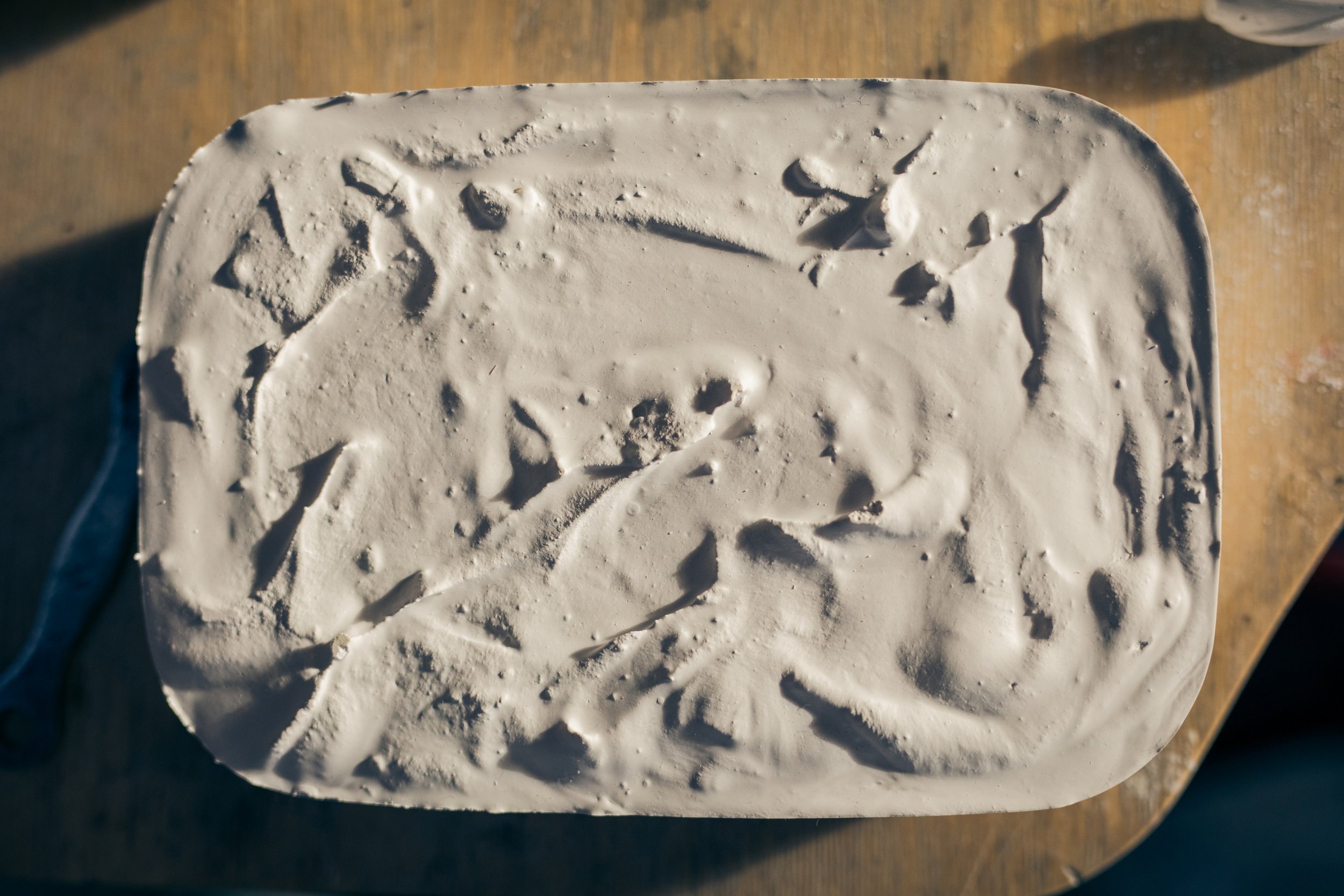
She shows me the plaster maquette for her Flight necklace. “Plaster is such a good thing to carve but I have had to stop using it because my lungs don’t like it,” she says. The maquette incorporates the cleverly engineered ball and socket joints that Rider invented for her. “Steve is so good, he is one of those unusual goldsmiths that actually likes working out something new.”
She credits Flöckinger with introducing her to stone cutting. “It was Gerda who taught me. She always did her own cabochons. I thought I was going to be an enameller because I love colour, but I discovered gemstones instead.”
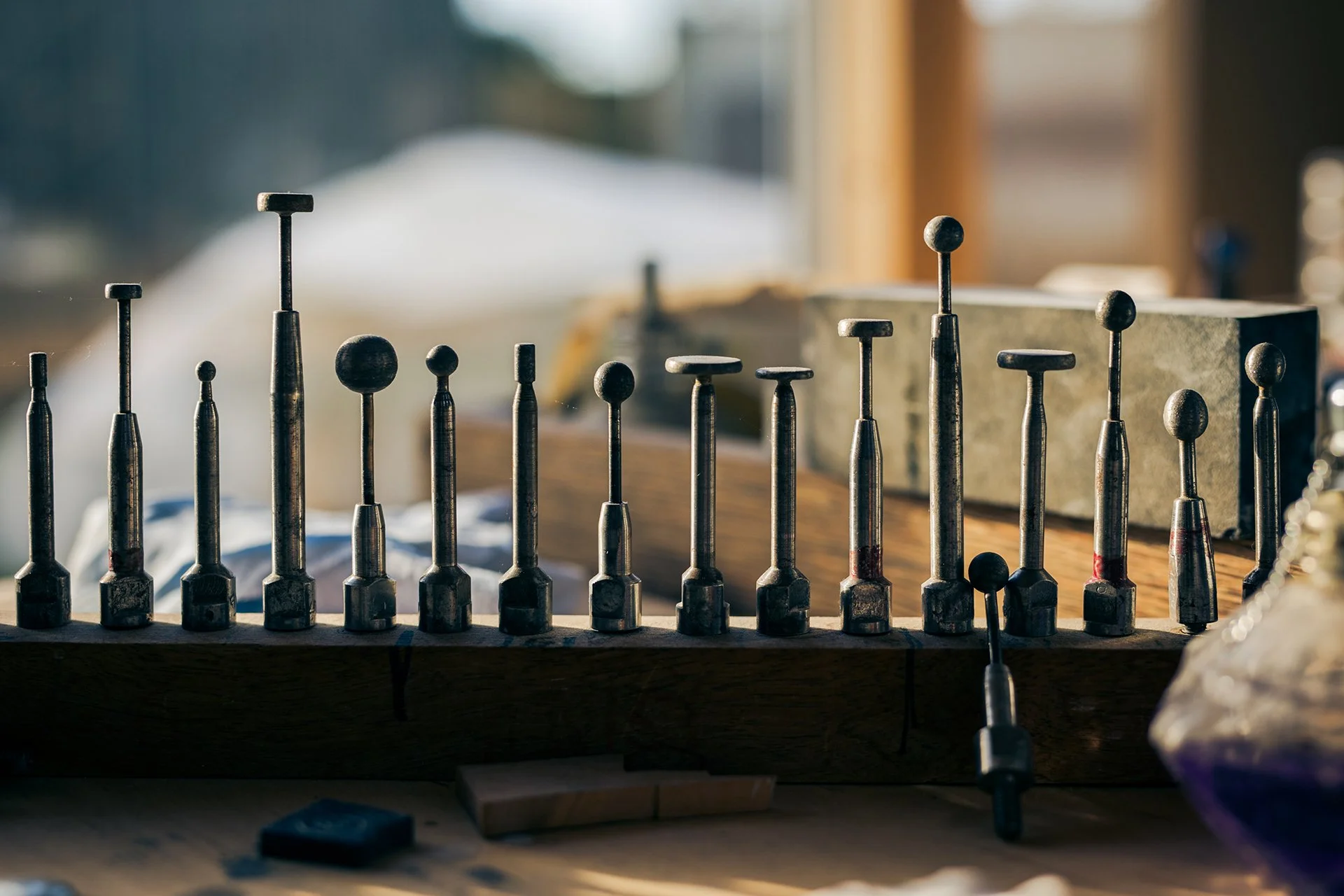
Stone carving was something that De Syllas taught herself. “I was very lucky,” she says. “Gerda had an engineer who used to visit her and he brought in diamond files and burrs because dentists were just starting to use those, so it’s all a matter of being there at the right time. He made me a grinding wheel that was horizontal, which was a bit disastrous. But it didn’t matter although it did get a bit wobbly. The wheels were silicon carbide for a long time. Later on, diamond-faced wheels came in, although I continued using silicon carbide for jade as the diamond wheels flaw jade.”
Her curiosity and confidence to develop technical skills and to explore different materials have allowed De Syllas to be ambitious and innovative in her designs. She took a year out to study glassmaking at Wolverhampton University on a Queen Elizabeth Scholarship Trust grant. “It was lovely, making hollow glass beads. But it was as much work as doing them in stone and of course you can’t sell glass beads for that much.”
She also pursued gunmakers James Purdey & Sons to show her how they inlay Damascus steel. “So I turned up to this wonderful old workshop, I was only about in my early twenties. I saw all these men burnishing barrels by hand. They taught me how to blue steel and then the engraver invited me home and taught me how to undercut for inlaying gold into steel. And they gave me all this Damascus steel.”
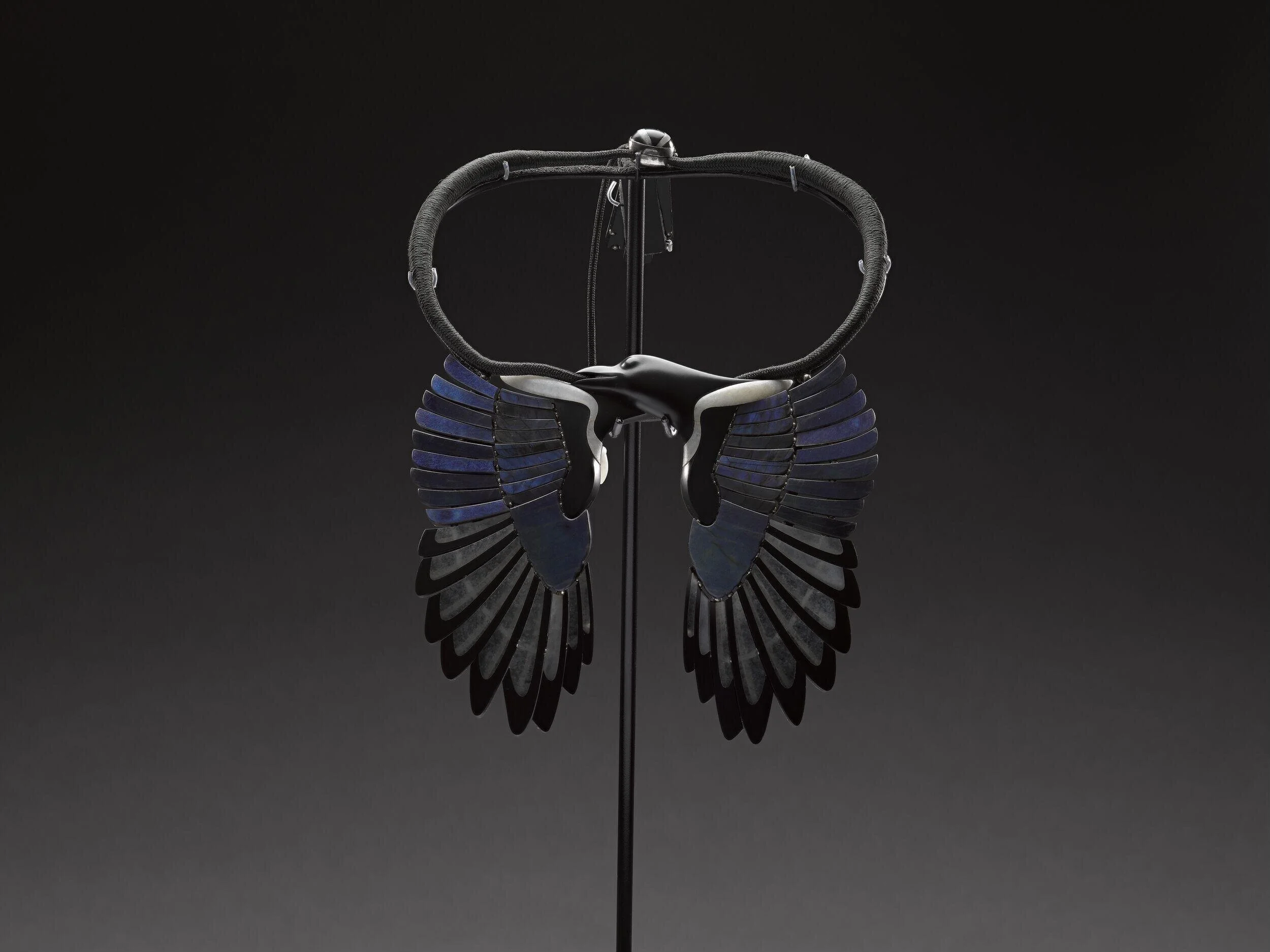
Her work is in collections at Goldsmiths’ Company (which bought her entire student graduation work) and the Victoria & Albert Museum. One of the items of jewellery in the V&A’s collection is her iconic masterpiece, the Magpie necklace, which was bequeathed to the museum by Gulderen Tekvar, a jewellery collector and De Syllas’s main client for many years. There is a photograph on the wall of her workshop of Tekvar wearing the necklace.
It is made of black nephrite jade, which De Syllas says “will cut paper thin, does not chip or craze and can carve as fine as one likes”. The shimmers of blue on the plumage come from a thin layer of labradorite.
“When I first met Gulderen she was wearing black, white and blue and it’s sort of a cliché really but I thought of crows and magpies. The colours and shapes are very strong. But when she first saw the piece she got quite upset because of the saying ‘One for sorrow’. Then I explained there was another bird on the back of the piece —‘Two for joy’. She loved it and wore it quite a bit before it went to the museum.”
Given a moment to think about her work and what aspect of it is most important to her, De Syllas says: “Shape is everything.”
Written by Caroline Palmer | Photography of Charlotte and her Studio by Paul Read