
Joy BC – Blood, Sweat and Tears
“I wanted to learn how to practice active listening, and the earrings are a reminder that we have to fully suspend our inner dialogue to properly listen to others.” For Goldsmiths’ Stories, writer Sophie Morris speaks to goldsmith Joy Bonfield-Colombara about her artistic inspiration, celebrating ancient stories and the creative power of tears.
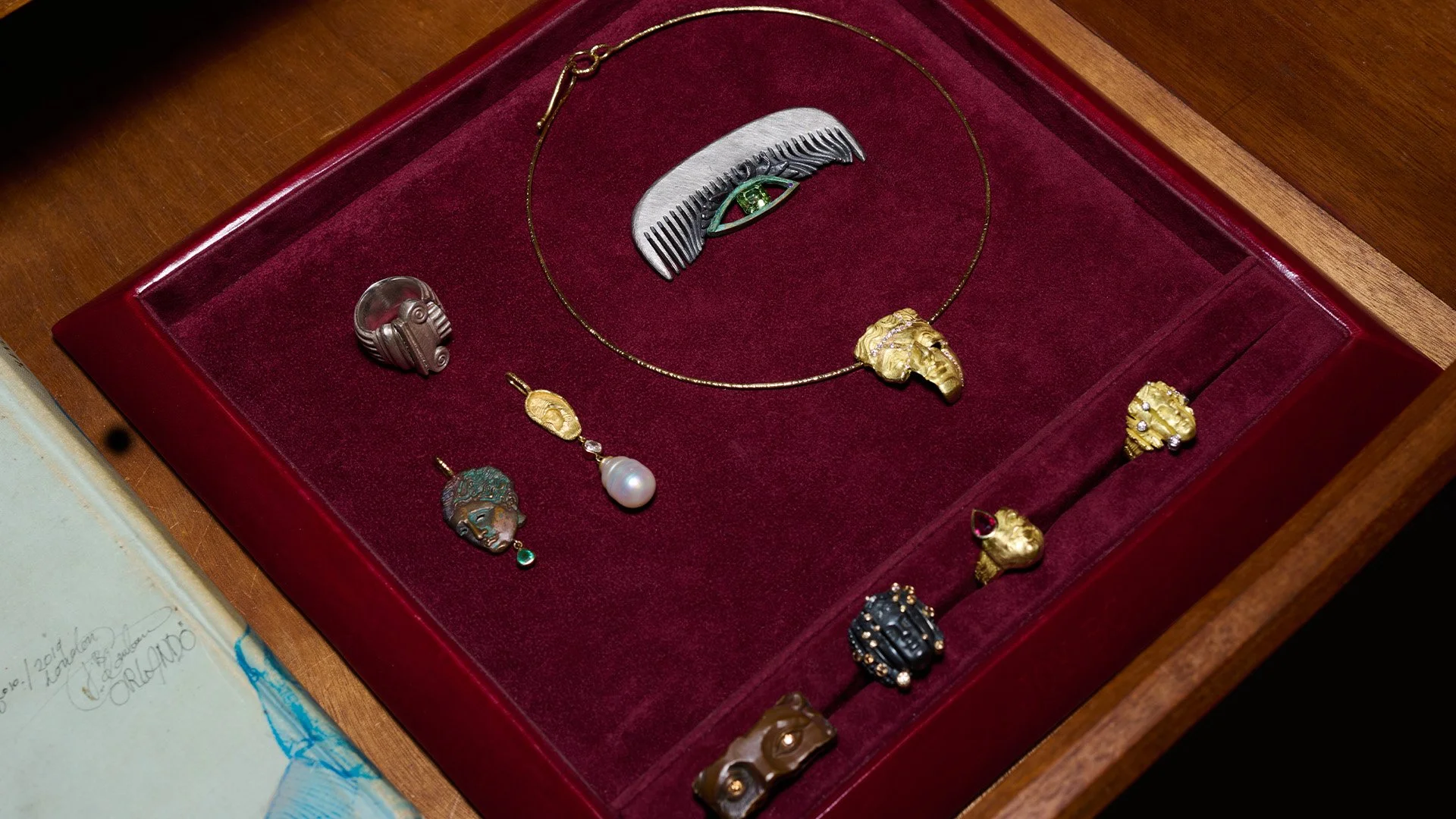
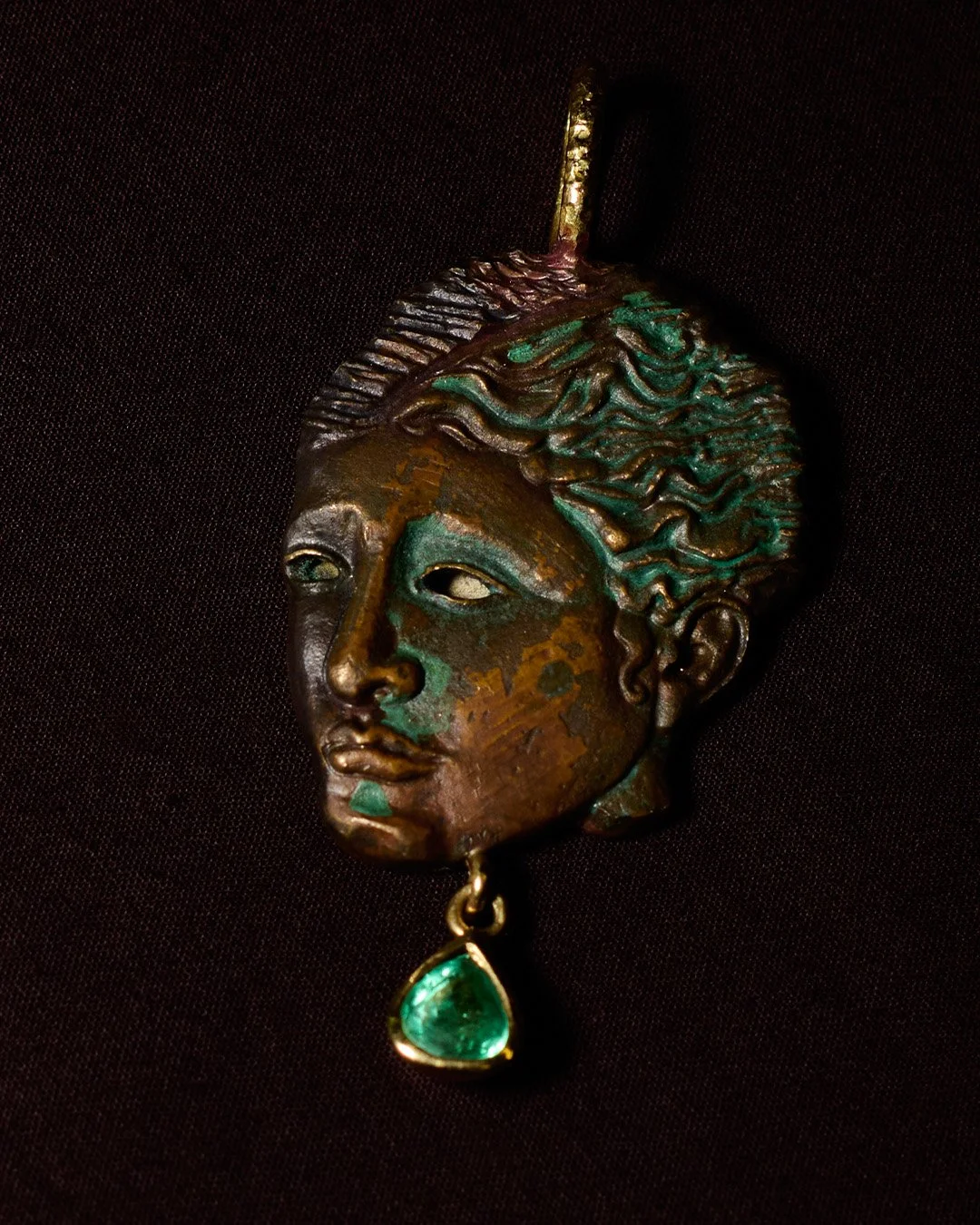
Joy Bonfield-Colombara is a storyteller and an old soul. Her jewellery is talismanic, commemorative, celebratory, contemplative and emotional. In faces, eyes and ears, Joy finds the affinities that exist between ancient stories and contemporary life. As an artist goldsmith, she combines the textures and colours of noble metals and gemstones in often surprising ways and practices globe-spanning traditional techniques, from hand-carving for lost-wax casting to Verdigris patina and urushi lacquer. Joy's miniature sculptures animate gemstones: hazel-coloured diamonds look like they could blink when set as the eyes to a brown Gaze ring, penetrating emeralds stare out from a brooch, the bronze cheek stained by a single tear. In a pair of Listening Aid earrings, a baroque pearl is suspended from a carved miniature ear, a series inspired by her reflections on how to become a better listener. “I wanted to learn how to practice active listening, and the earrings are a reminder that we have to fully suspend our inner dialogue to properly listen to others.” I listen to Joy in her studio where she is currently in residence at Sarabande Foundation in East London. She tells me about her creative process, what she has learnt from her parents and the most painful year of her life.
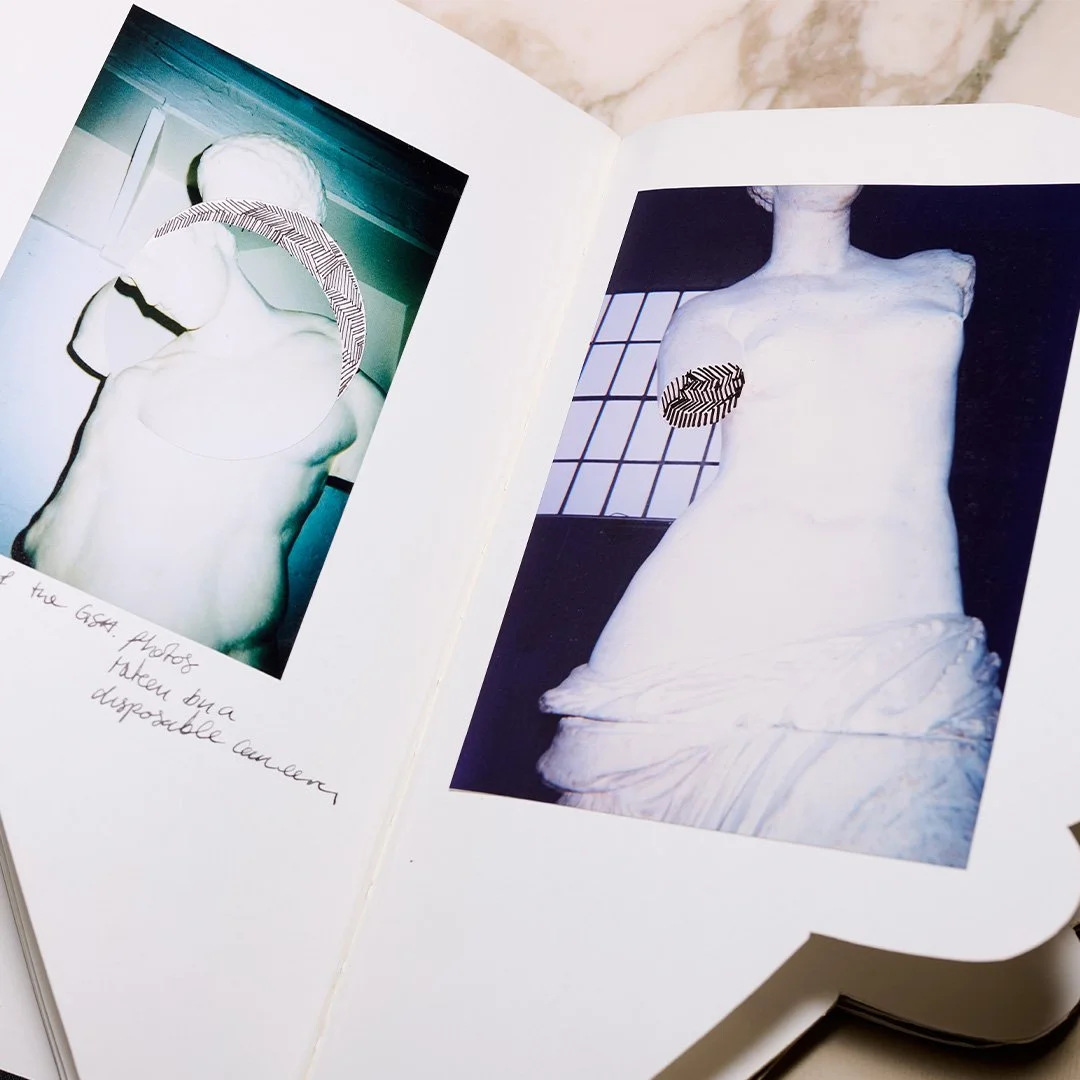
Mythical women – Medusa, Hypatia, Artemis, Flora, Aphrodite and Ariadne – are central to Joy’s work. She questions the way women are lauded for their beauty or reviled for their cruelty in classical stories without adequate acknowledgement of what made them cruel. Joy is committed to settling the score, creating new complex portraits by blending goldsmithing techniques with likenesses drawn from sources that travel East to West. In her Deconstructed Classic series, she takes the perfect proportions of idealised Western beauty as a vehicle to question her own fascination with classical sculpture and a canon of Renaissance sculptors like Bernini (with whom she has a love-hate relationship on account of his violence towards women). Time collapses in the faces of her protagonists, at once ancient and alive, features drawn from Greek and African mythology, Egyptian carving, Renaissance sculpture, eighteenth-century miniatures, friends and strangers.
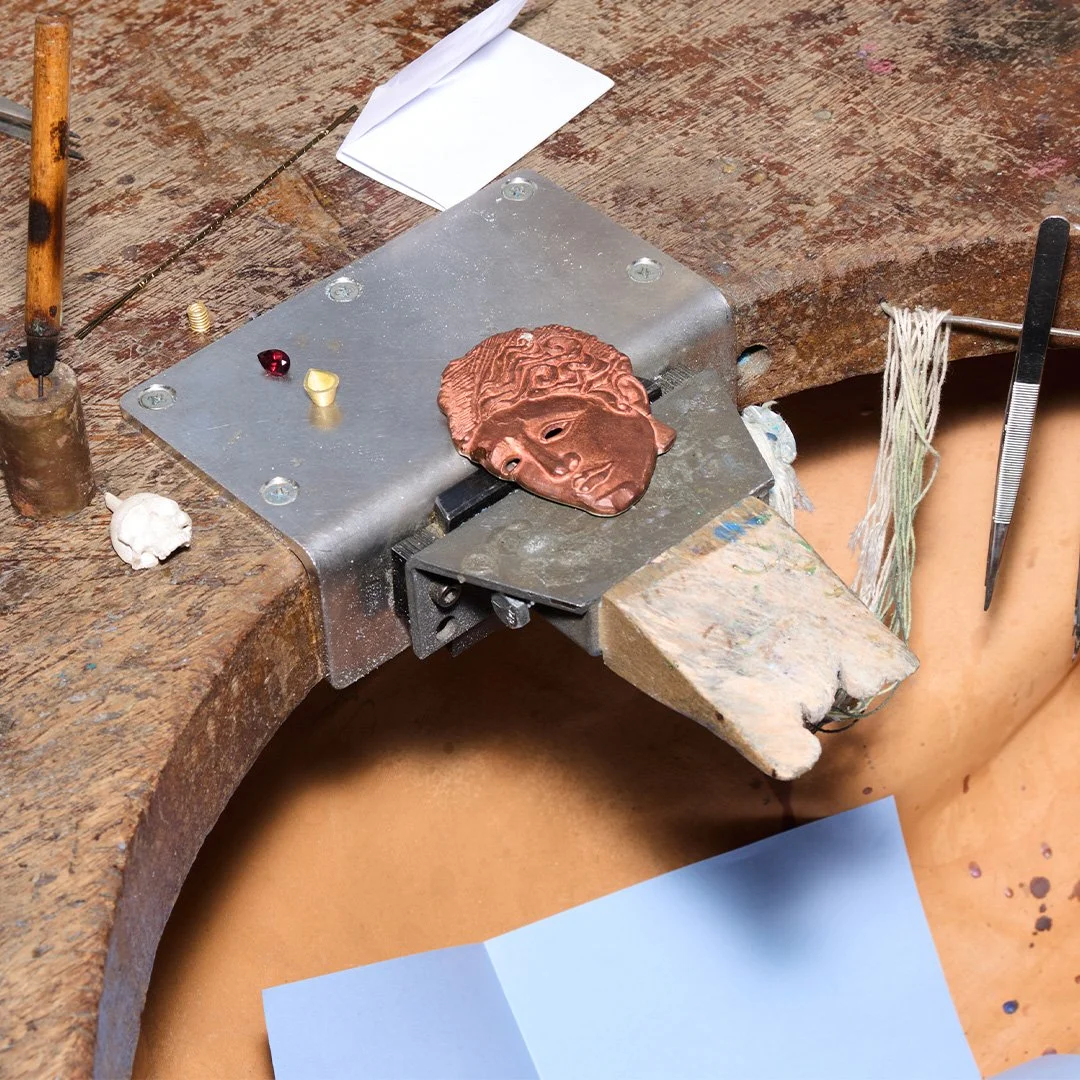

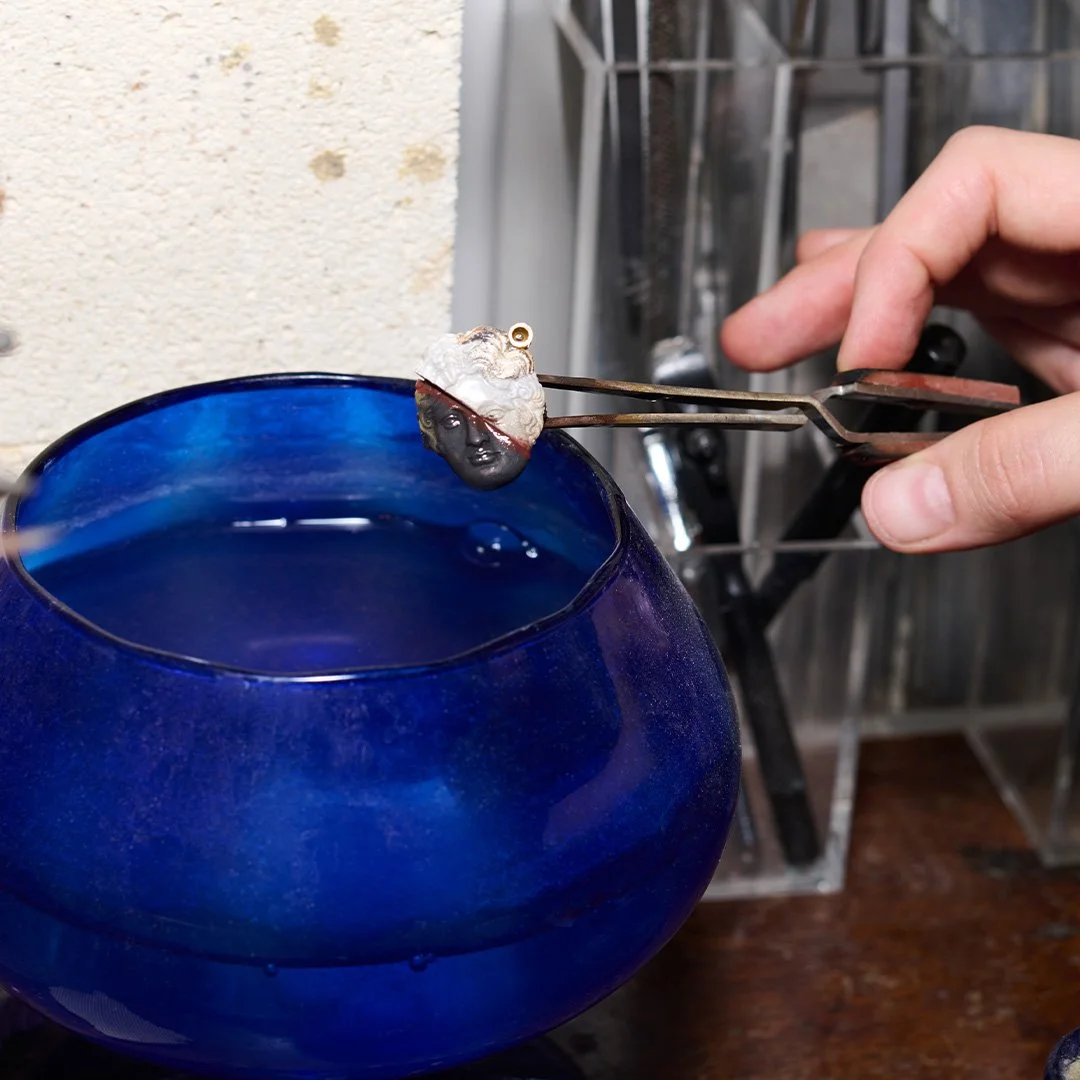
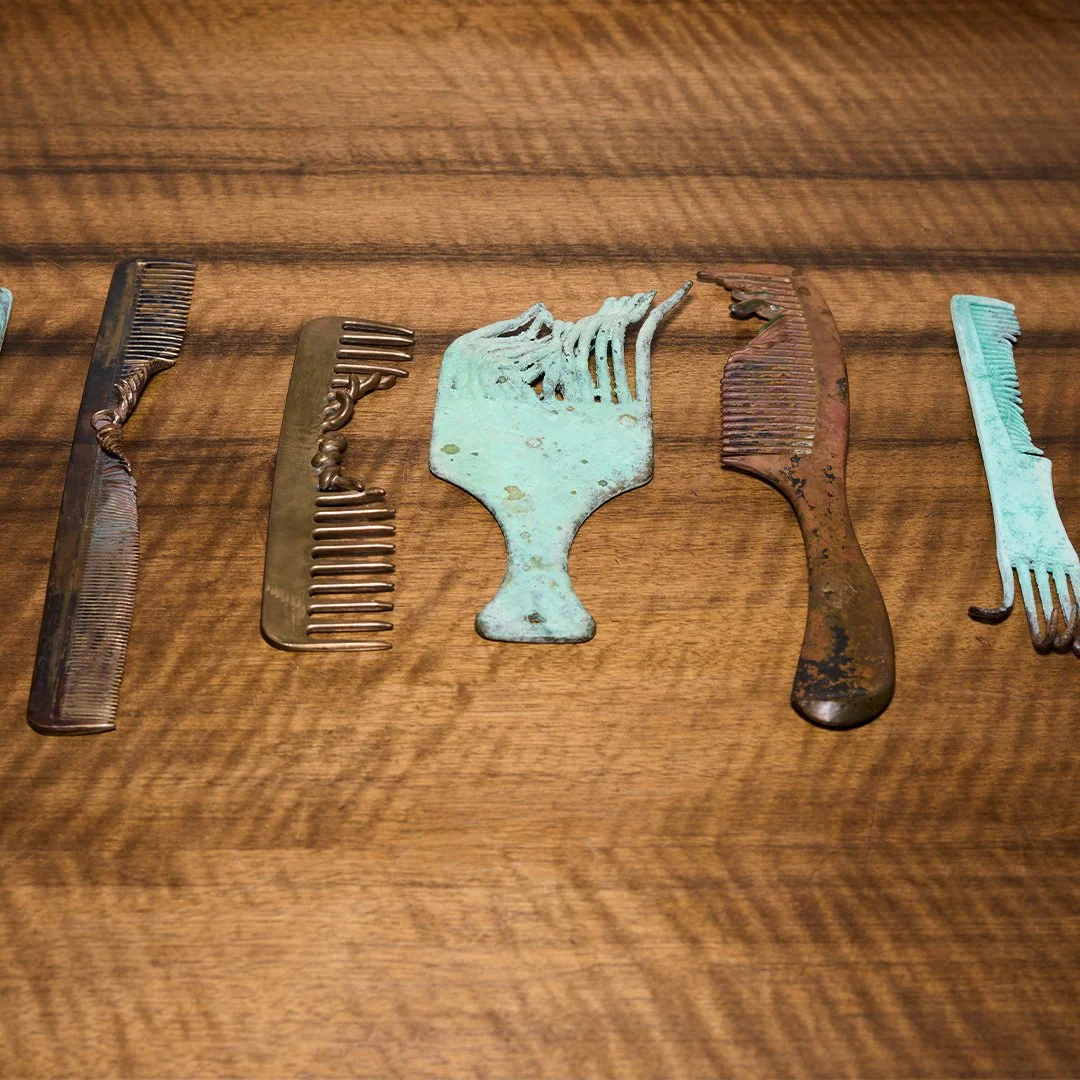
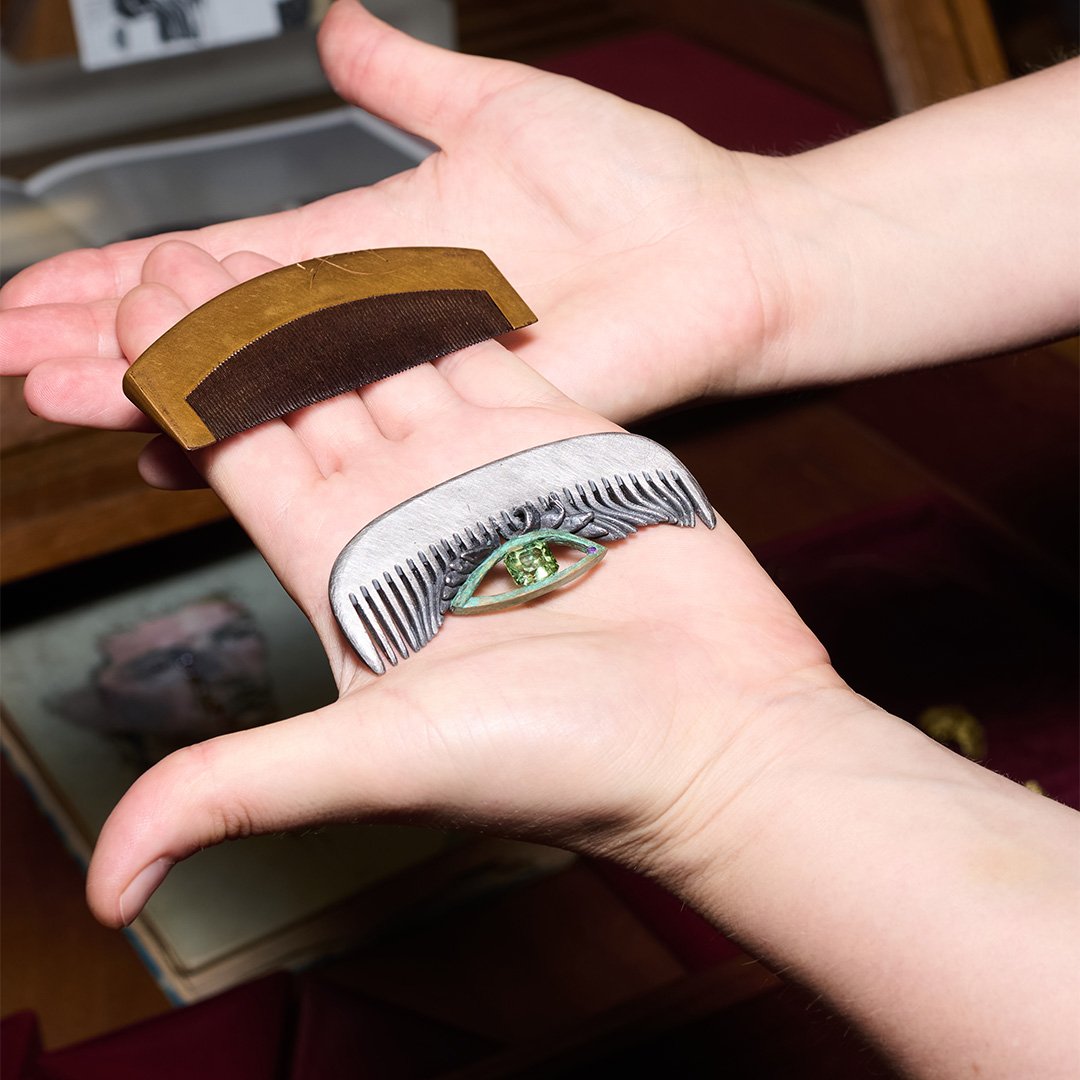
She has walked hand in hand with Medusa, for some years now. She made a series of combs inspired by the mythical gorgon as an RCA student and three new Medusa brooches will appear in her first UK solo exhibition this September. Whilst history remembers the her as a villain, scratching the surface anyone can see Medusa had a lot to be angry about: “it is a story of powerful woman wronged and a story of transformation” Joy tells me. Where canonical male artists like Cellini and Caravaggio dwell on the bloody moment Perseus decapitates her, in Joy’s Medusa pieces the comb becomes an embodiment of the woman, its teeth turning into tendrils that sway like living sea coral. They draw empathy, sensitive to Medusa's origin as a victim of assault, a woman scorned. “The earliest surviving combs date to around 4000 BC,” she tells me. “They are one of the first objects we developed to groom and change our appearances.” The wide range of comb forms in the series reflects the voracious research behind Joy's jewellery.
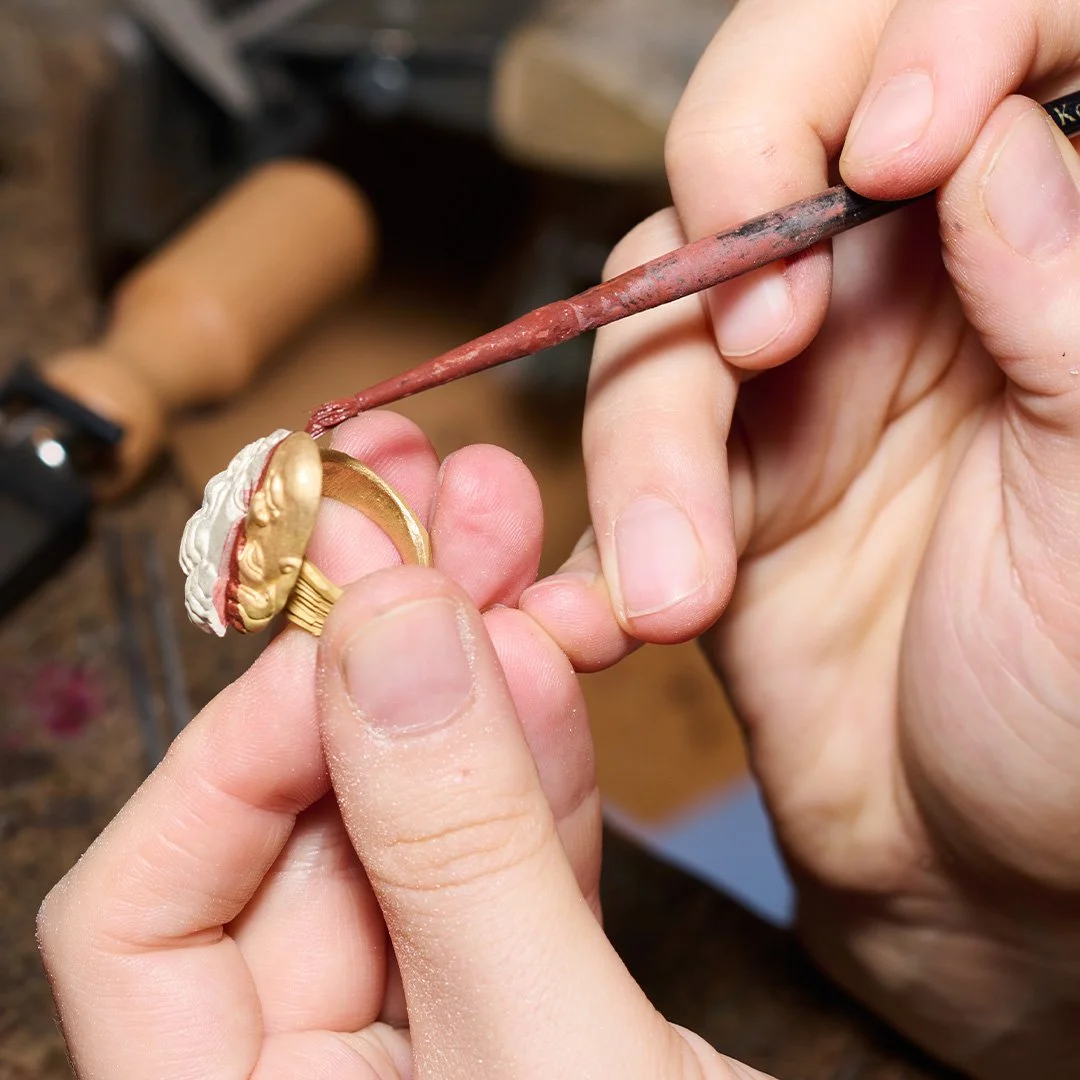
Researching, looking at sculptures and oral histories all play a role in Joy’s creative process. “I am looking for the details that make me feel alive. I draw portraits on buses, press flowers, investigate the proportions of a painted face, or follow the lines of an object to find the essence of what makes that specific shape beautiful.” Then she gets to work carving, casting, soldering, working on the patina and the final finessing of matte and burnished details to represent the way shadows and light hits the surface.
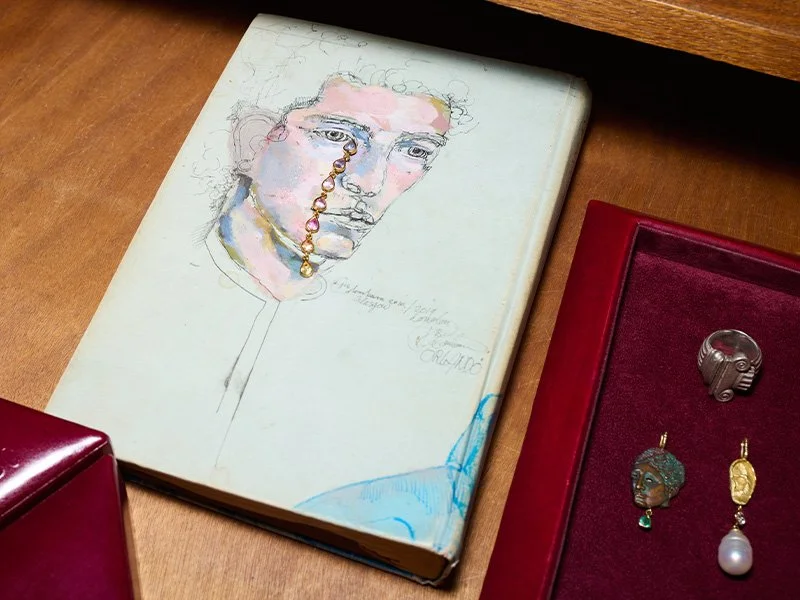
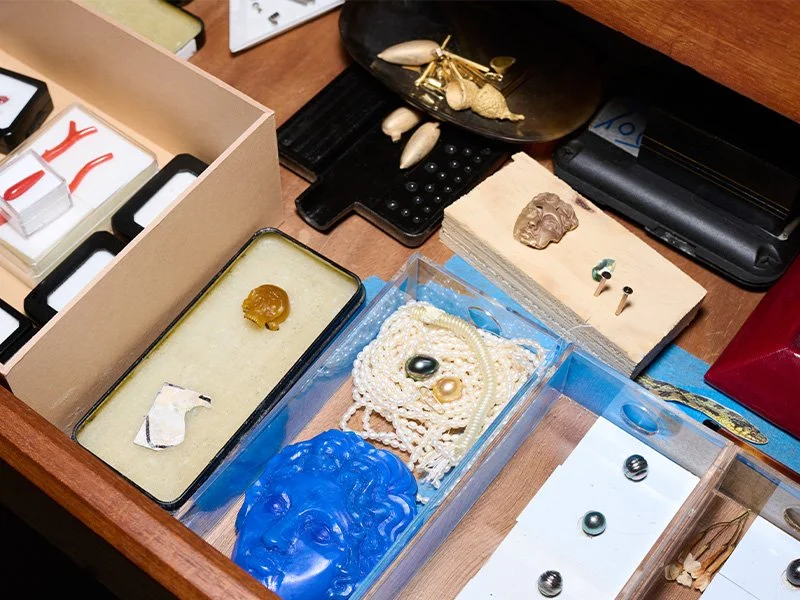
Apprenticeships, art school and studying with technical masters are the core pillars of Joy's training, palpable in the details of her pieces. She has drawn portraits since she was a teenager, studied at Glasgow School of Art and the Royal College of Art, and did years of time at the bench working for other jewellers. “Art school is such an important space for experimentation,” she tells me, “Because it's a place where you don't have to reduce work to either jewellery or sculpture, you're allowed to play within these categories.” Detail-oriented skills are learnt, almost by osmosis, in a master-apprentice relationship. She has held two residencies in Japan: one under master craftsmen specialising in Damascus steel and metal casting in Tokyo, and a research fellowship in Kyoto, where she was taught urushi lacquer by Sensei Kuramoto and Sensei Sasai. In 2022 she received Queen Elizabeth Scholarship Trust (QEST) funding to spend a year in Padua with goldsmith-alchemist Giovanni Corvaja, learning to draw gold wire as fine as a human hair. We talk about the influence of the Padua school and a shared love of artist Giampaolo Babetto. In 2010, as a budding goldsmith, she stumbled across a book about Babetto in the Glasgow library and credits this moment with her discovery of studio jewellery: “I realised that an artist could make a piece from start to finish.” Fifteen years later, a friend gave her the same book as a gift; the date stamp revealed she was the last person to check it out of the library. Joy attracts that kind of serendipity. What’s more, one of her ancestors was a goldsmith in Padua, and Joy was conceived in the house where they had lived.
Working with her hands is in Joy’s blood. Her mother is an artist, and on her father’s side the family were stone masons on the Isle of Purbeck since the 13th century, until he bucked the trend by becoming a sculptor. Watching her father using a tooth chisel became part of Joy's expressive language and has left a physical trace in her pieces today. She began drawing with the same little, iterative lines you see in sculptures during the ‘hewing-out’ stage of direct carving, lines that make her drawings feel three-dimensional. This evolved into her signature hewn texture that appears on the hollow backs of pendants and the surfaces of rings and earrings, adding definition and movement to faces and ears.
She describes her experience of seeing stone turned to flesh in Michelangelo's Pietà Rondanini in Milan, unfinished at his death and covered with carving lines and marks. “I love seeing the traces of the artist's hand, so with my work I reverse the sculptor's process by putting the lines back into the finished piece.” Art historians might try to treat the ‘artist's intention’ with critical distance, but Joy wholly believes in its power. “Something magical happens in the hand when art is made that is unique to human creativity, where the narrative and the craft of the execution combine to bring materials to life. Intention is a form of magic.”
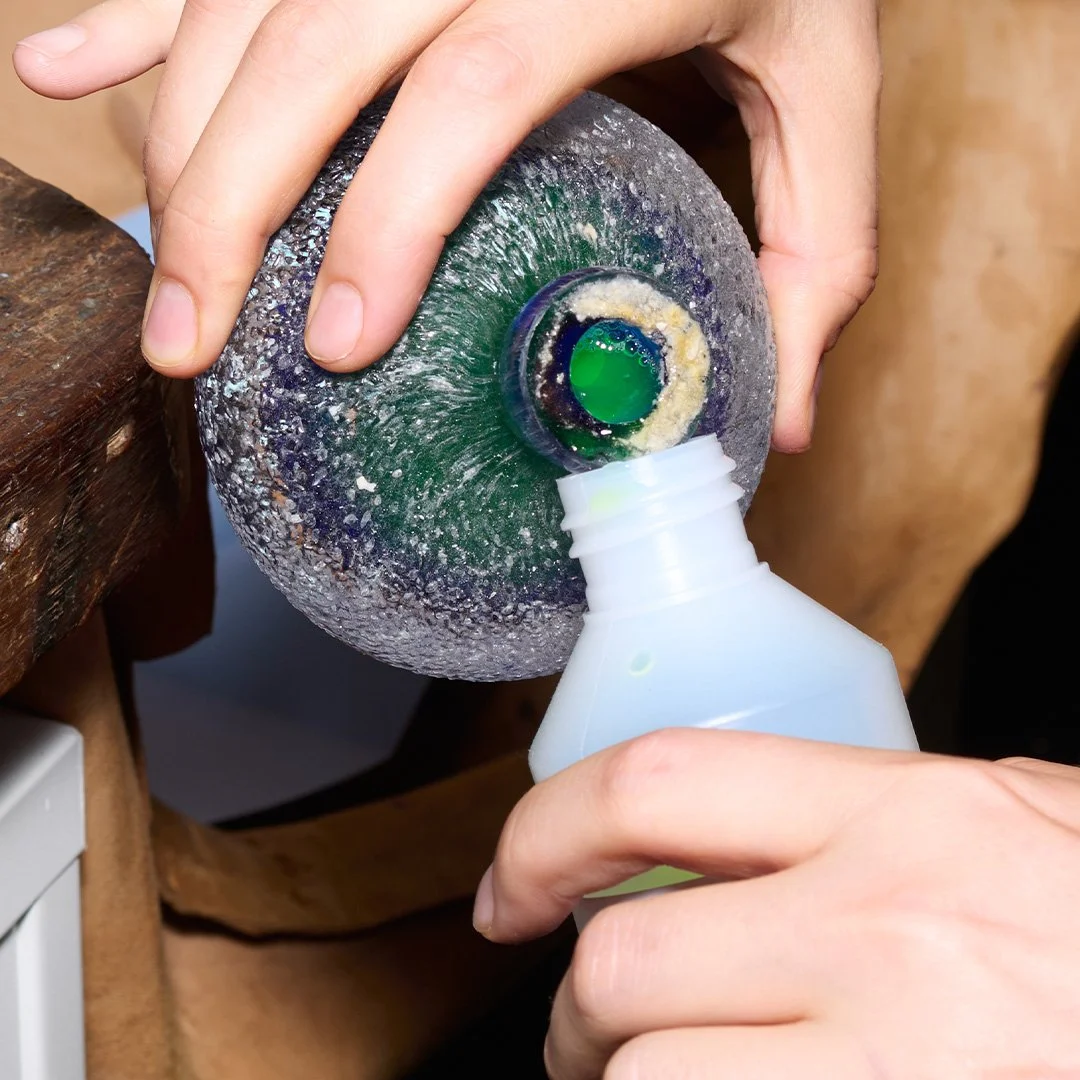
Her work is described by her London gallery, Elisabetta Cipriani, as a “love letter to materiality”. She makes jewellery with noble metals that can be eternally recycled: bronze, gold, steel, platinum and silver. “I don't plate metals with other metals” she explains, “Why make bronze look like gold when it is bronze?” She often oxidises silver and uses patinas because she thinks the way metal transforms over time is beautiful, and it reminds her of the way the body changes, contracts and expands. Yet, her finishes are appropriate to the wear a piece will face; a ring needs to be more hard-wearing than a pendant. She learnt a hot application patina technique in Japan to create durable brown finishes.
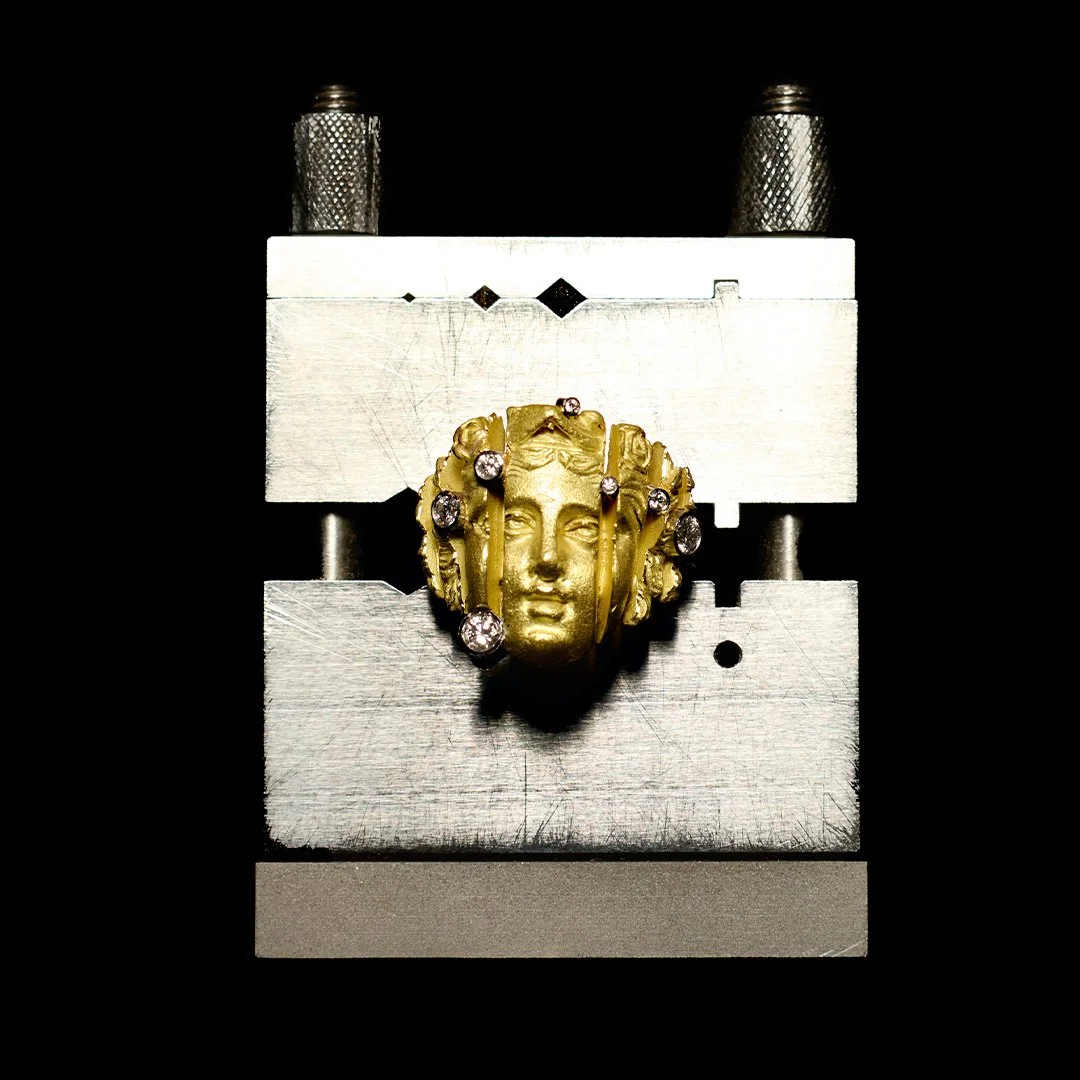
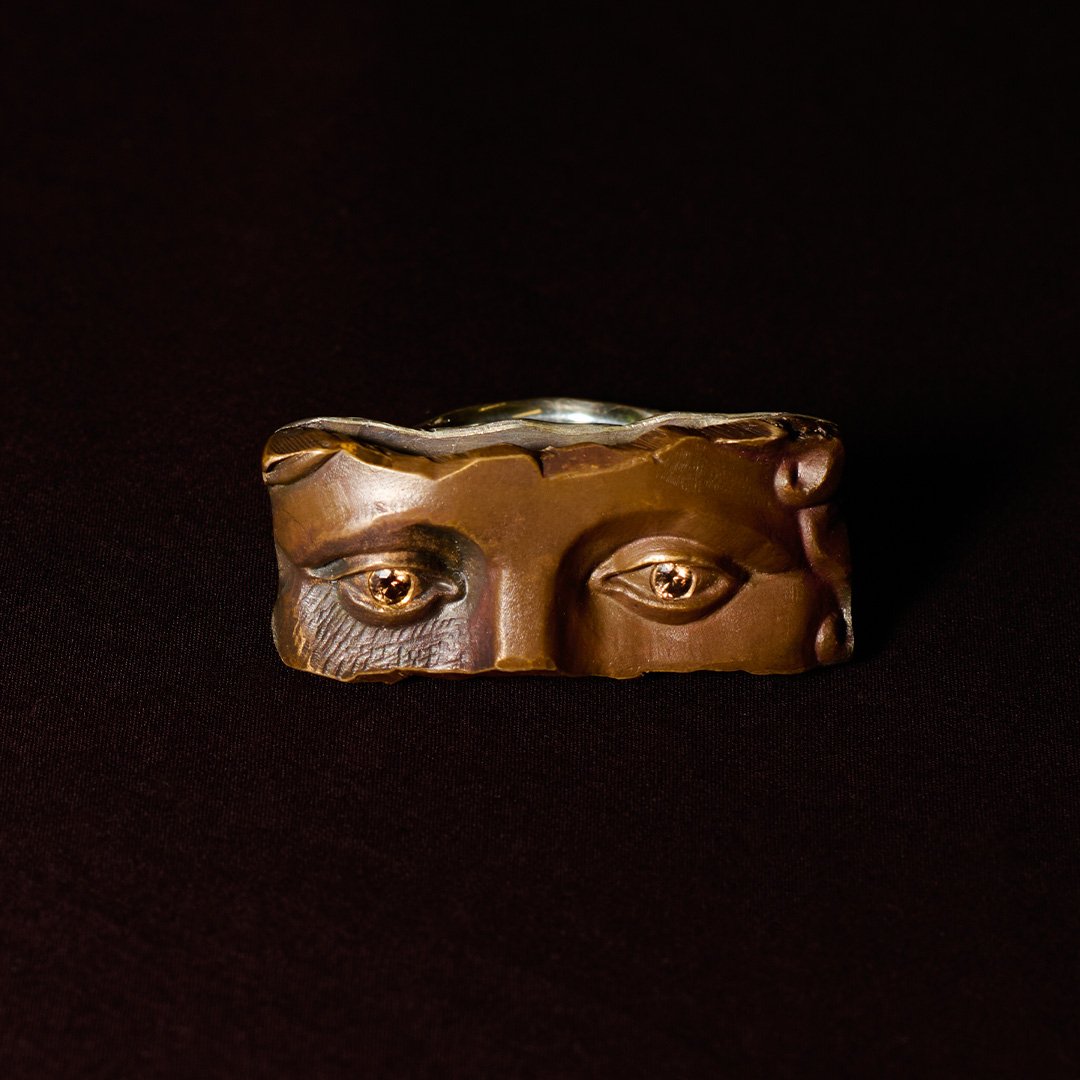
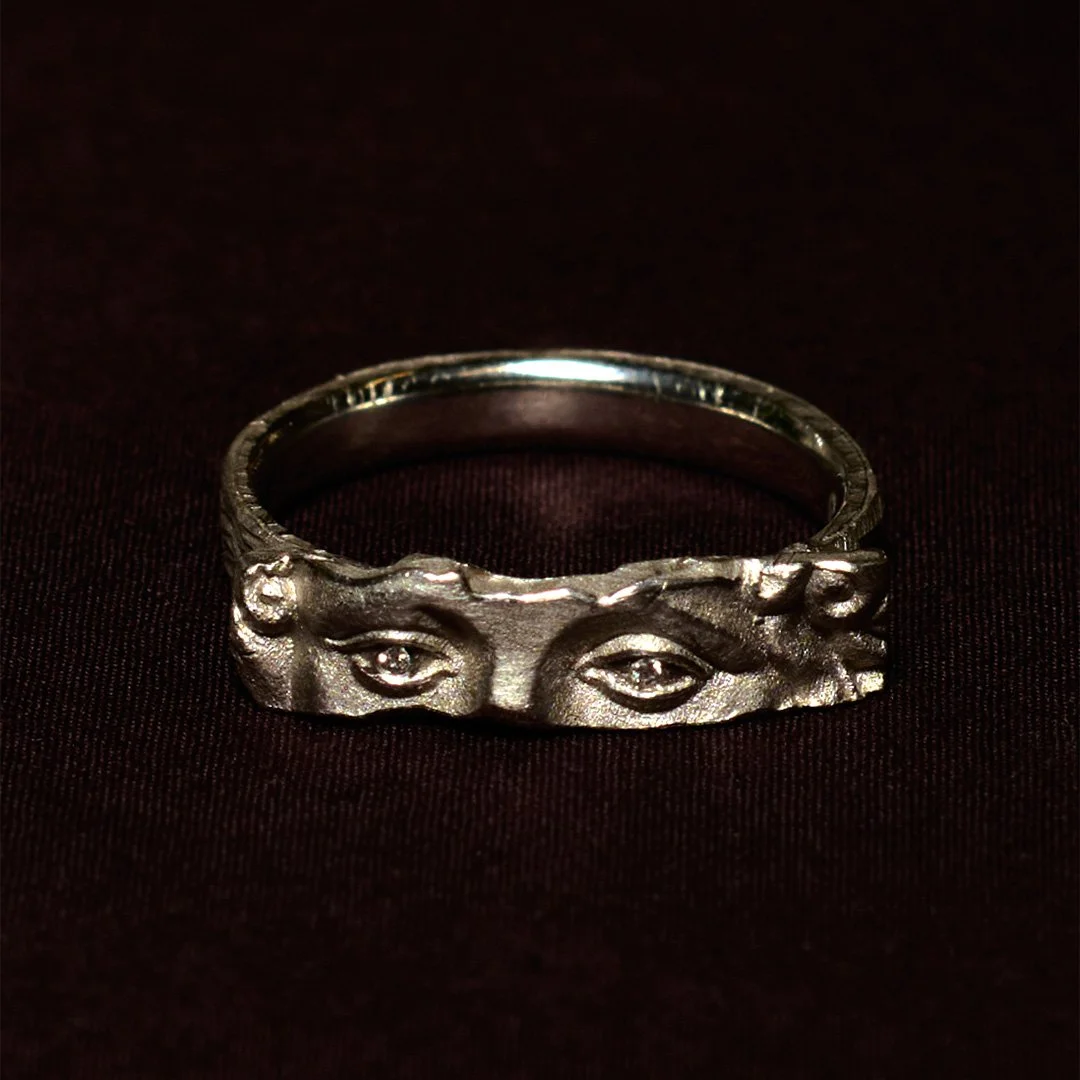
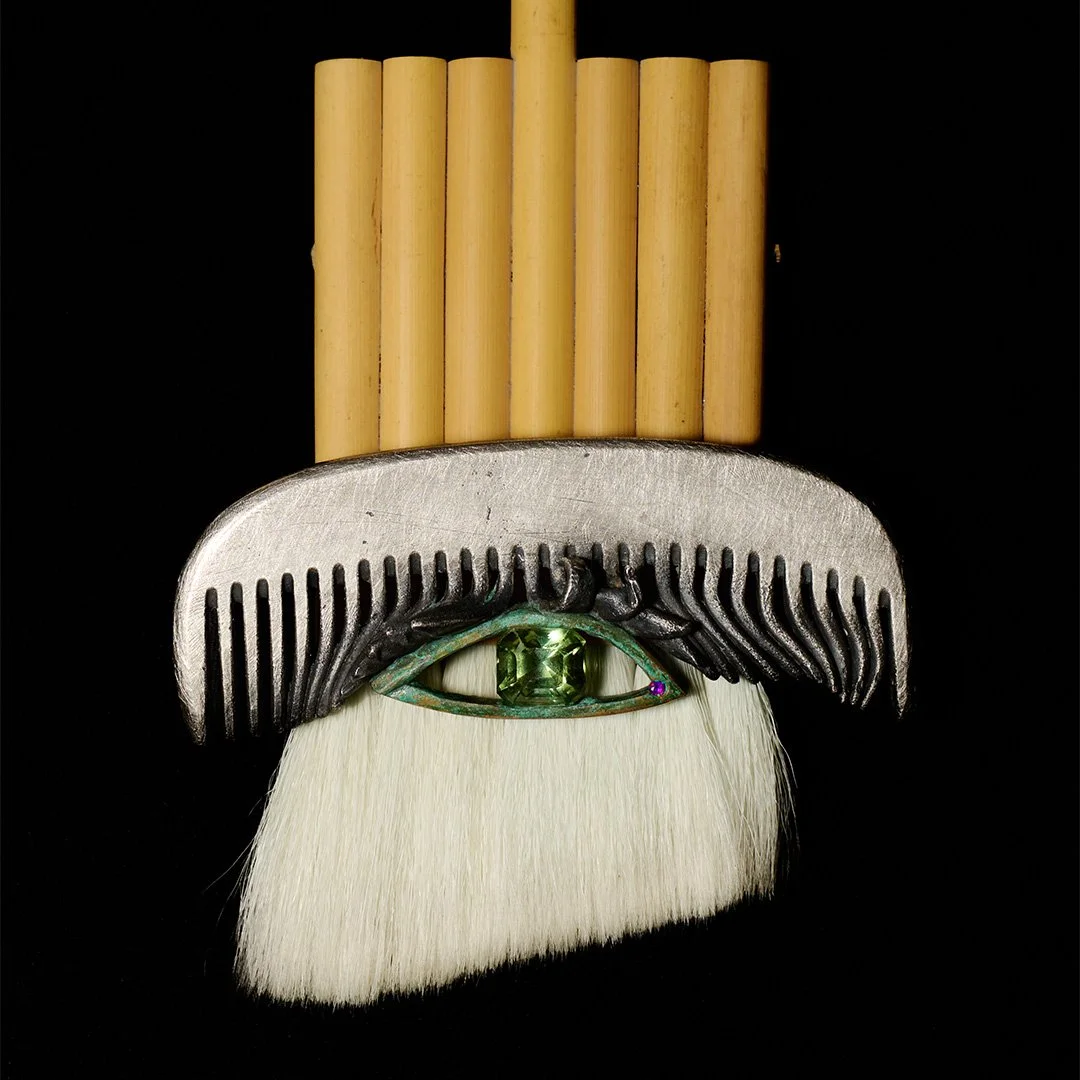
The way Joy uses colour is thoughtful: finding a stone the same lilac-blue as a client's eyes, pairing warm gold with a pomegranate-coloured garnet, or a string of teardrop sapphires graduating from violet-blue to pale fuchsia to bruised peach to water-logged yellow. Look closely at the Gaze ring and you will find subtle purplish variations in the brown surface, a shadow falling across one side of the face. Her studio is littered with expansive and quieter blues: lapis blue glass bottles, dusky sky walls, blue tape holding image references to the back of the door like a portal into her world. She writes correspondence in oxblood ink that foreshadows the burgundy leather box in which a client receives their jewel.
Nature is an endless source of inspiration. In her studio there is a dried red rose, marble and alabaster surfaces, mottled shells and woven baskets. “I actually wanted to be a marine biologist” she admits, “I’m obsessed with the sea, the science of it, its calling, the calmness that enters you when you go there, the sound of waves.” She repeats an aphorism from a short story by Isak Dinesen: “the cure for anything is salt water: sweat, tears, or the sea – these are three recurring themes in my work.” Joy has thought about salt water and healing more than most; she has been researching tears for over a decade. In the aftermath of a year of extraordinary pain – the loss of her best friend, a debilitating bike accident, post-trauma therapy – Joy emerged exhausted by grief. “I felt vulnerability and shame because I couldn't stop crying. Then I learnt that tears of grief contain a mild sedative released into your body, and each tear has a different chemical composition. Tears of pleasure and pain, the tears that lubricate your eye when you're cutting onions, these tears are all different.” She also learned that in Jungian psychology tears carry enormous creative power, that they are a mechanism for moving forward. “As I discovered the science and symbolism of tears in different cultures they became a symbol of power for me,” and from this she created her first Precious Tear ring as a talisman for herself. She has since made many for many friends and clients, in memory of lost loves or in celebration of lives lived together.
Joy’s work has been lauded in books and exhibitions and acquired by museums; on the 40th Anniversary of the Goldsmiths' Fair, she was awarded the Goldsmiths' Prize. And yet it’s the space, time and community of her residency at Sarabande this year that has given her the strength to keep working. Artist jewellers need grants to research, experiment and travel to learn from the best teachers. The cash turnover of their businesses is considerable and yet they take home a fraction of that figure after costs. It’s hard to be a goldsmith today, so why do it? For Joy, it comes down to the stomach-fluttering, heart-beating urgency of making art, and the sense that perhaps the simplest things in life can be the most profound, moving and beautiful.
Joy BC: Between Ruin and Root at Elisabetta Cipriani Gallery, London (29 September – 10 November) is Joy Bonfield-Colombara’s first solo exhibition in the UK.
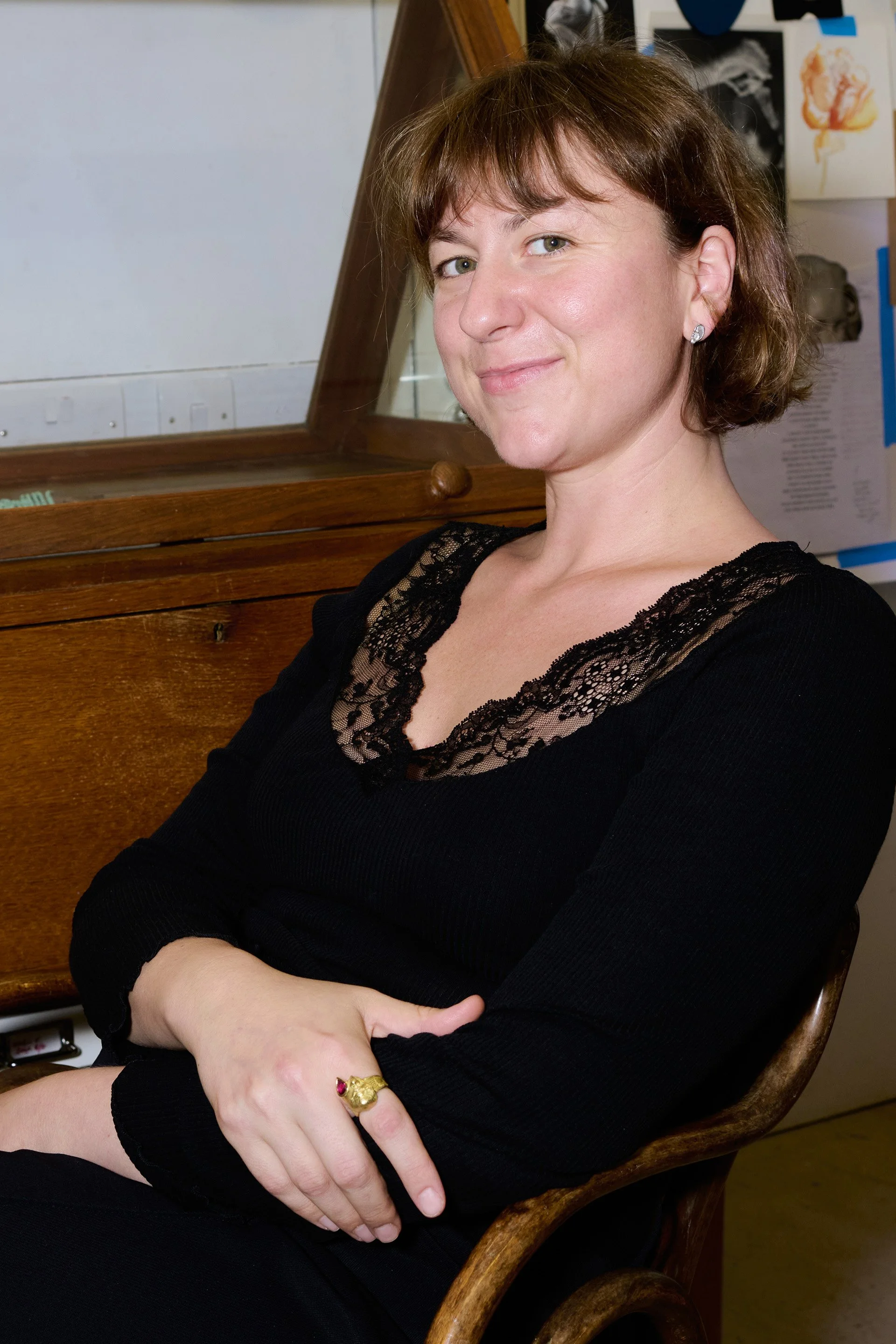
Written by Sophie Morris | Photography of Joy in her studio by Lucy Sparks