
Going places: Goldsmiths’ Foundation award funds innovative school-based art as therapy project
AT The Bus is a charity that provides transformational, school-based art as therapy to children and young people aged 5-16 who have a range of complex social and emotional needs and are struggling with their mental wellbeing. The charity’s work builds self-esteem, confidence and independence through creativity, supporting improved educational, behavioural and relationship outcomes. Fiona Thompson writes about how a converted double decker bus became a safe space for school pupils in Oxford.

You can’t miss the double decker bus parked in the playground at The Cherwell School in Oxford. The design, by Camille Walala, immediately captures your attention with its bright colour blocks, black and white stripes and eye-popping spots.
What goes on inside the bus is equally extraordinary.
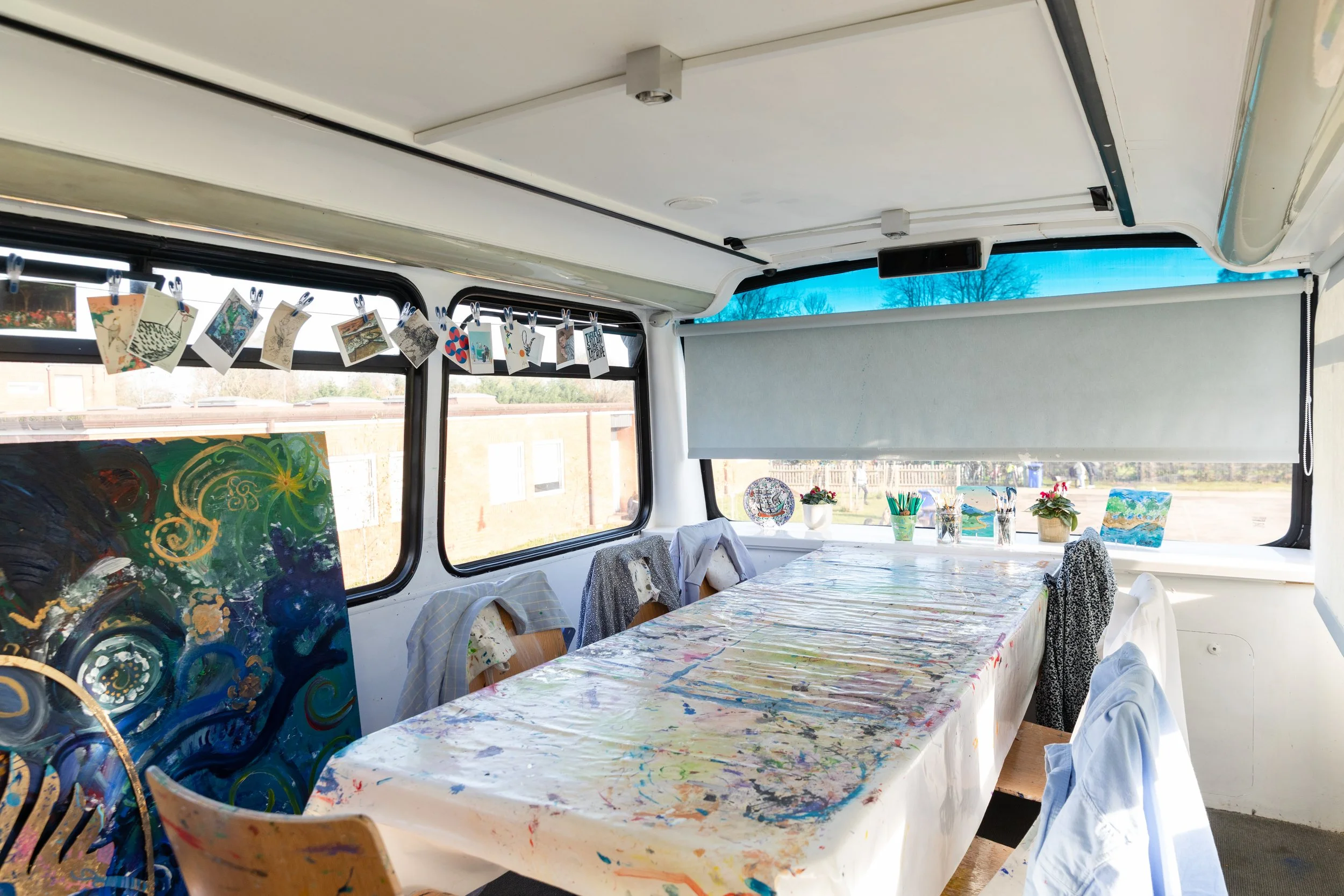
This double decker has been transformed into an art studio and therapeutic space to support the mental wellbeing of young people at the school.
It’s the flagship studio space of AT The Bus, a charity that provides transformational school-based art-as-therapy programmes across Oxfordshire and London, reaching up to 1,370 children and young people aged 5 to 16 each year.
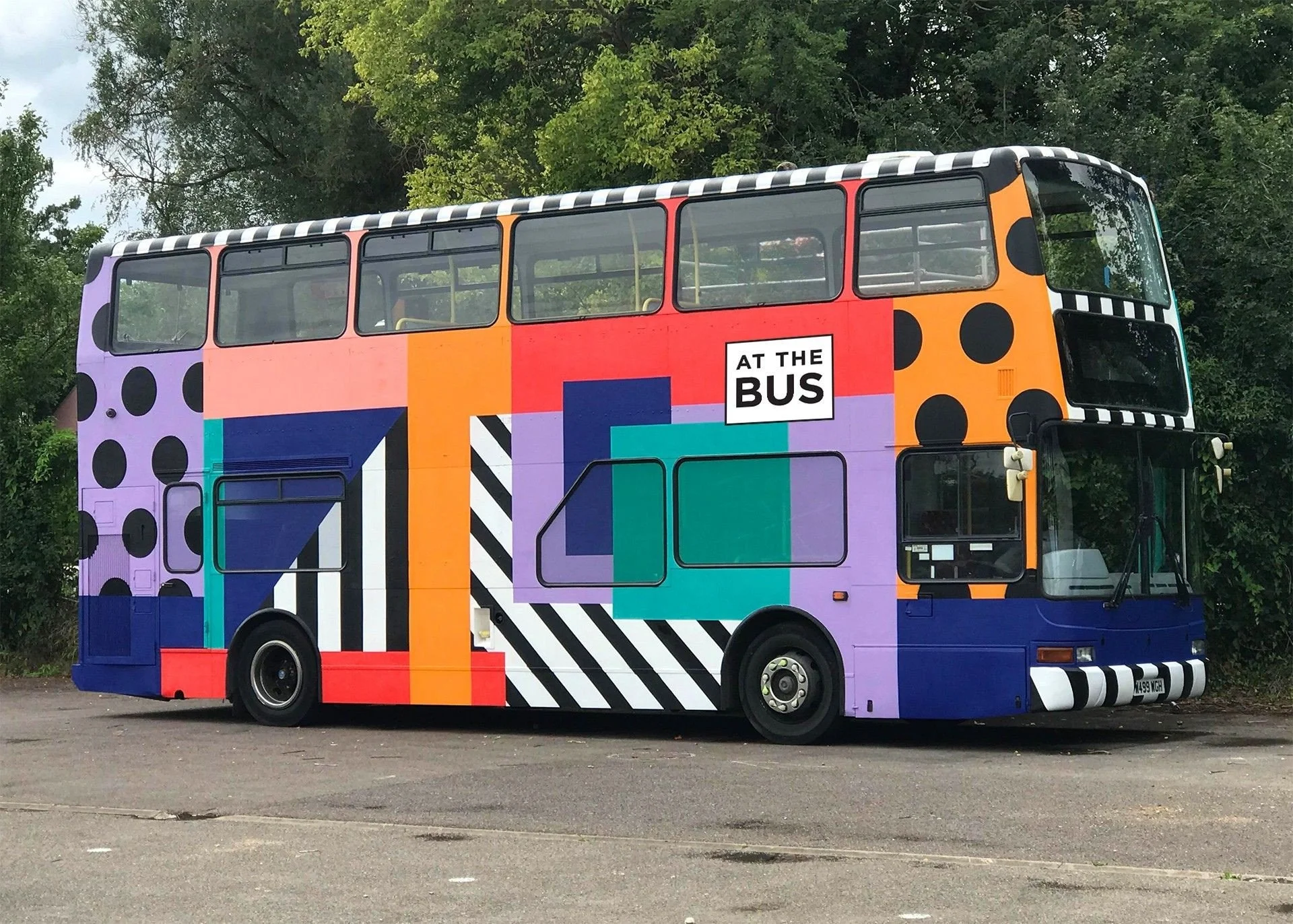
Founded in 2018 by therapeutic educator Dr Juli Beattie and a group of like-minded people, the charity currently works in 17 schools. The Cherwell School is the only one to have its own double decker bus; other schools have dedicated art studios. However, with or without a bus, as one child pointed out, “It’s called AT The Bus because we’re going places.”
As part of its inaugural grant fund, the Goldsmiths’ Foundation has given a grant of £50,000 to AT The Bus, which will go towards core costs, including programme delivery, staffing, art materials and resources, visiting artists, youth voice development and facilitator training.
Michelle O’Brien, Goldsmiths’ Foundation Director, reflects on why Foundation Trustees were keen to award this grant. She says: “AT The Bus exemplifies what we believe creative practice can achieve. By placing art at the heart of therapeutic support, they're helping young people express themselves and build resilience. This work demonstrates how creativity can be a powerful tool for positive change, opening up new possibilities for those who need support most.”
At a time when children’s wellbeing is in crisis, AT The Bus provides a vital creative early intervention service. Children’s levels of anxiety have shot up, especially since the pandemic. One in 5 young people now have a diagnosable mental health condition and 20% of pupils are missing over 10% of their schooling.
Schools often refer children to AT The Bus because they’re not attending or engaging in classes. Some have experienced bereavement, others are newly arrived in the country or are living with complex needs. Frequently, they need support with regulating their emotions, building their confidence, overcoming anxiety and making friends.
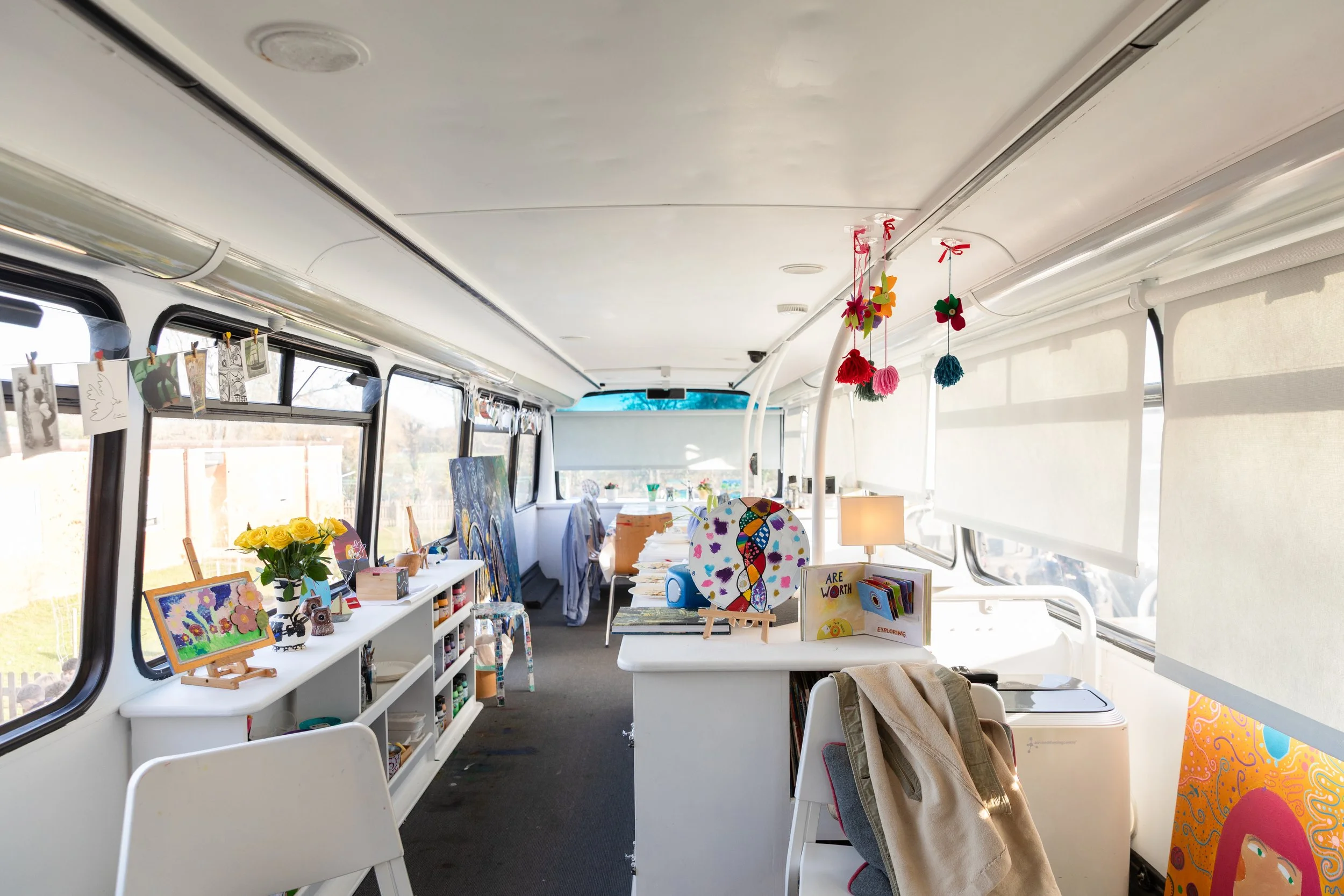
When children at The Cherwell School step into their double decker art bus, they enter a peaceful, therapeutic atmosphere where everything is designed to enhance creativity.
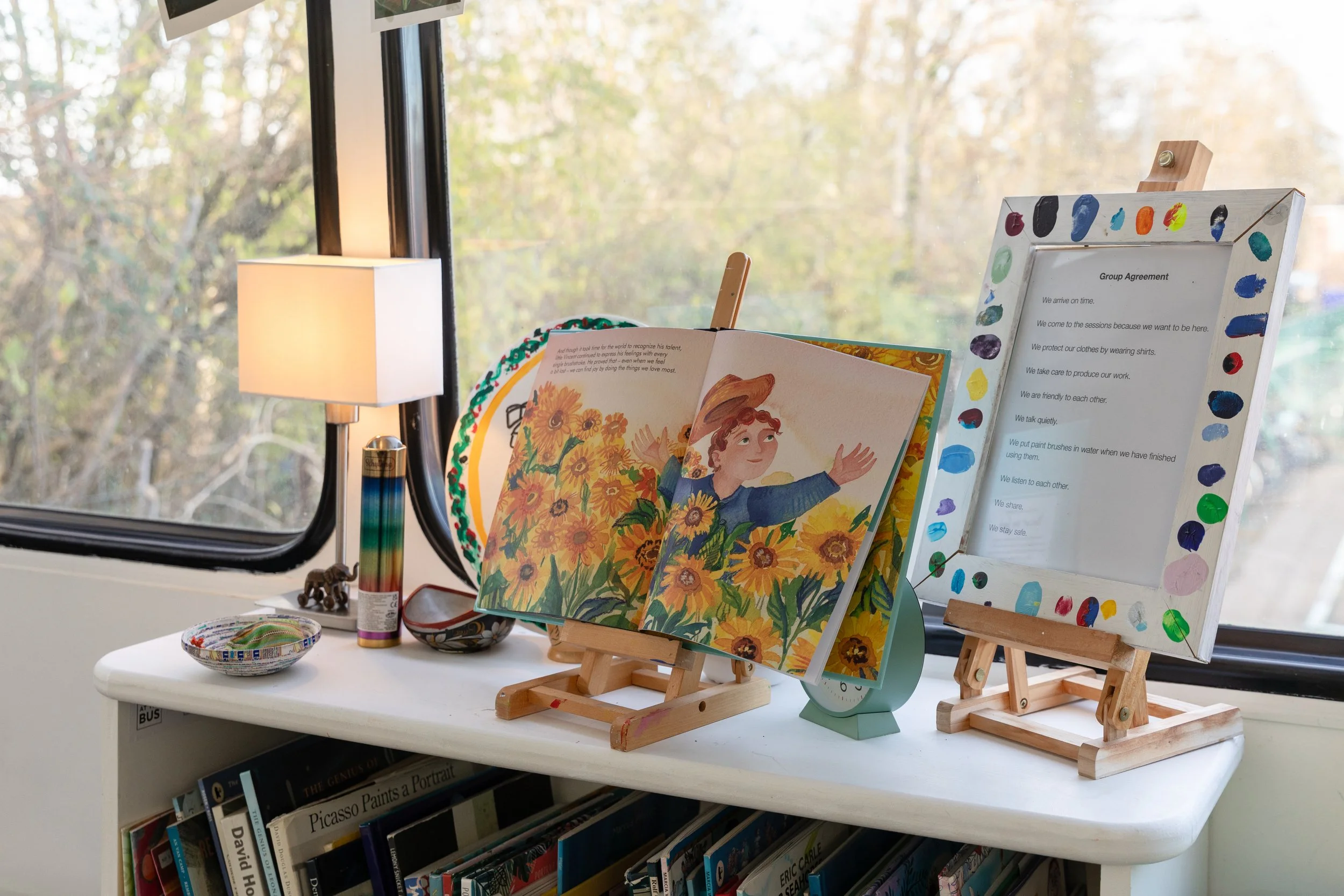
Children’s paintings are propped up in front of the driver’s seat and hang on pegs across every window. Paints, brushes and art materials are stored inside open-fronted units. Art books and story books are piled up on bookshelves.
On the lower deck, a long table is set out as a communal eating space. Upstairs, there’s a cosy seating area at the back of the bus. At the front, a large art table is covered with a paint-splattered cloth. Painting smocks hang on the back of six chairs placed around the table, ready for the next group of students.
Today, a special two-day project is underway, led by Eliza Higginbottom, an artist, sculptor and jeweller who is a former pupil of the school and a Liveryman of the Goldsmiths’ Company.
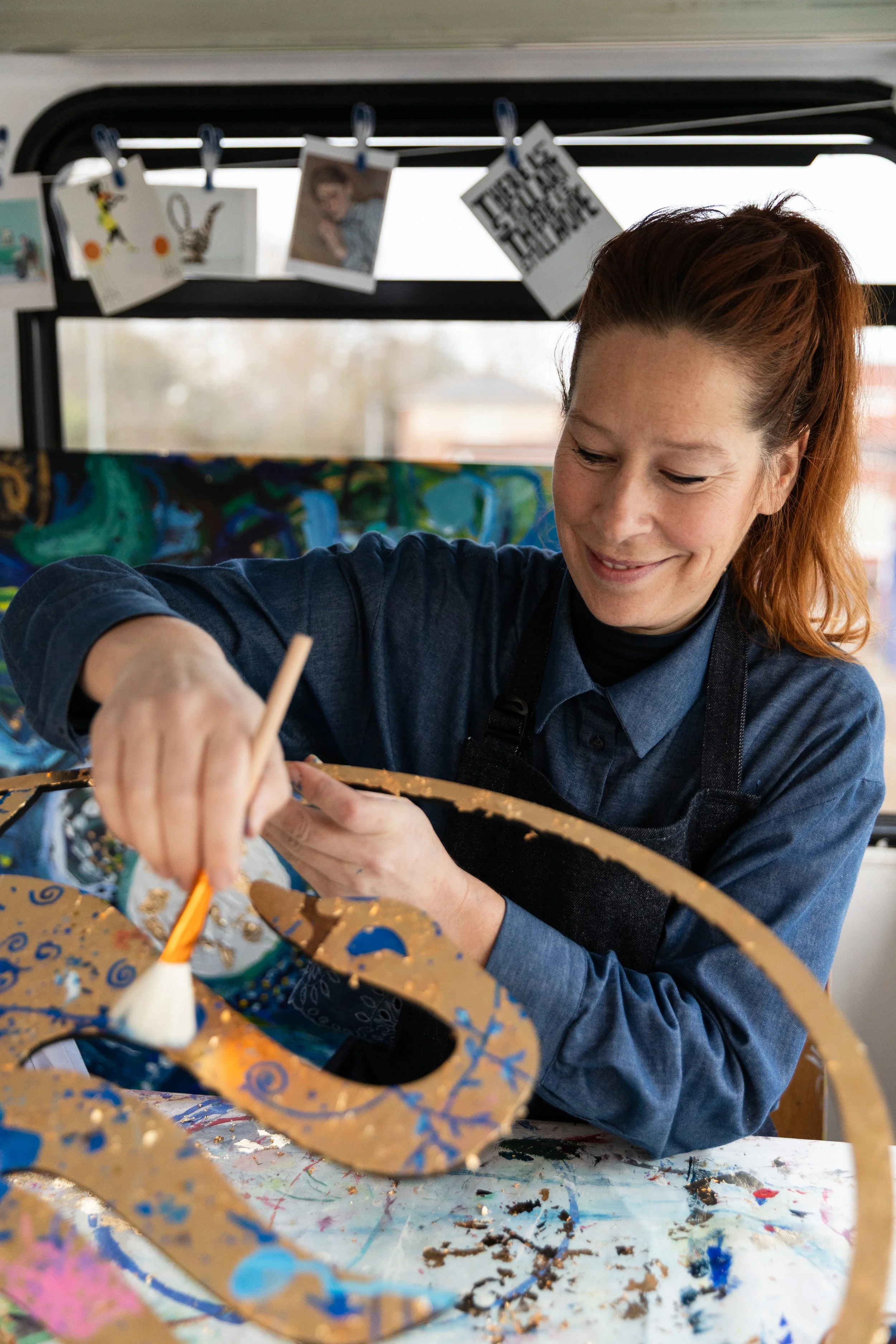
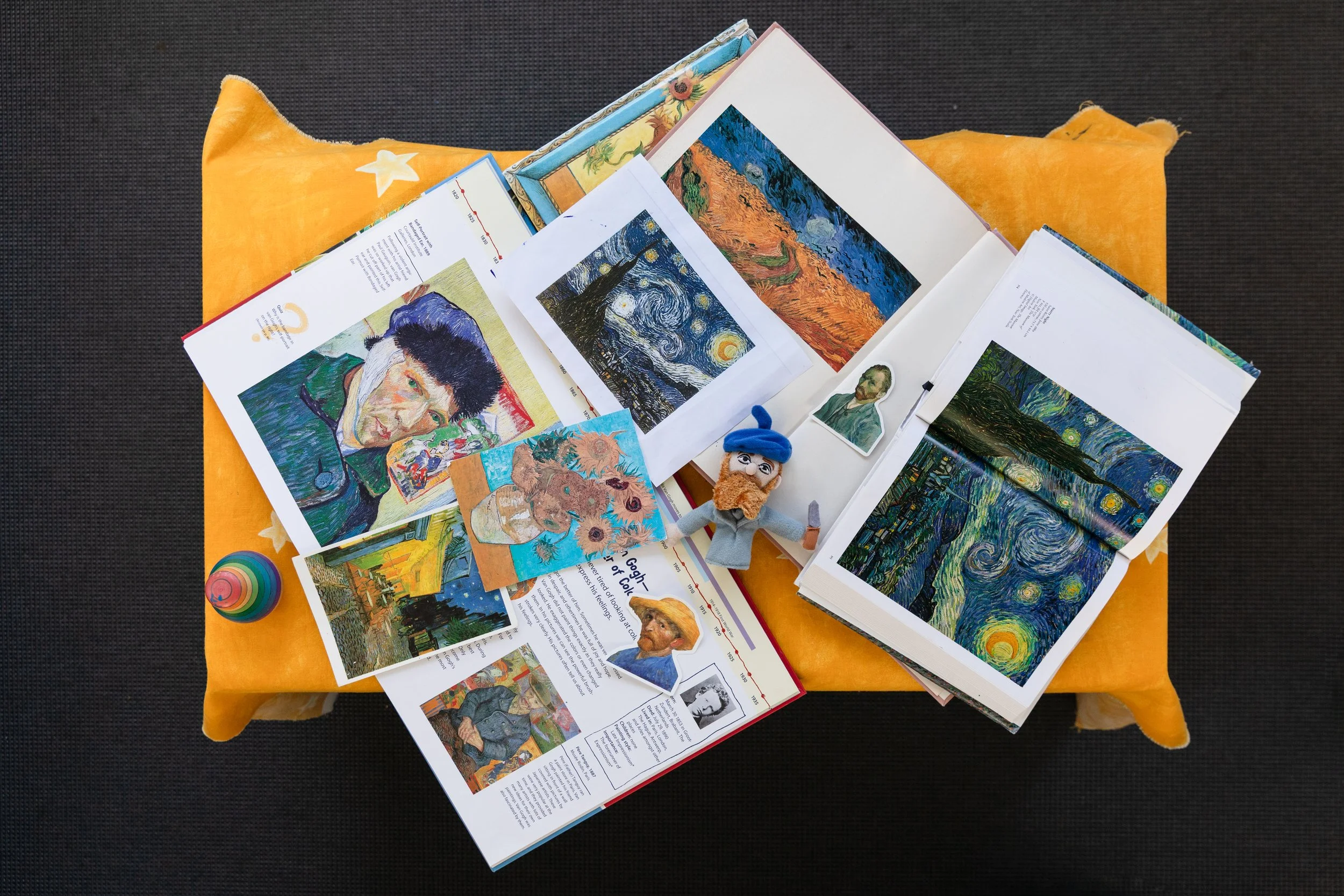
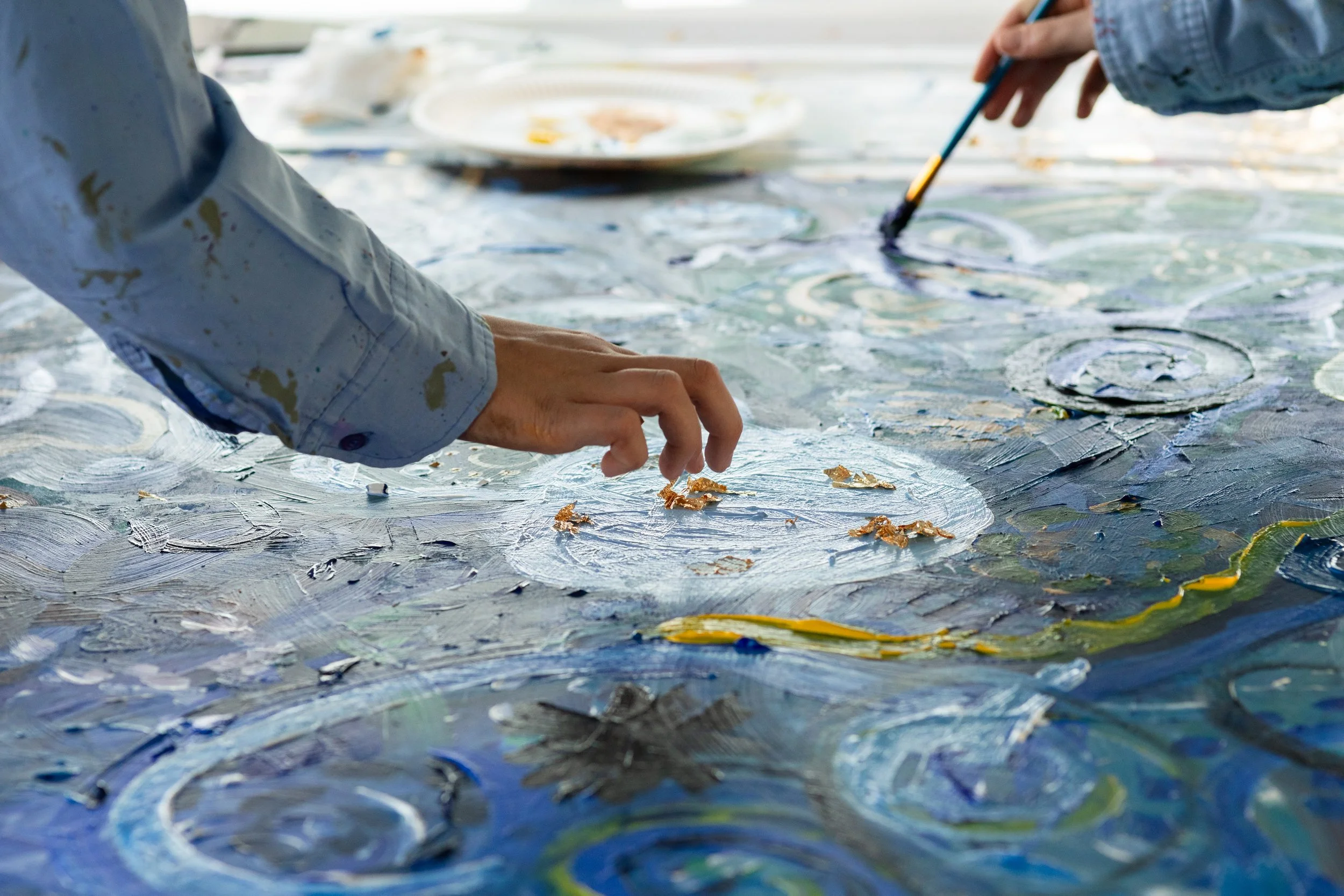
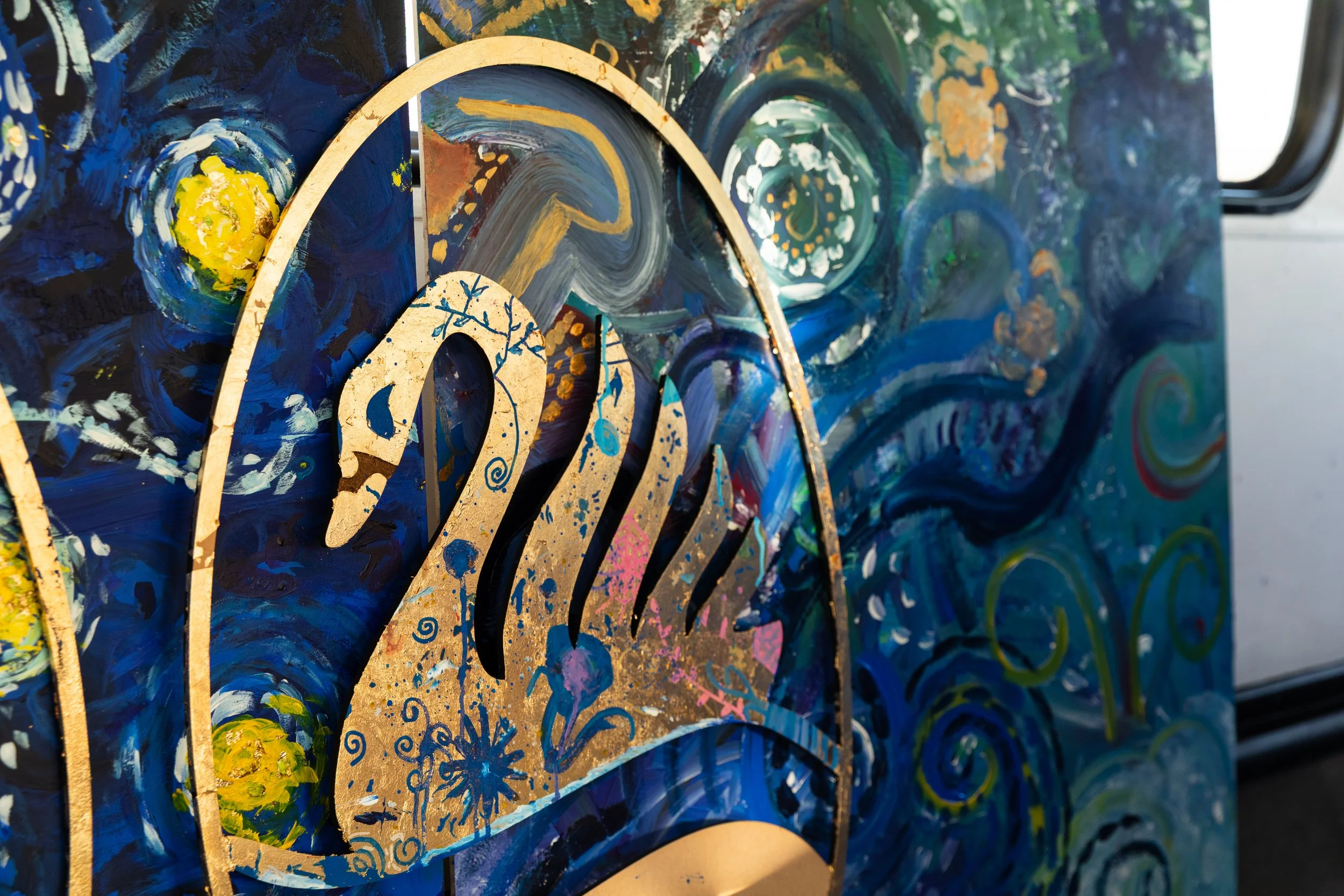
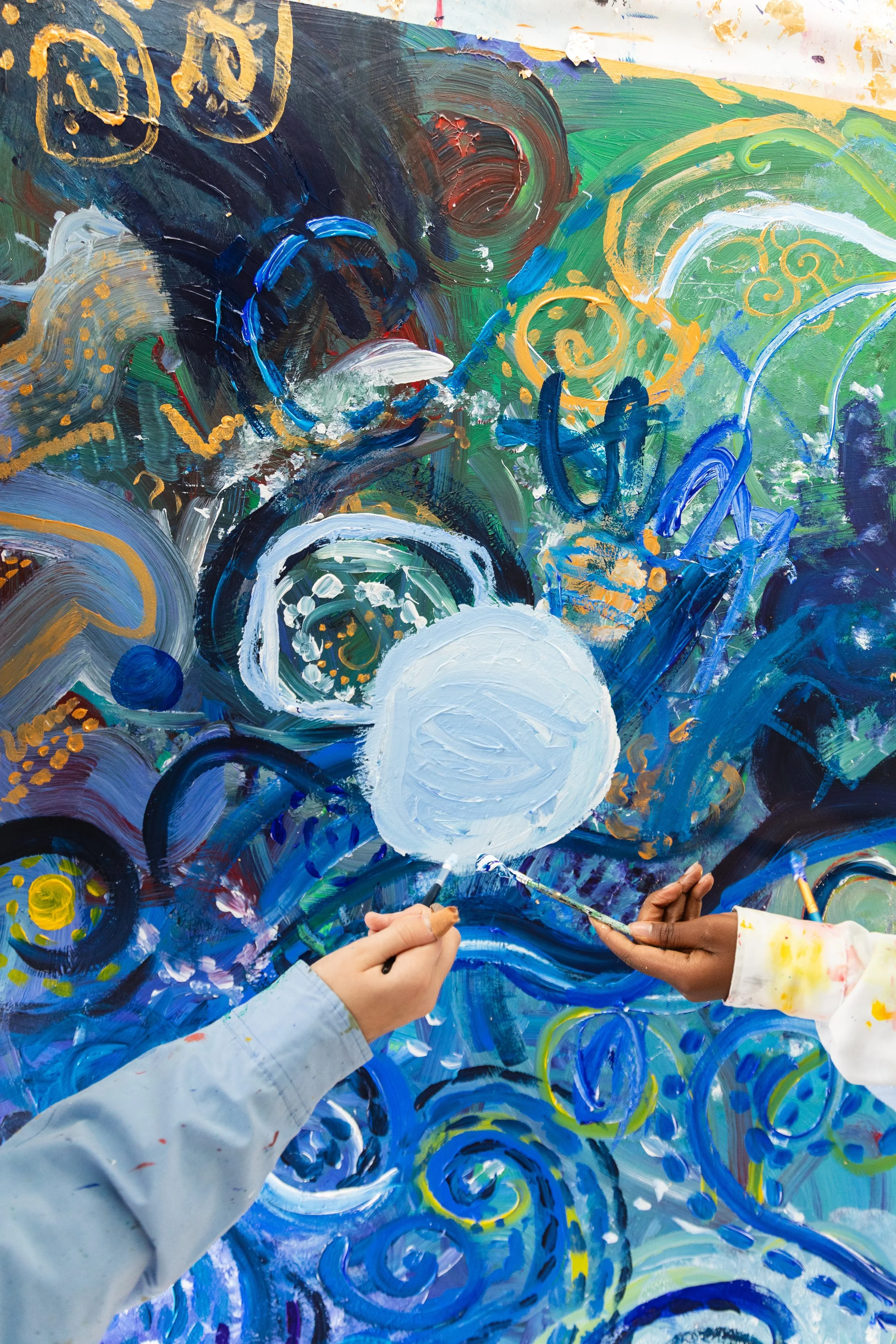
The children are creating a large artwork featuring a swan (the school’s logo), inspired by Van Gogh’s ‘Starry Night’ and decorated with real gold leaf.
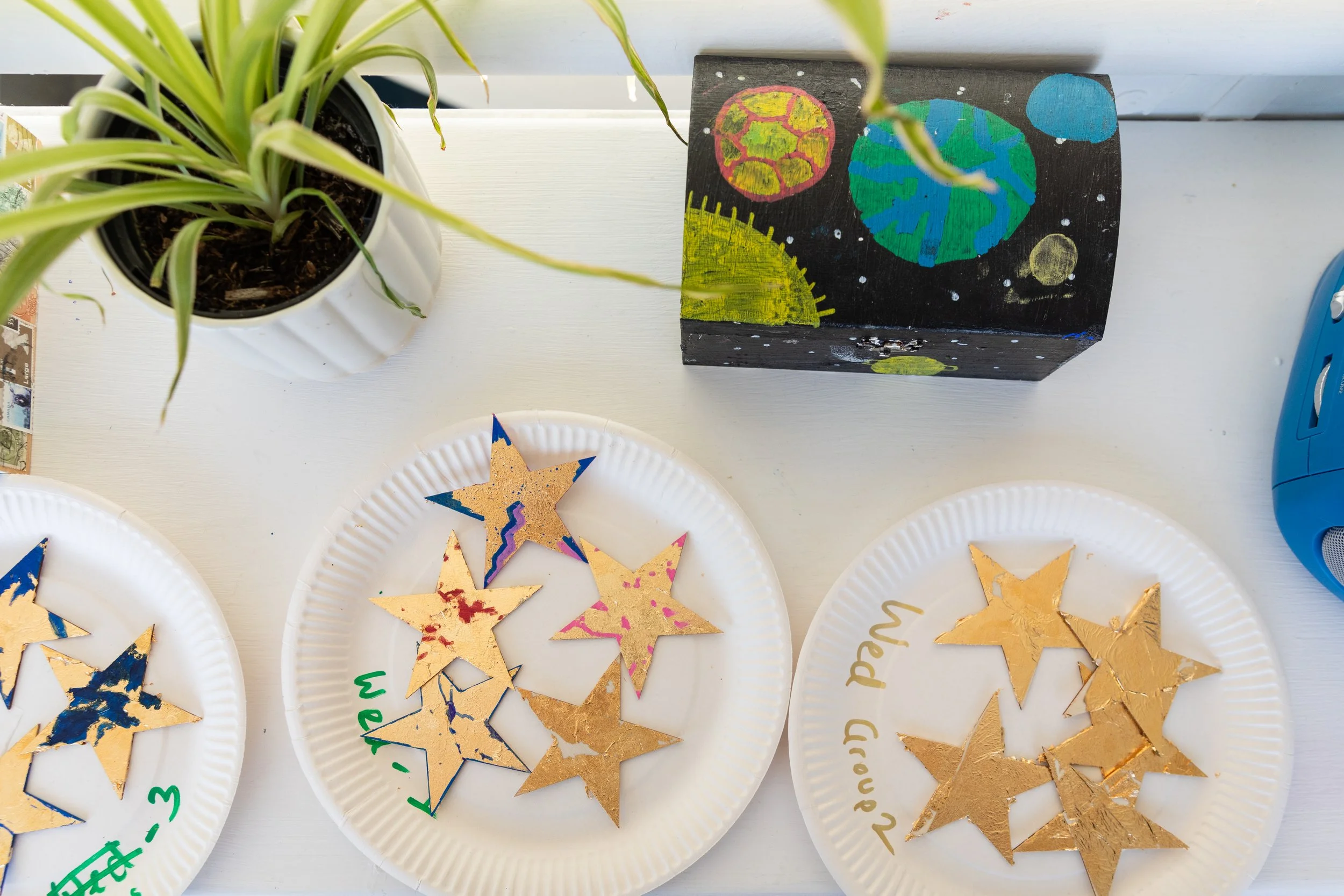
“I’m encouraging the children to be super free with the paint and not to worry about making mistakes,” says Eliza. “They’ve been impressively dexterous with the gold leaf and quickly became more confident with it. They’ve gained a feeling of learning from mistakes and overcoming something difficult.”
Amy Weaver, Communications Lead at the charity, adds: “The permission to experiment translates to other areas of children’s lives. We had one child who initially would only use blue paint. Gradually, he tried other colours. He learned how to play and try new things.”
Each art session follows three activities, according to The Beattie Method, developed by Juli Beattie. Young people start with story time on the sofa, move across to the art table to work on their current project, and end by sharing food at the table downstairs.
This combination of activities has a transformative effect on children, giving them a chance to relax, be creative and make friends.
“It’s such a privilege to watch the reaction of a child who finds school difficult and has been reluctant to learn,” says Juli.
“Suddenly, they have the freedom to be creative in a safe environment and that changes them. They say things to me like, ‘Is there magic in this room?’ They don’t understand why they can manage here when they can’t cope in lessons.”
A child comments: “It feels like just taking deep breaths after coming from outside and I really like it because it’s fun.”

The impact of AT The Bus ripples through the school community.
Chris Price, Headteacher at The Cherwell School, says: “It’s a brilliant initiative. The school is a much better place with AT The Bus. As a result, a significant number of our most vulnerable students are having a better experience in school, which is reflected in higher levels of attendance and punctuality, and increased academic progress."
He adds: “I find it quite remarkable that we’ve been able to have an art therapy unit in a double decker bus at our school. It’s one of the things I’m proudest of in my career.”
As the charity’s founder, Juli is impressed by the support she’s received from the Goldsmiths’ Foundation. “Goldsmiths is a visionary funder,” she says. “It’s important to us to receive this funding from a partner with such a deep understanding of how creativity can make a difference to young people’s lives.
“We also love having Eliza here to share her skills and act as a role model. Maybe she’ll inspire one of our students to work in the creative industry one day.”
As for the future, Juli dreams of getting a new electric bus. “We could use it seven days a week, driving to museums, arts organisations and sports centres around the UK, giving even more children the opportunity to be creative.”
Written by Fiona Thompson | Photography of AT The Bus studio by Jayne Lloyd