
The National Theatre Skills Centre: All the World’s a Stage
For decades, the National Theatre has been focused on turbo-charging creative skills and professional development. To address the growing skills shortage and to ensure equal representation within the sector, the organisation has launched a new National Theatre Skills Centre. This offers resources, training and professional development to boost specialist skills across all areas of theatre, with opportunities available nationwide from entry-level to mid-career. Fiona Thompson writes about the latest skills training offered by the theatre company, and the support from the Goldsmiths’ Foundation.
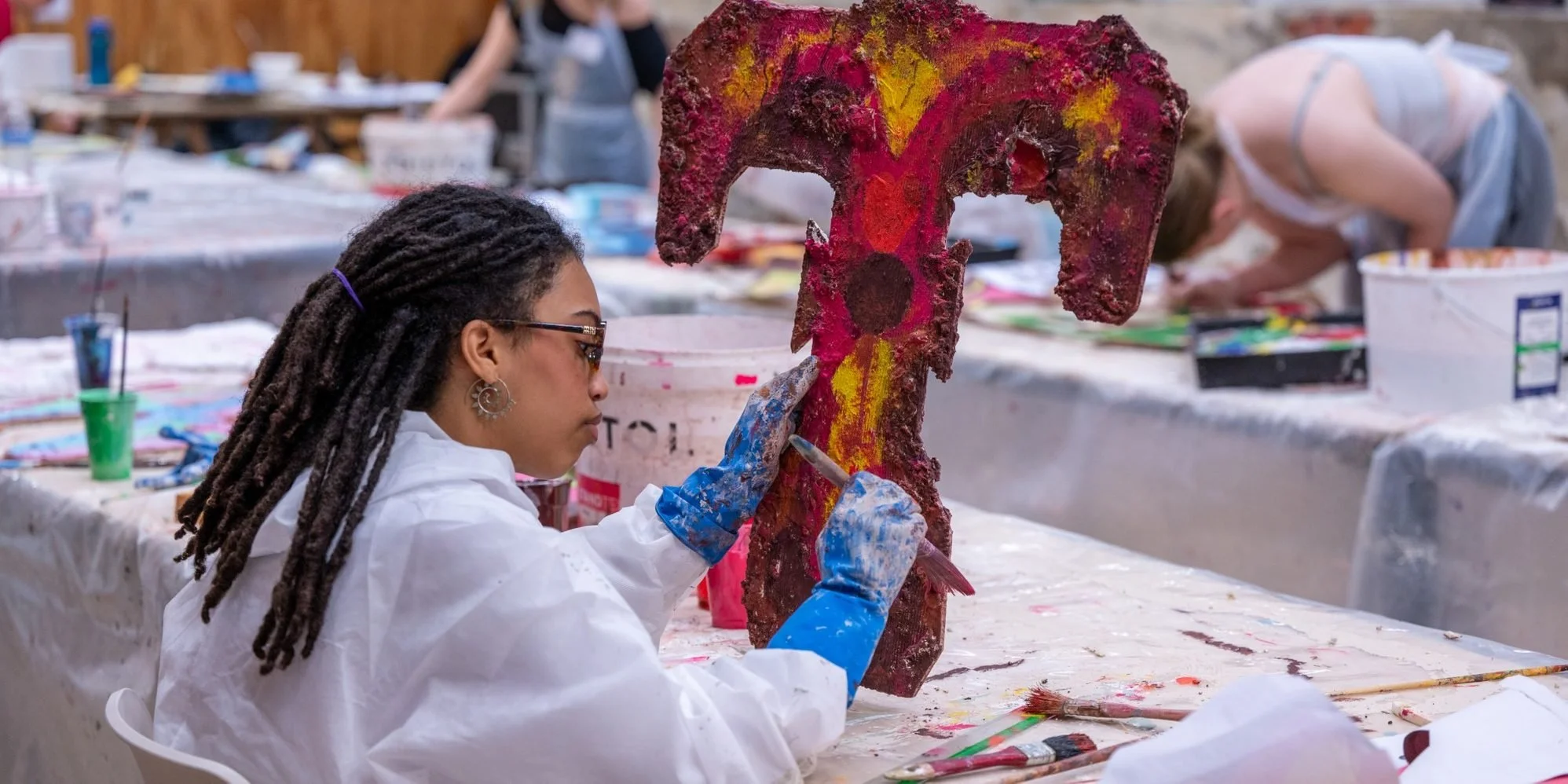
“It’s one of those funny things,” says Simon Stephens, Head of Skills at the National Theatre. “When we talk about our Skills Centre, people expect us to have a separate building. But our Skills Centre is the National Theatre. Everything we do to boost skills happens here in our brilliant purpose-built building on London’s South Bank.”
Going backstage, you get an idea of just how much work goes on behind the scenes, and how many people it takes to create the magic of stagecraft.
As we walk underneath a life-size horse puppet from the National Theatre production of ‘War Horse’, Peter Burgess, Head of Trusts and Foundations, says: “There probably isn’t another performing arts venue in the country with this scale of in-house facilities for creating work for the stage.
“We describe the National Theatre as the largest factory in central London. We put on at least 15 productions each year, and most of what you see on our three stages is made right here.”
On the ground floor, people are busy building sets in the carpentry workshop. Nearby, scenic artists paint huge theatrical backdrops, using moving platforms to reach across vast canvases.
In the Props Studio, work is underway on a piano frame that will conceal an electronic keyboard. We overhear a conversation about alternatives to glass bottles that are safe to smash on stage.
Upstairs in the Wigs, Hair and Make-up Studio, highly skilled technicians are creating new wigs, sewing five hairs at a time. Each one takes 40 hours to produce. We see the dressing room where actors including Sophie Okonedo and Benedict Cumberbatch have discussed their hair and make-up for upcoming roles.
In every area backstage, apprentices work alongside seasoned professionals to learn the skills of stagecraft.
Today, the National Theatre’s apprenticeships programme is run by its Skills Centre, which was set up 18 months ago to turbo charge creative skills and professional development in the sector.

As part of its inaugural grants programme, the Goldsmiths’ Foundation has given the National Theatre Skills Centre an award of £50,000. This funding will offer skills training opportunities to 35 young people from under-represented backgrounds.
It will provide participants with free courses in subjects such as scenic art and costume making, and will deliver a new Wigs, Hair, Make-up and Prosthetics Apprenticeship. The award will also contribute to trainee salaries, mentor fees, pastoral support, and the development of progression pathways into the creative industries.
“The National Theatre Skills Centre is doing something we absolutely love to see, bringing together brilliant craftsmanship with real opportunities for young people who might not otherwise get a foot in the door,” says Michelle O’Brien, Goldsmiths’ Foundation Director.
“There's something fitting about the Goldsmiths' Foundation supporting an initiative that values both traditional skills and fresh talent. We're excited to help open up these creative careers and are keen to see the magic these emerging artists will create behind the scenes.”
The Skills Centre focuses on training the future workforce and addressing a growing skills shortage. It aims to reach 15,000 people over the next three years.
“Lots of people left the theatre industry during Covid,” says Simon, “particularly those working in areas such as scenic art, costume, wigs, hair and make-up. Many moved into the screen industry, which got up and running much more quickly after the pandemic. As a result, we’ve had fewer applicants for our specialist theatre craft jobs.”
In addition to future proofing the talent pipeline, the Skills Centre is also broadening access to skills opportunities and developing a more representative workforce.
“Over the last five to six years, there’s been some progress in having greater representation in terms of actors, directors and writers,” says Simon. “But this change is happening much more slowly in theatre skills behind the scenes. We want this to be an industry where anyone can thrive, progress and have a really rich and meaningful career. To do that, we have to identify the skills gaps and fill those gaps with a much more representative workforce.”
The Skills Centre is reaching a more diverse pool of applicants by removing barriers to access. The major barrier is finance, so all courses are free. The team also works with charities and schools to promote opportunities to young people who may not have considered working in the theatre.
“If you’ve never seen a metalworker, scenic artist or prop maker, how can you imagine yourself pursuing that kind of career?” asks Simon.
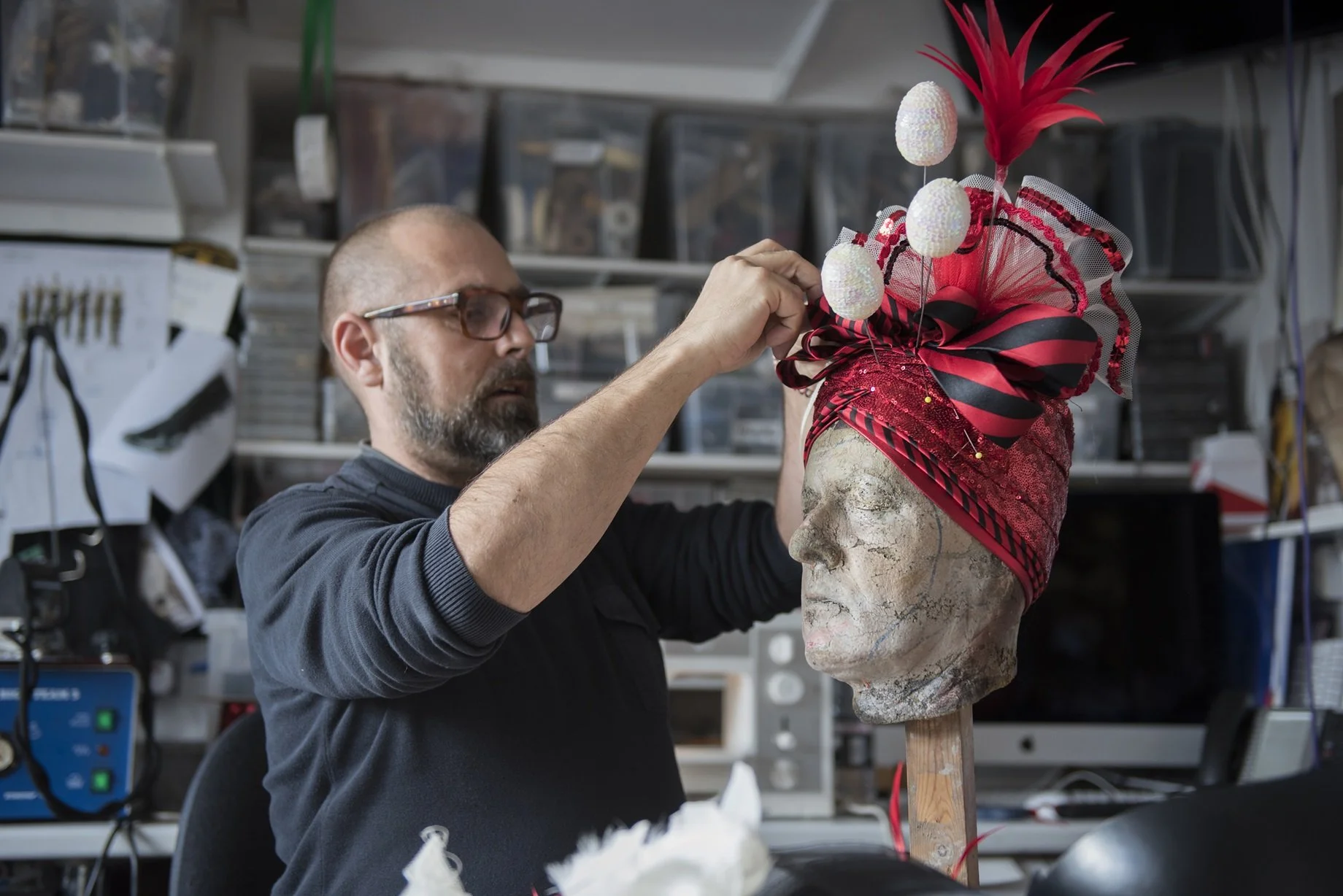


On a recent ‘Repurposing Clothes into Costume’ course, 56% of participants had never engaged with the National Theatre before. Afterwards, 89% said they were now more likely to pursue a career in the arts.
“We also offer wrap-around support to help participants settle in,” adds Simon. “This includes mentoring and pastoral support as well as clear progression pathways.
“I’m so proud that we’re helping people from less-represented backgrounds to consider a career in theatre. You see a light switch on when participants on a course realise what they might achieve.”
In the last 10 years, more than 60 apprentices have completed their training at the National Theatre across 20 different departments, with over 90% going into paid professional work in the area they trained in.
Leah, who took an apprenticeship in Wigs, Hair and Make-up, says: “Learning in such a skilled environment with professionals who have years of experience was core in learning how to get the job done in the most efficient and professional capacity. It also gave me great connections to further my skills with other places of work.”
After completing her apprenticeship, Leah worked at the English National Opera and Shakespeare’s Globe before returning to the wig department at the National Theatre as workshop coordinator.
“Leah’s experience highlights that networking is an extremely valuable part of our apprenticeships, whether it’s with other young people or with established experts in the industry,” says Simon. “Networking helps young people to feel seen, valued and welcome in this space. That’s really powerful. It gives them confidence.”
Meanwhile, Peter is excited to see how the partnership with the Goldsmiths’ Foundation will develop in the coming months. “We’re delighted to receive this funding,” he says. “It means so much to us to have this partnership with a creative organisation that has such a deep understanding of traditional craft.
“Like the Goldsmiths’ Foundation, the National Theatre is looking to the future, building on an incredible history. There’s a definite synergy in our commitment to vocational skills, social change and creating a more inclusive workforce. We can’t wait to see what happens as we join forces and learn from each other.”