
The Goldsmiths’ Company’s world-leading collection of contemporary designer silver has a unique shape and character thanks to a regular programme of commissions. As with all its acquisitions, the aim is to inspire. Through objects the Company tells stories about people: their artistic and technical achievements, their innovative use of new materials and technologies, in combination with traditional handskills, and their connections with the craft and with the trade. Human stories link objects and individuals across centuries and cultures in building a legacy for the future.
In November 2020, during the second wave of the Covid-19 pandemic with its concomitant periods of lockdown, during which people were required to isolate at home, the Goldsmiths’ Company invited the leading silversmith Junko Mori to create a piece that would be emblematic of the Covid-19 experience.
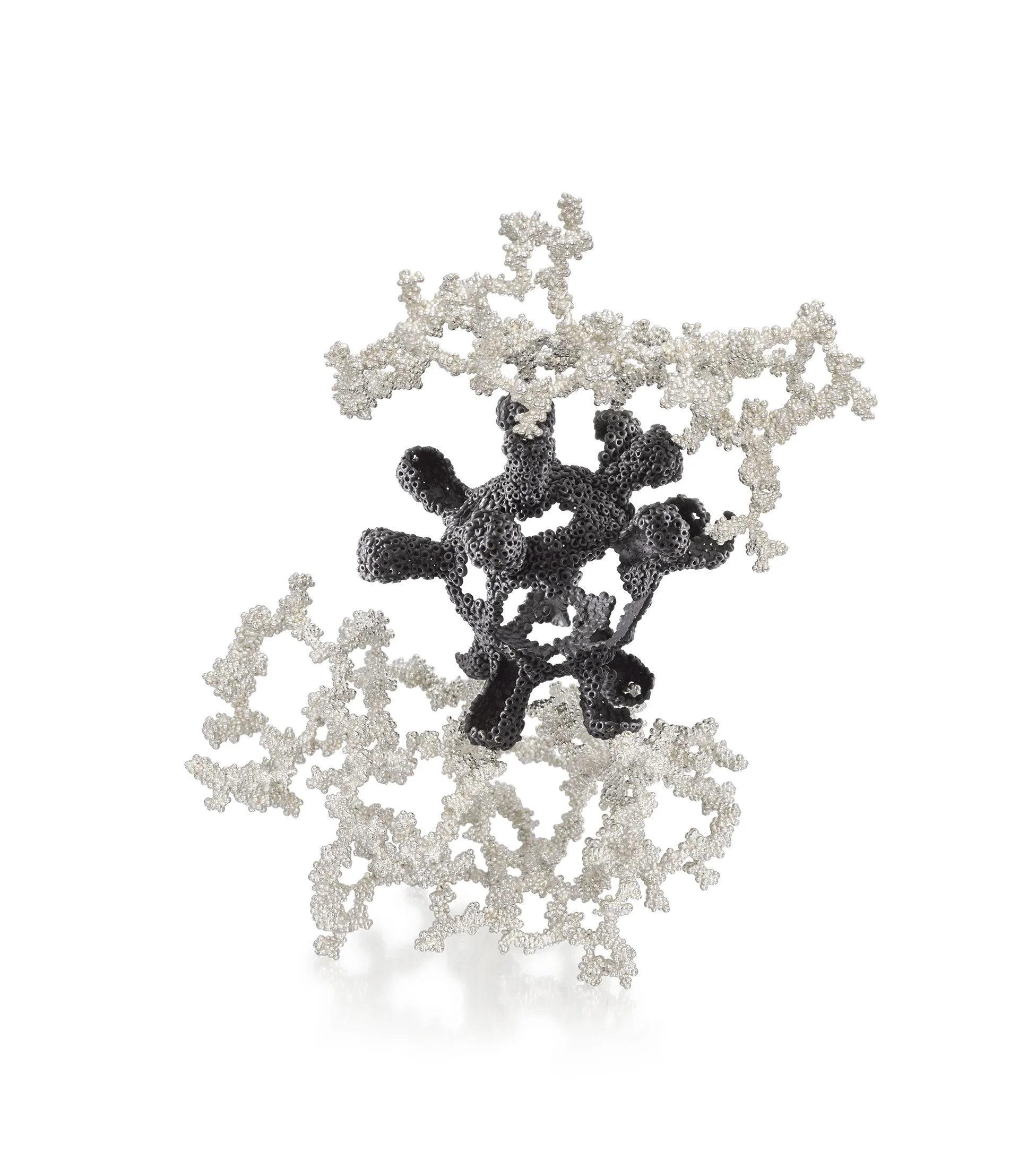
Hope in Balance, silver and lost-wax cast bronze, Sheffield, 2021, mark of Junko Mori, commission for the Goldsmiths’ Company (The Goldsmiths’ Company. Photograph: Clarissa Bruce)
Junko Mori’s subtle sculpture, Hope in Balance, represents a completely new departure for the Goldsmiths’ Company. The commission had a particular significance. The invitation to Mori, via her art dealer, Adrian Sassoon, arose from a display of small works in mixed metals which Adrian Sassoon showed at Sotheby’s that autumn. Mori’s work was already well-represented in the Goldsmiths’ Company Collection, with pieces inspired by natural forms and microscopy: Organism (2005), Pinecone (2007) and two British Hedgerow beakers (2017).
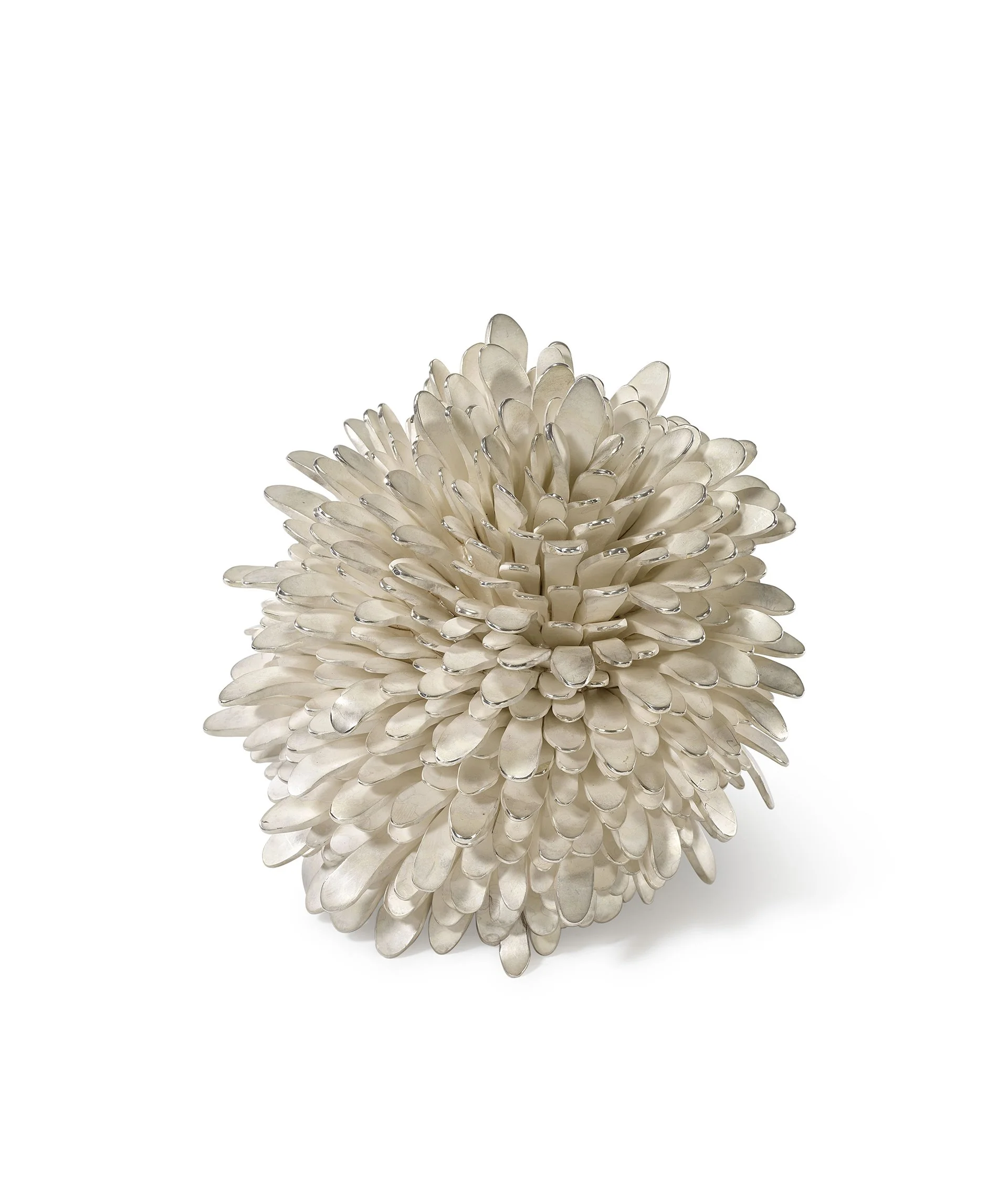
Pinecone, fine silver, Sheffield 2007, mark of Junko Mori (The Goldsmiths’ Company. Photograph: Clarissa Bruce)
The small, delicate, handheld sculptures in Adrian Sassoon’s exhibition were, however, distinctive and different, prompting the thought that Mori was uniquely placed to make something small in scale and precious that could evoke the pandemic which we were all experiencing. This was a novel idea at a time when few were thinking along these lines and when the menace of the virus was particularly threatening. The concept originated with the Company, making it an exceptionally creative and significant commission, as well as being Mori’s first for the Collection.
We were looking, not for a direct representation, but for the deeper story, filtered through Mori’s spirited intellect and imagination. Adrian Sassoon notes her approach to the commission: “Junko Mori brilliantly looked towards a celebration of the human body’s proactive, immune response to the Covid virus for inspiration for this sculpture. This perspective is typical of her interest in science and belief in biological ingenuity”.
At the time we did not know that Mori had recently recovered from a serious case of the virus herself, which gave her response further resonance. She worked quickly to design and make a positive piece, hence its name, Hope in Balance. “I wanted to focus on the antibody as a symbol of defence”, she explained. Her aim was to “shift the viewer’s attention away from the fearful image of the viral enemy, towards our strong immune system”.
Based in her North Wales workshop during the 2020 lockdown, she started to explore the human immune system online, something completely new to her, which brought her into contact with the immunologist Dr Saba Alzabin. Their conversations on Zoom helped to shape her understanding and inspiration: “Saba and I agreed that focusing on one of the stages, when millions of antibodies are created to start locking with the spikes of Coronavirus, was the best way to progress with my concept and design”.
That is exactly what we see in the finished sculpture. The design drawing, which she gave to the Company Archive as part of the commission, is made up of three semi-transparent sheets, each sheet showing one element of the sculpture. The drawings can be studied separately or layered on top of one another to evoke the appearance of the finished piece.
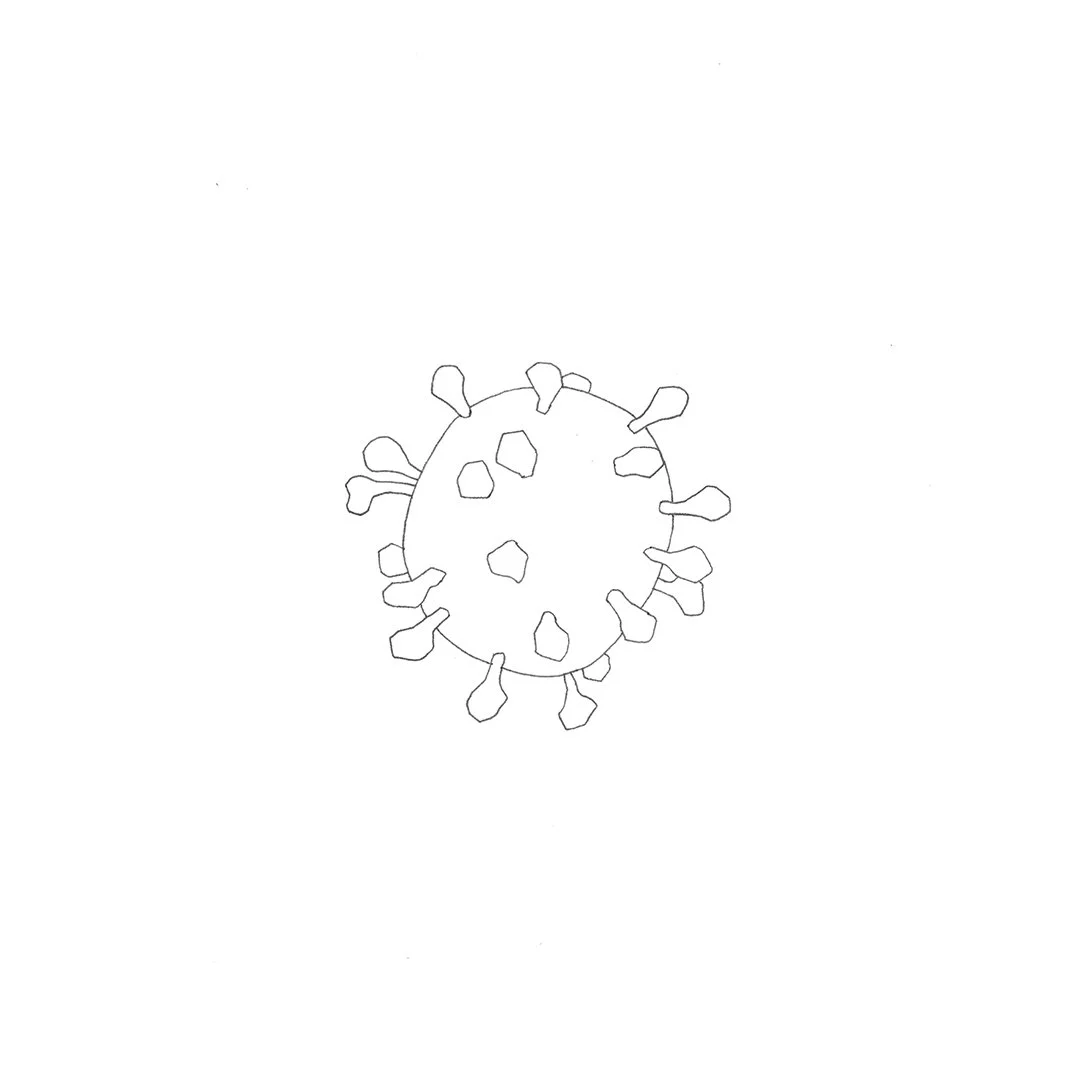
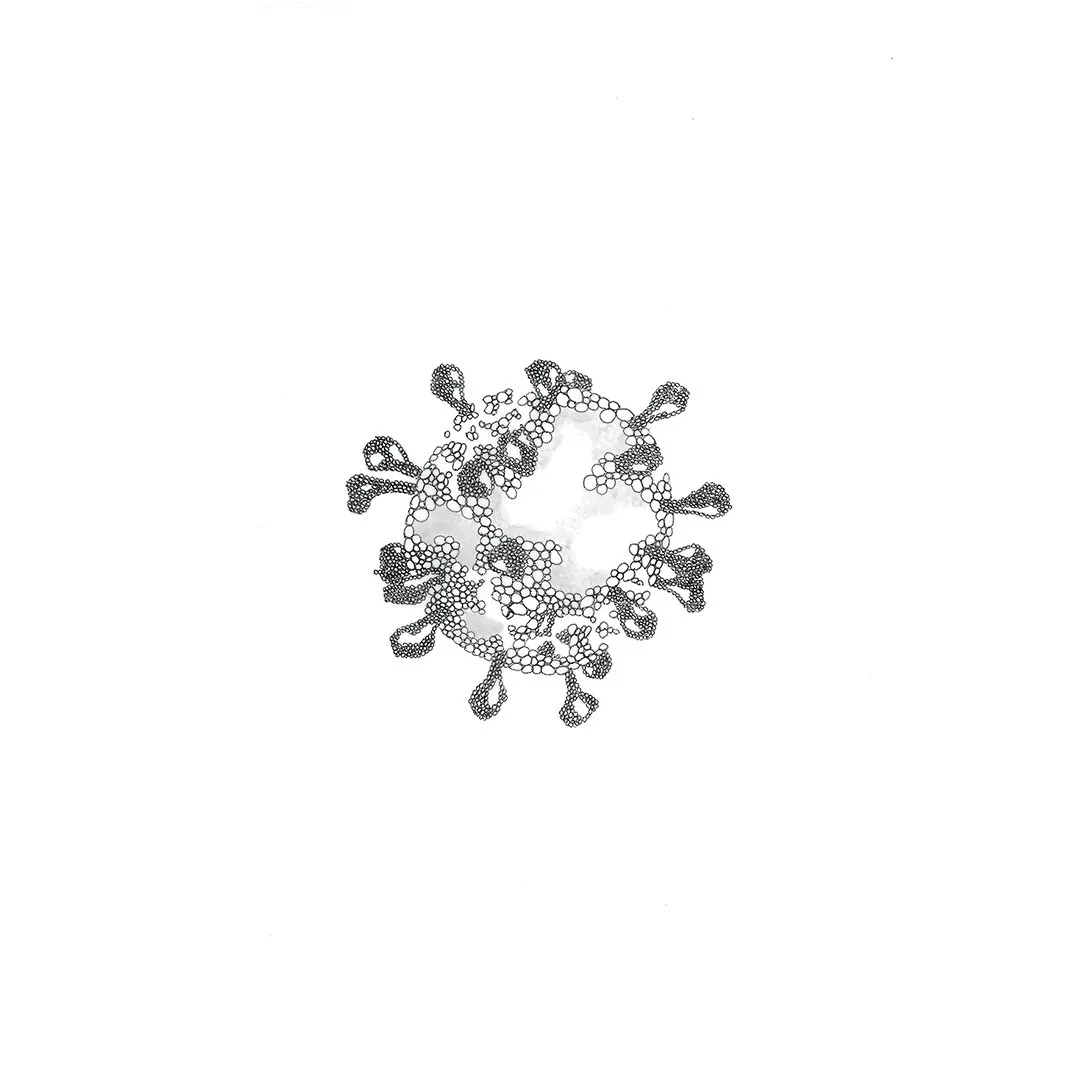
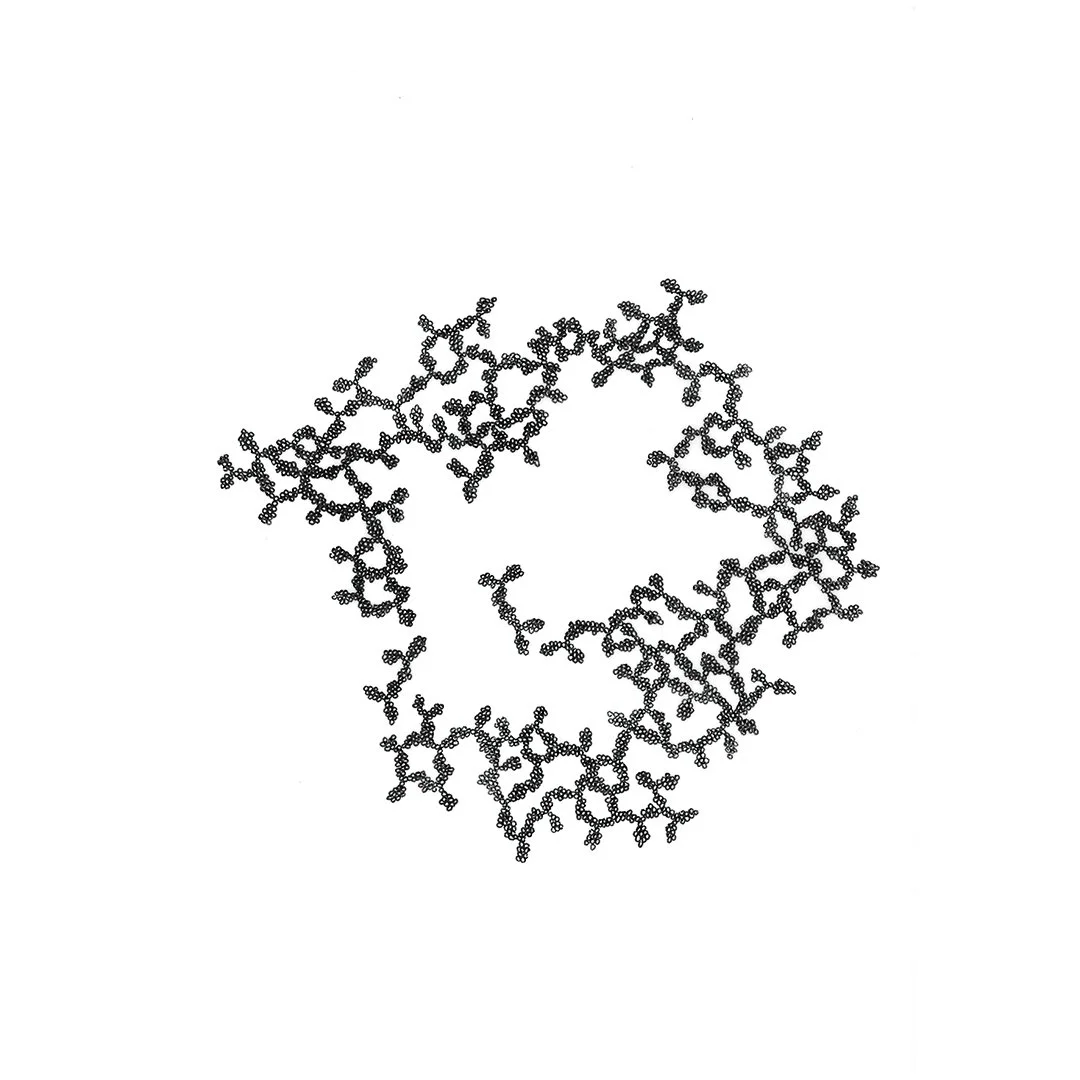
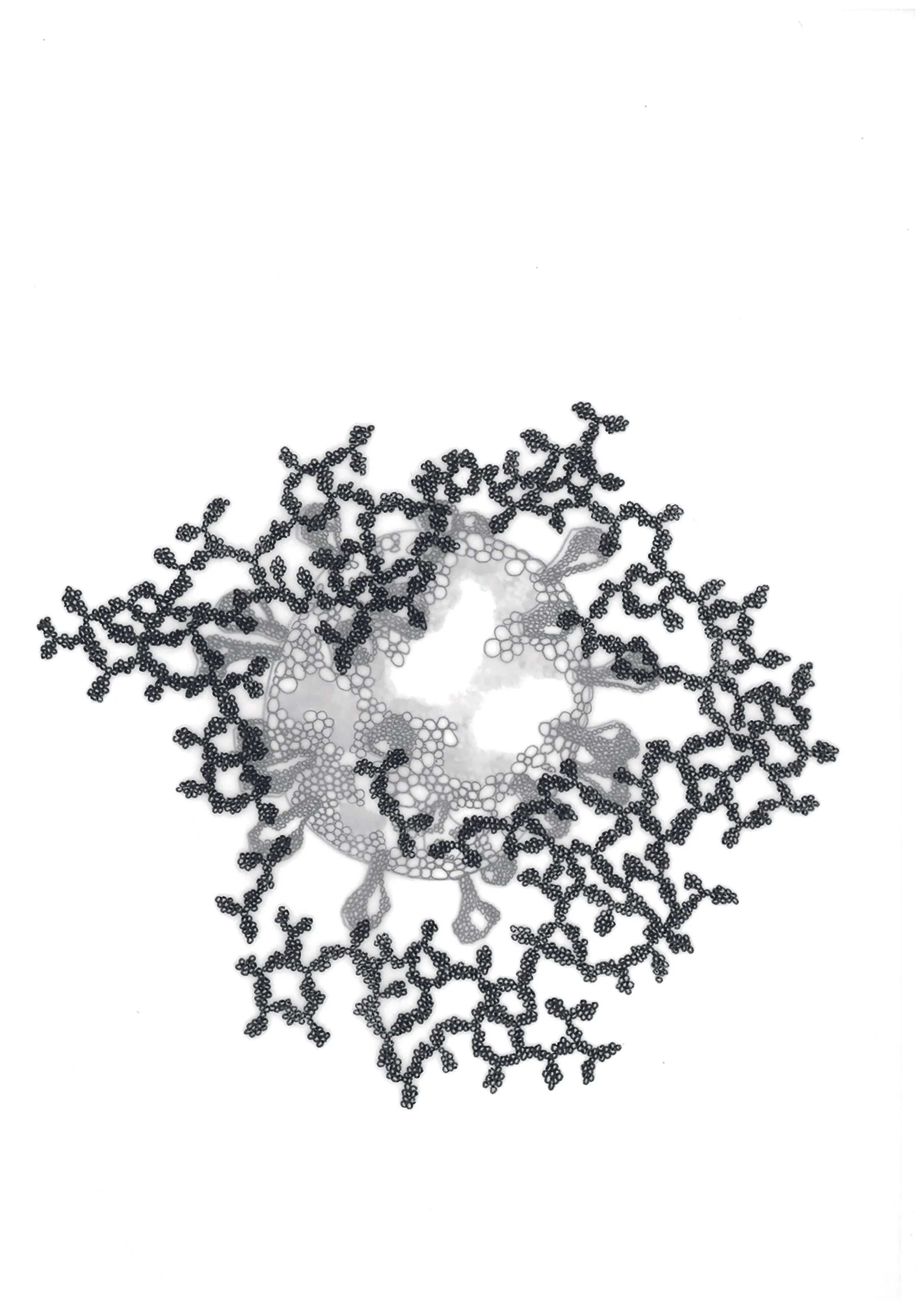
Design drawings for the Junko Mori sculpture, Hope in Balance, depicting the three separate elements which are joined together to make the whole (The Goldsmiths’ Company)
The sculpture is constructed in three interlocking elements: a central hollowed-out sphere, cast using the lost-wax technique in bronze, to signify the spherical virus itself. It is the core of a small precious sculpture with a two-part outer element in sterling silver. The openwork silver structure opens in half; spikes of the outer element lock into the inner, as antibodies do to the virus in our bodies. Mori has designed the pieces so that they lock into each other at three points only, so as to create a stable sculpture.
The Sheffield hallmarks are lasered onto separate silver elements on the base as an integral part of the design, which also marks the front of the sculpture to enable assembling the three parts into one whole.
Central to the concept is the void at the very centre, a hollowed-out sphere in bronze, patinated black, to represent the space the virus leaves once it has been defeated. Around this, Mori constructed a large assembly of Y-shaped antibodies, hand-built in wax that were cast in silver. Each component is slightly different from the others, like leaves on a tree; they were cast in silver and then soldered together one at a time. Adrian Sassoon comments:
“Junko has always respected silver for its medicinal qualities and felt it was entirely appropriate to use this material when representing the antibody structure. In fact, even before this commission was discussed, she had evangelised the benefits of taking a dose of colloidal silver each day to ward off many ailments. As her obedient art dealer, I took a daily dose for most of the Covid years”.
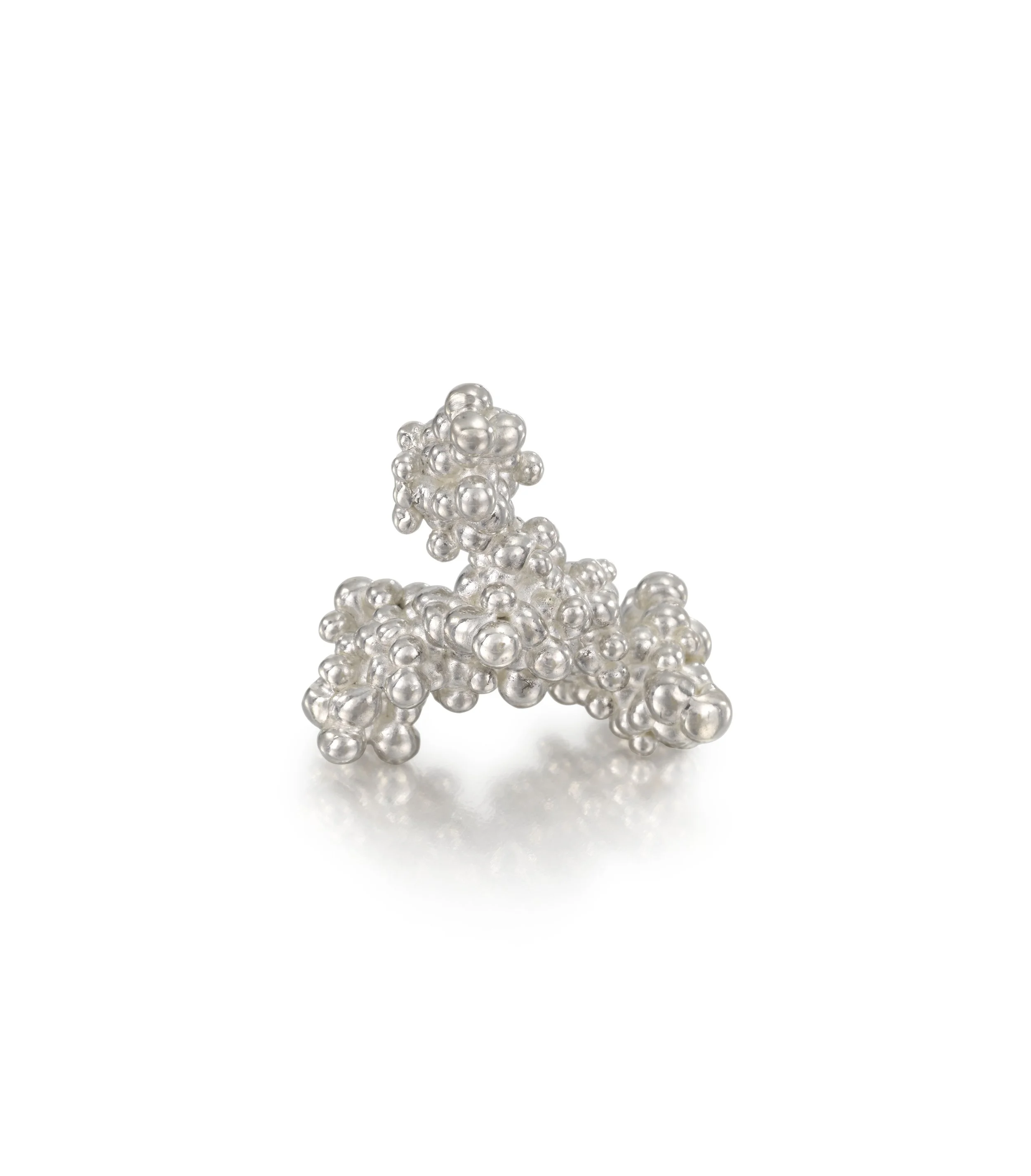
Test piece for silver Y-formed antibodies for the Junko Mori sculpture, Hope in Balance (The Goldsmiths’ Company)
Again, the inspiration for the structure came directly from microscopic images, showing how human antibodies operate. “They are unique and organic”, she explains.
“This is something I wanted to represent, capturing something of their subtle beauty and diversity”.
A cloud of silver antibodies floats around the core, offering shifting perspectives and casting intricate shadows.
The result is deeply considered and thoughtful; completely new in concept while being absolutely her own in terms of aesthetic, approach and making. It was clear from the minute it arrived at Goldsmiths’ Hall in January 2021 that this was something exceptional. It is not just a marvellous work of sculpture, but has a very serious aim, as Mori explains: “The more we learn about our immune system, the more we know how to enhance this magical gift we have been given by nature. I hope this work inspires people to learn more about our inner cosmos”.
It was that sense of public purpose that led the Goldsmiths’ Company to offer the piece on loan to a public institution as something to be shared. A first approach to the Crick Institute made sense, given its then role as a vaccine centre, research institute and contemporary gallery space. Its Director, Sir Paul Nurse, explained that they had limited public access and public spaces owing to the pandemic and to the fact that, as a vaccination centre, the Crick was under the control of University College Hospital. He suggested writing to Sir Ian Blatchford, Director of the Science Museum, which was also serving as a vaccination centre. The time was right. The Science Museum Group had been undertaking fascinating and important work in response to the Covid-19 pandemic that had shaken the world so fundamentally. The then Keeper of Medicine, Natasha McEnroe, was dedicated to communicating science in innovative and visually striking ways. The Science Museum Group, in collaboration with the Wellcome Foundation, partnered with the National Council of Science Museums India, and the Guangdong Science Center and its network in China, was working to highlight the global effort to develop vaccines through a series of exhibitions and events to take place simultaneously in the United Kingdom, India and China.
Natasha McEnroe immediately took up the offer of a loan to the Wellcome Trust-funded exhibition which she was curating, Injecting Hope. The exhibition told the story, in three United Kingdom venues from 2022−25, of the push to create vaccines, including for Covid-19, at pandemic speed. It brought together more than eighty objects that were acquired in real time during the peak of the pandemic by curators across the country as part of the Covid 19 Collecting Project, begun in February 2020. Natasha explained that the project aimed to “capture the experience of the pandemic for future generations”.
This involved acquiring some remarkable works of art for the Science Museum, including a giclée print by the Singh Twins, NHS v. Covid-19: Fighting on Two Fronts; Roxana Hall’s portrait, Katie Tomkins, Mortuary and Post- Mortem Services Manager and Grayson Perry’s ceramic drug jar, Alan Measles: God in the time of Covid-19.
As well as curating a legacy for the future through this collecting strategy, Natasha McEnroe was keen to end her exhibition Injecting Hope on an optimistic note, which the Mori sculpture would do perfectly. The other work of art she included in the exhibition was a glass sculpture, The Sphere that Changed the World by Angela Palmer, which is now in the Science Museum collection. Although this was not a commission, it made an intriguing parallel to Mori’s sculpture: both were fascinated by the architecture of the virus within the body and had collaborated with leading scientists to realise their vision.
The exhibition, drawing together these two new works of art, made in response to the pandemic, with objects representing everyday experience during COVID-19, was shown first at the Science Museum in London, before travelling to the Museum of Science and Art in Manchester and finally to National Museums Scotland in Edinburgh on a three-year tour. In each place, objects of regional significance were added, broadening the story and its appeal to local audiences. At each venue Hope in Balance was shown as the last object of the exhibition, offering each visitor a final moment of reflection. It was beautifully shown as an object, commissioned and lent by the Goldsmiths’ Company, in the display case which was lent with it. Hope in Balance finally returned to Goldsmiths’ Hall in April 2025 after three years on tour, having been seen by over half a million people.
It has been fascinating to see a contemporary Goldsmiths’ Company commission play such a key role in a major public exhibition, one which drew together arts and sciences in exploring a theme which touched every one of us. Junko Mori’s sculpture makes visible our body’s response to a virus and the intricacies of the human immune system, but it does much more than that. In the words of the Science Museum, “It reflects the sadness, sympathy and strength within us all during the pandemic”.
Reflecting on the piece, and its meaning for her four years on, Mori comments that the research she did for it was “incredibly powerful” in its impact on her imagination. It continues to inspire her with the need “to look after our body and soul to enhance our own defence: this is what I took from the commission”.
The theme of our coexistence with immune cells within our bodies led to her current project, Coed Coexist, in collaboration with her fellow Pen Llŷn artist, John Egan and their local gallery Plas Lyn Weddew in Llglanbedrog, North Wales. Mori worked with fifty other artists to create pieces inspired by cross-sections of a fallen beech tree found in the ancient woodland around the gallery. A recent photograph of her in her new studio shows her with the impressive piece she created in hand-forged steel to start the project. Like Hope in Balance, the new work exemplifies her belief in what Adrian Sassoon calls “biological ingenuity”. She explains that her research and conceptual thinking for the sculpture has a legacy: “I am hoping to create a second piece in this direct series in the future.”
As a Goldsmiths’ Company Commission, Hope in Balance embodies the imagination, innovation and skill of one of our leading designer silversmiths. It is also a unique document for our recent history which demonstrates the enduring value of creativity and making.
Written by Dr Dora Thornton, Head Curator of the Goldsmiths’ Company