
Michael Carberry – Tap, blast, quench, repeat
“I’ve always been attracted to work that has a raw aesthetic. You could see that somebody has actually made it rather than necessarily the process of totally dominating the material like through casting. Somehow they have managed to make something quite small that is very dynamic, it had movement or something about it.” For Goldsmiths’ Stories, writer Caroline Palmer speaks to jeweller Michael Carberry about his unconventional approach to working and pushing the boundaries of metal and design.
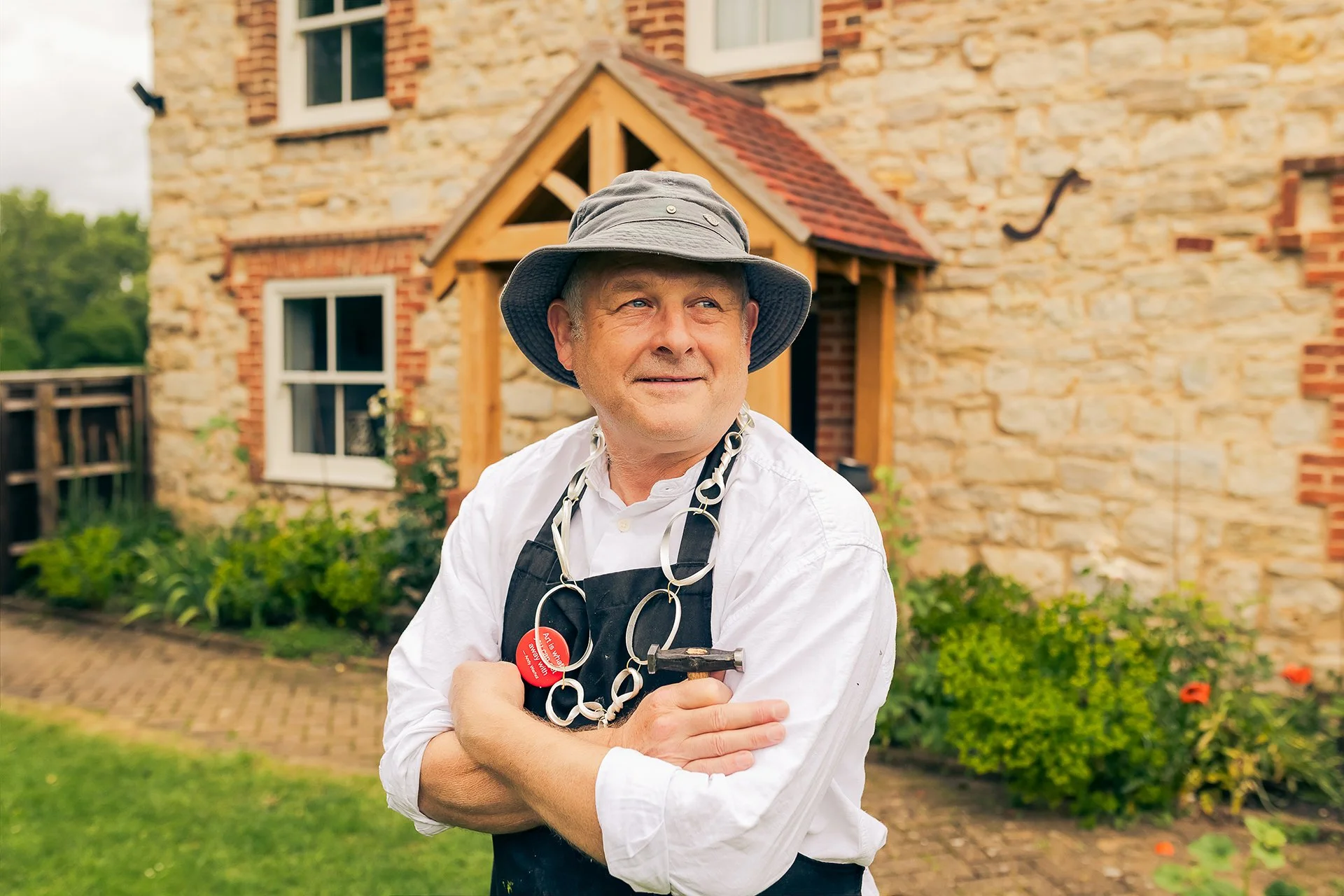
There is a part of Michael Carberry that still dreams of burying his silver jewellery on Scottish hillsides or tethering his work to trees, blasted by the wind and rain to see what years of serious weathering can create — wild, other-worldly textures maybe that no hammers could produce.
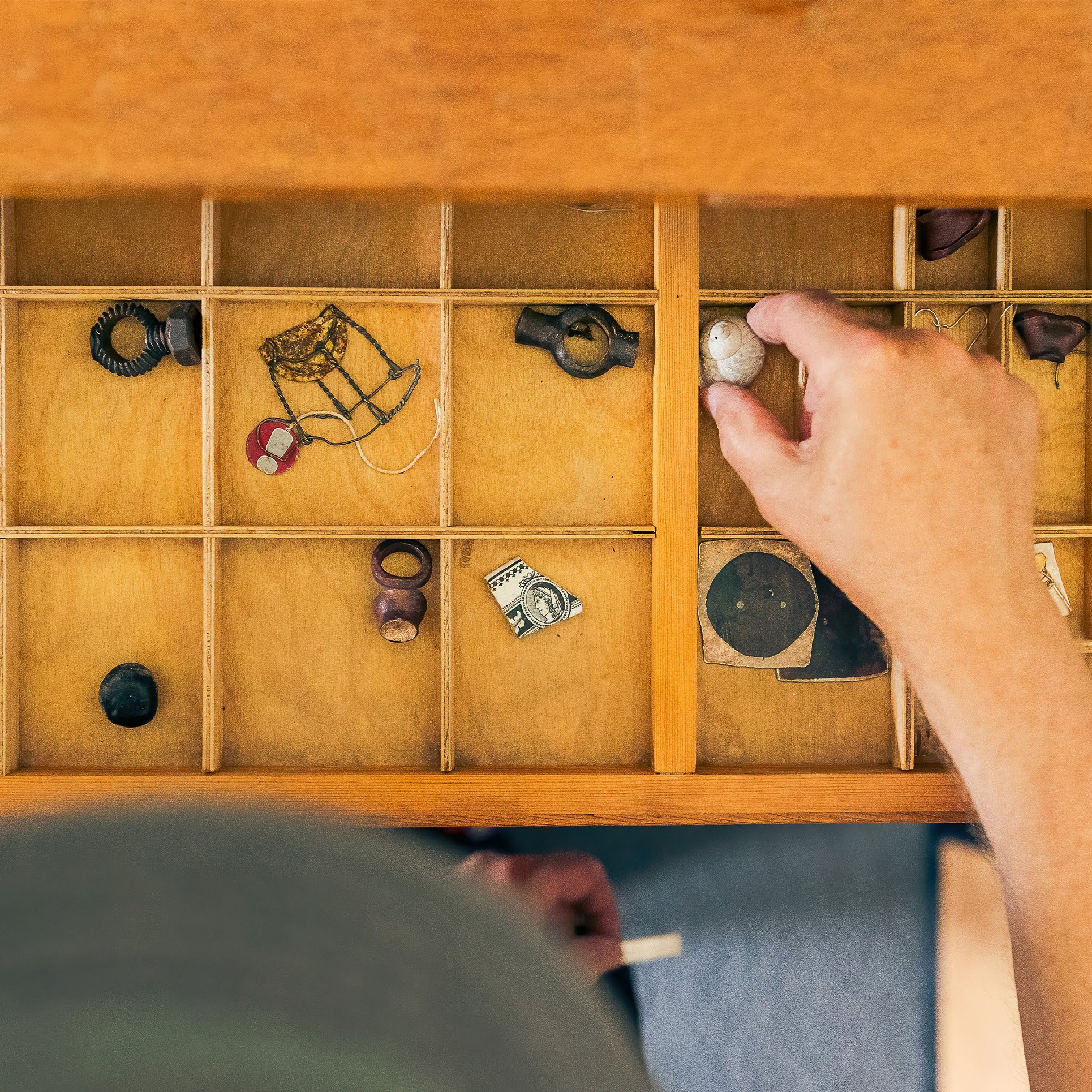
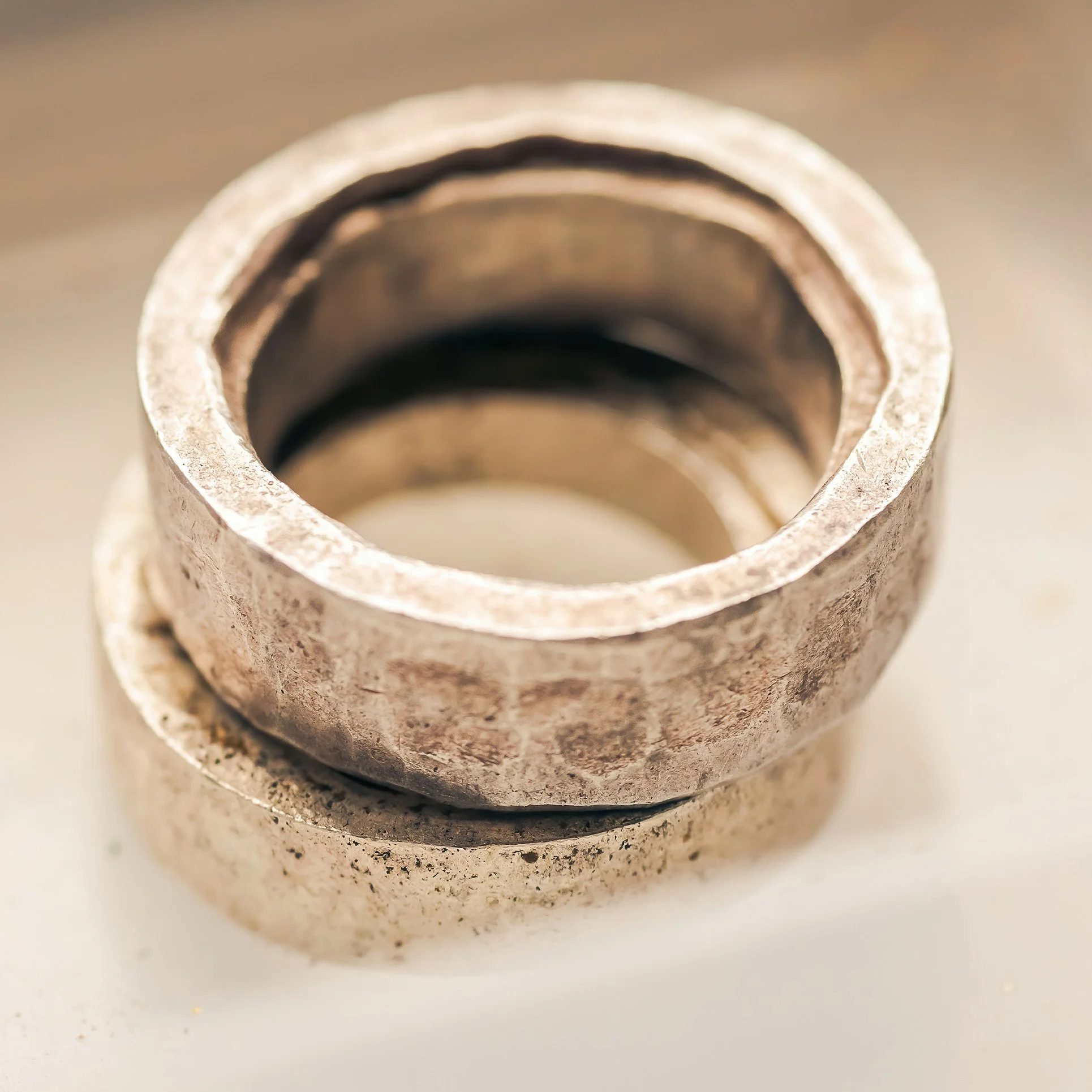
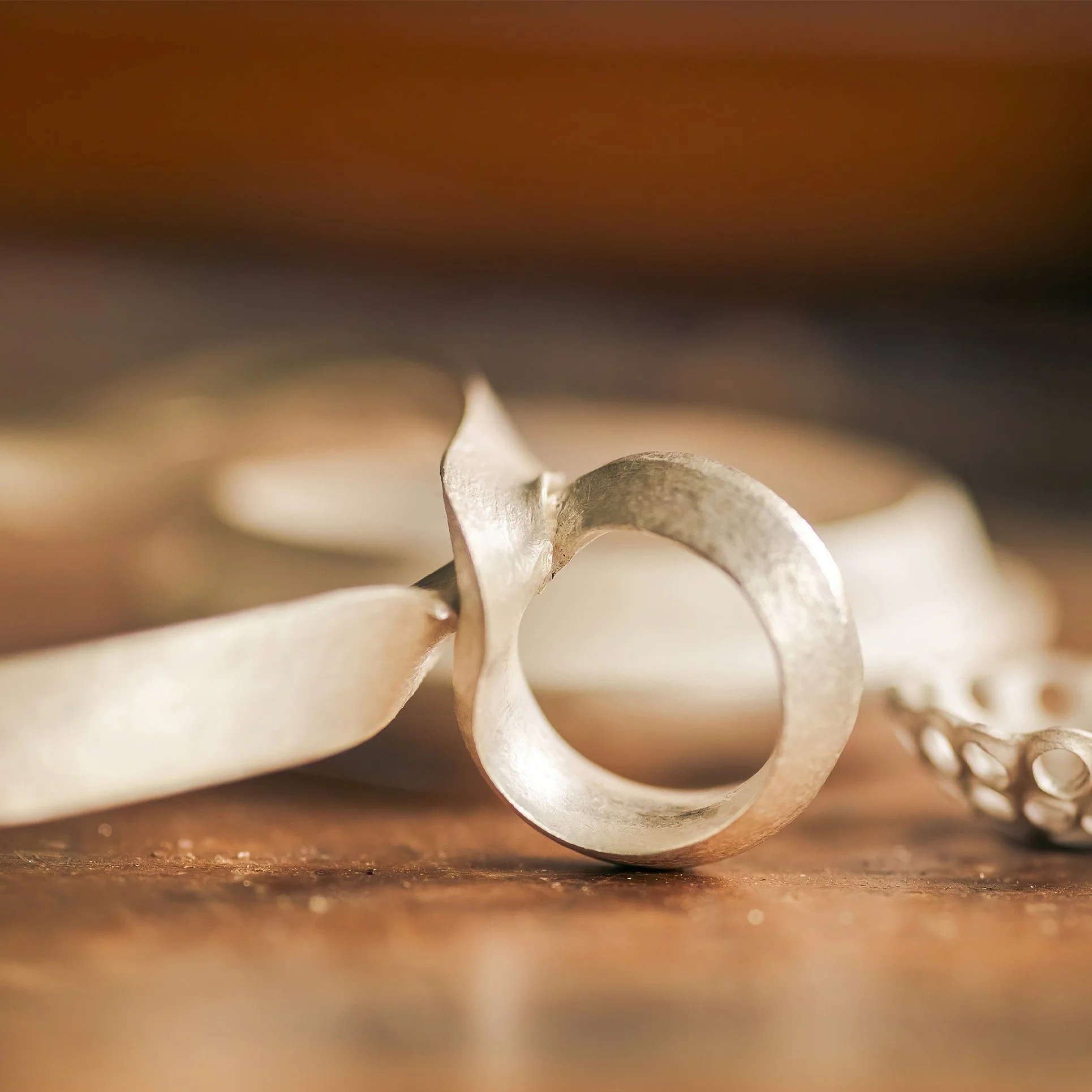
Then there is the Michael Carberry content in his uncluttered, serene studio attached to his lovely, well-manicured garden and home in rural Buckinghamshire, producing mostly silver, hand-forged jewellery that is at once minimalist, timeless, outside of fashion but that also displays the marks and contained energy of hours of skilled hammering.
These two aspects of the jewellery maker exist side-by-side and are what make his work so distinctive and give it its quiet power. For he is a rebel at heart and his work and career have all been about anarchy and playfulness contained within a strong discipline in pursuit of quality and pushing boundaries, coupled with a down-to-earth notion of what jewellery is and means.
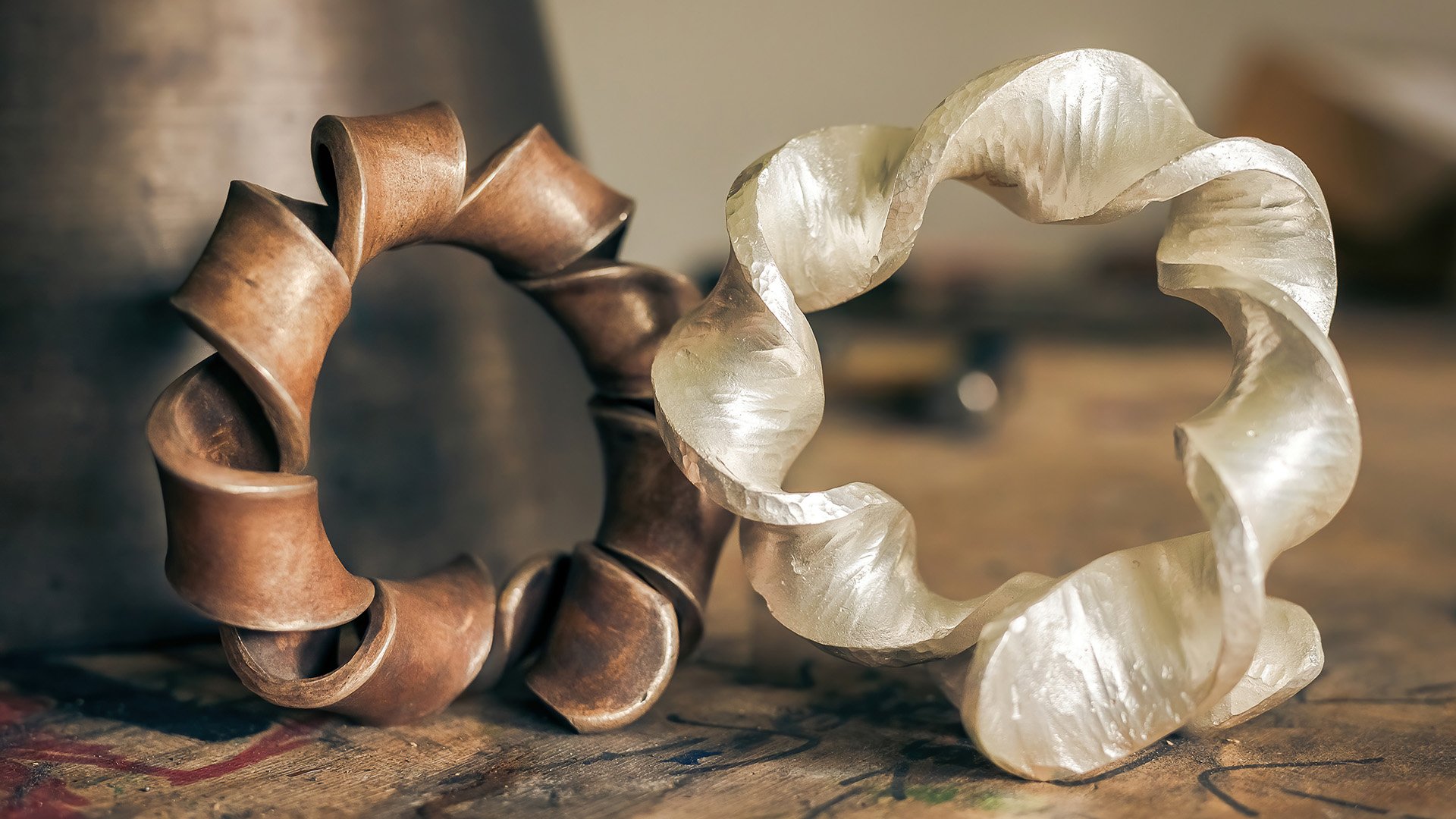
“I’ve always been attracted to work that has a raw aesthetic. You could see that somebody has actually made it rather than necessarily the process of totally dominating the material like through casting. Somehow they have managed to make something quite small that is very dynamic, it had movement or something about it,” he says.
As with his approach to his work, Carberry’s route into jewellery making was not a conventional one. His school in Oxfordshire was a sporty one and “I got it into my head that I wanted to play sport at a very high level and I was obsessed with riding and horses and horse racing seemed the easiest sport to get into. So I just went for it,” he says.
So his first career was as a jockey. Yet despite some success he ultimately decided it was not for him. But he had always drawn and enjoyed art “although if you had seen my metalwork at school you would not have been impressed”, and ended up on a foundation course at the Blackburn College of Art and Design, this led to a silversmithing degree at London Guildhall University (which incorporated the Sir John Cass School, known as the Cass), followed by the Royal College of Art, in 1994.
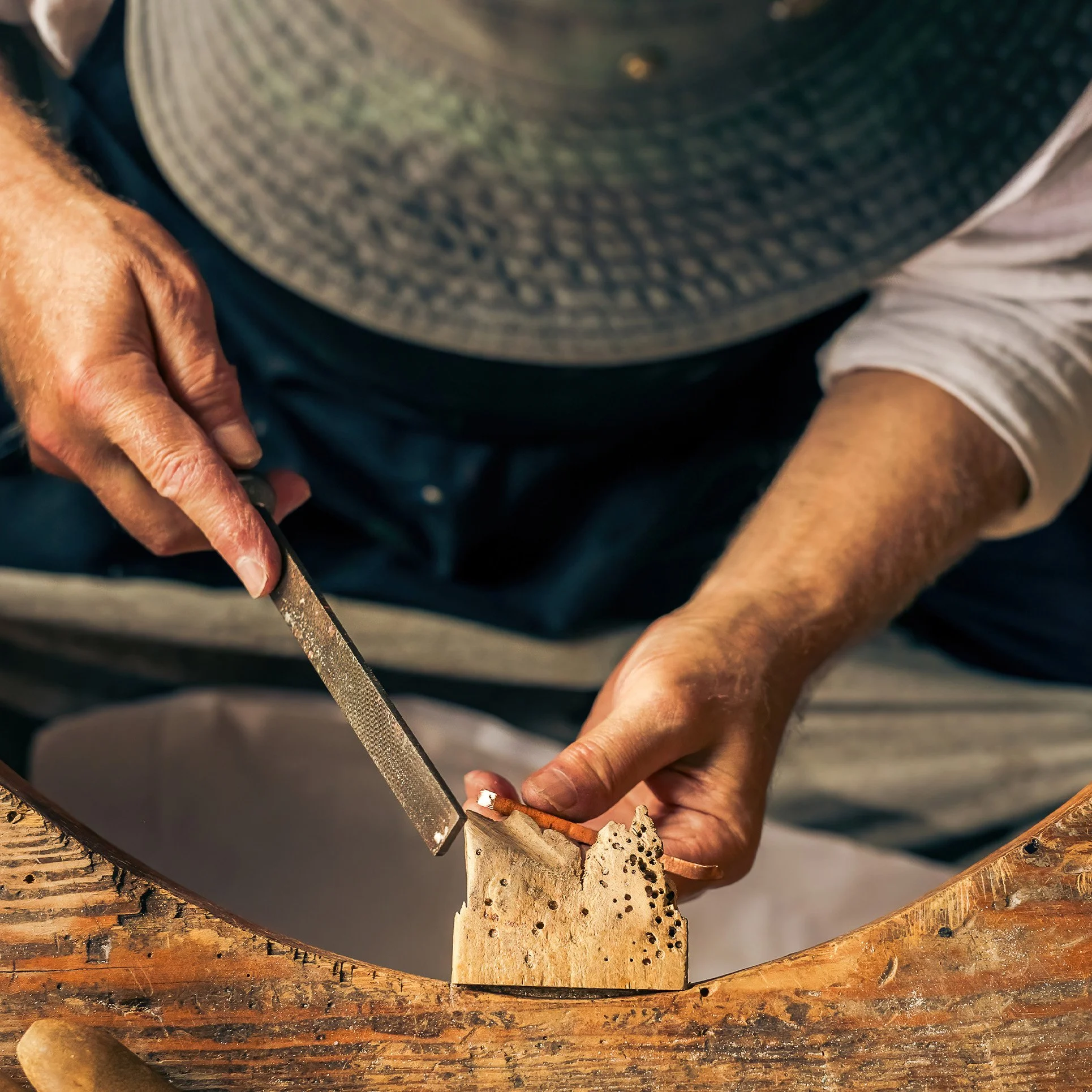
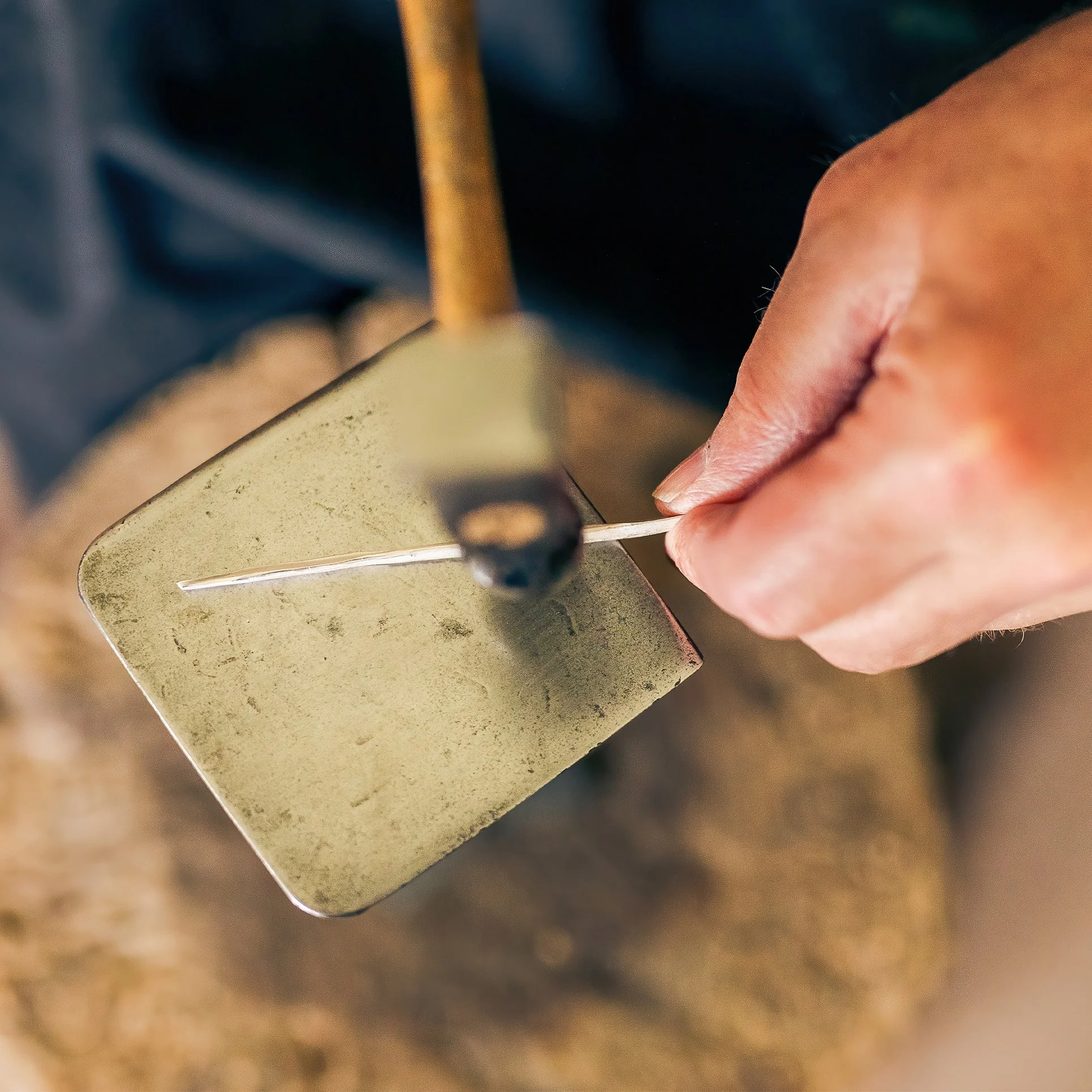
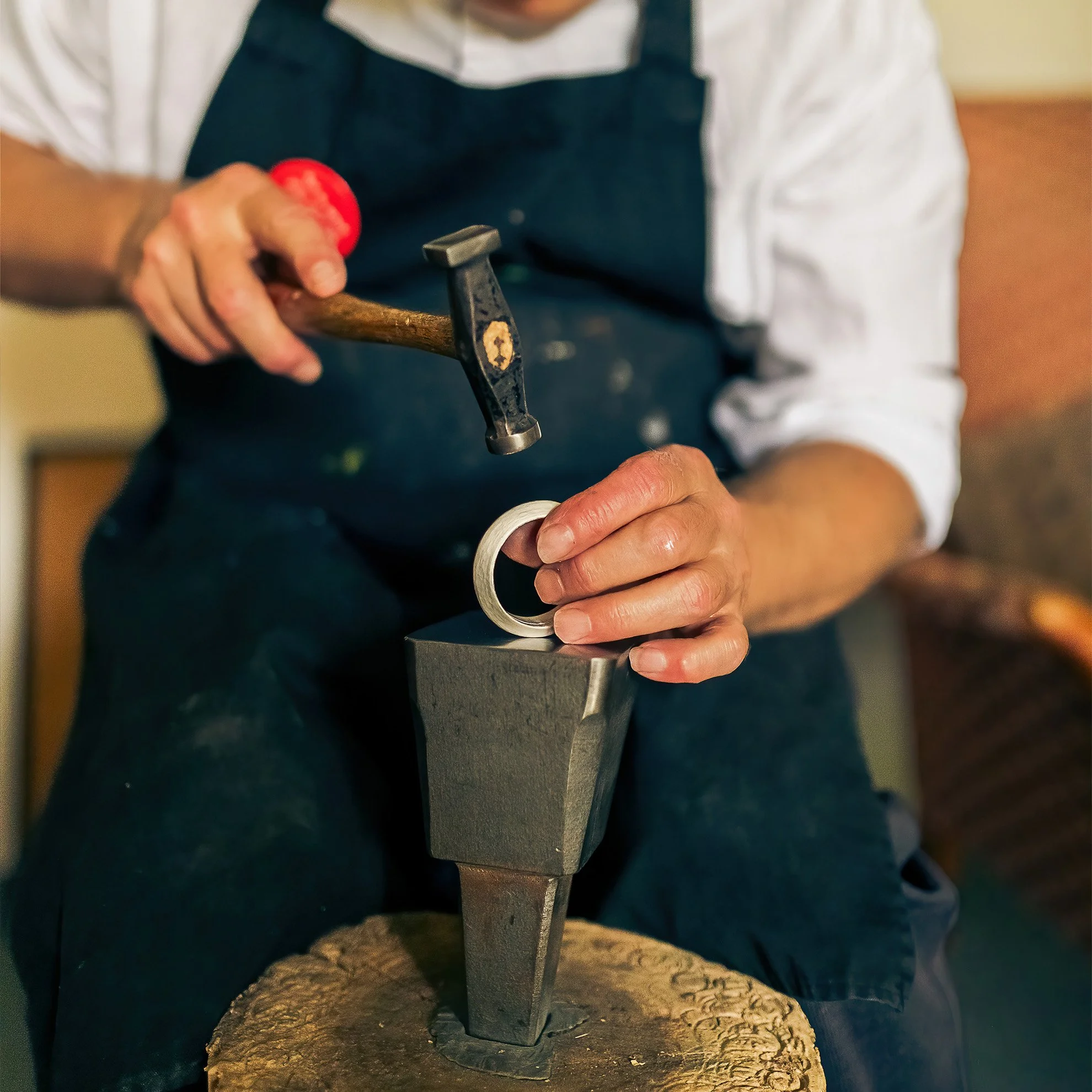
There the roots of his practice were forged, literally. “My work really changed when I went to the Royal College, mainly through meeting different people. About half the class were overseas students, from Denmark, Germany, Belgium, the Netherlands.” And it was the European aesthetic of this time, embodied by jewellers such as Hermann Jünger, the German jeweller considered one of the most influential of the 20th century, that Carberry was drawn to. It was European galleries, in turn, who were the most interested in representing him when he left the Royal College.
Yet it was a stint in Stockholm, Sweden at a placement with Wolfgang Gessl, an Austrian jeweller and silversmith, while he was at the Cass, which “put me off German jewellery for a long time”, but at the same time laid the foundations of the discipline and technical mastery that underpins Carberry’s work.
“I stayed there for about six months. Gessel worked for Sigurd Persson, who was a really top silversmith / jeweller; he could do everything. Persson was in his eighties at this point. It was a whole different philosophy there. Things had to be made a certain way with a real sort of quality I wasn’t getting at college.
“We would use wood and metal. But what put me off for a long time was that I was given a set square and told that everything had to be absolutely straight, absolute precision. I remember raising a silver bowl and a week later I was still raising it and that’s how precise it had to be done.”
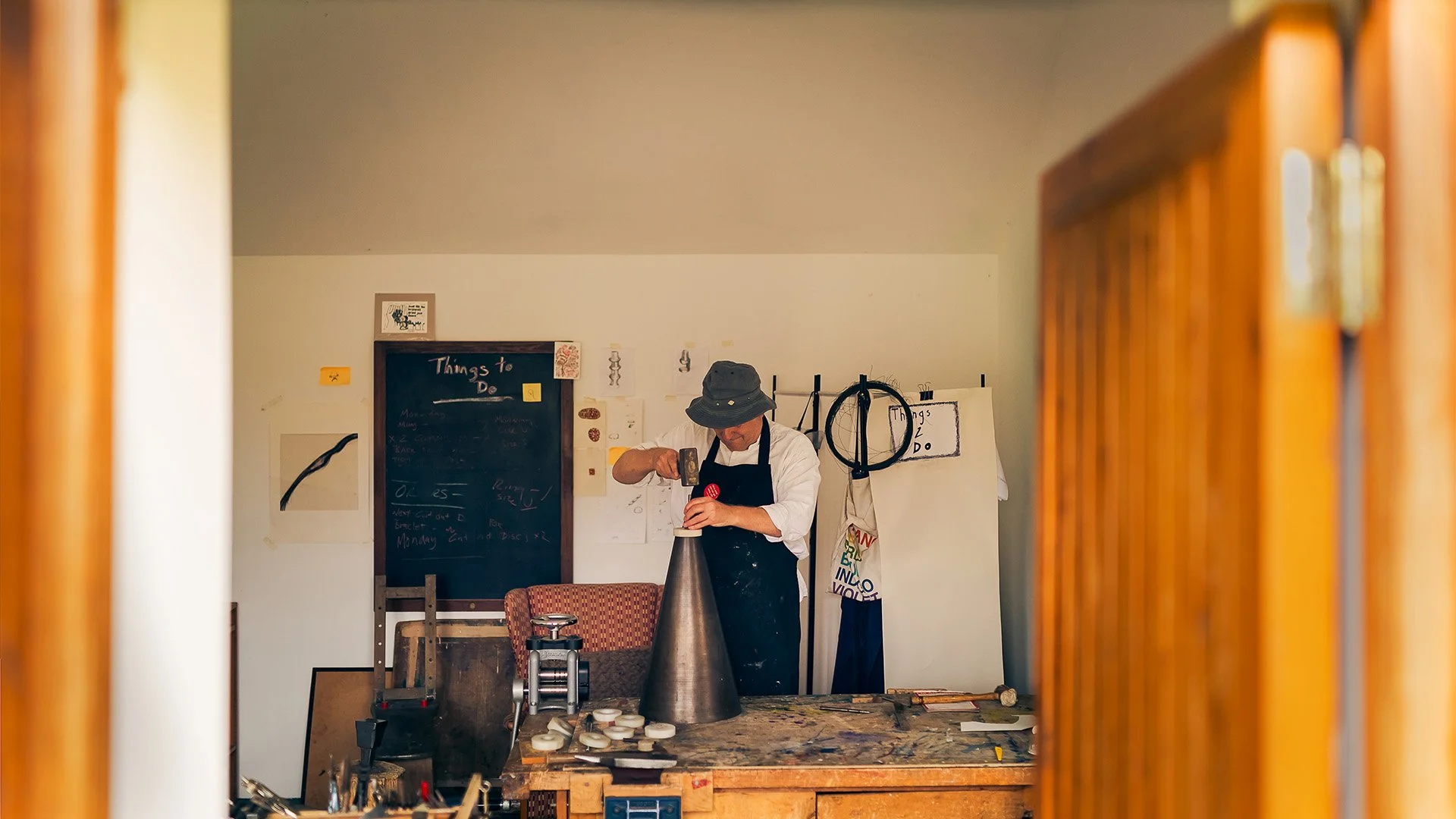
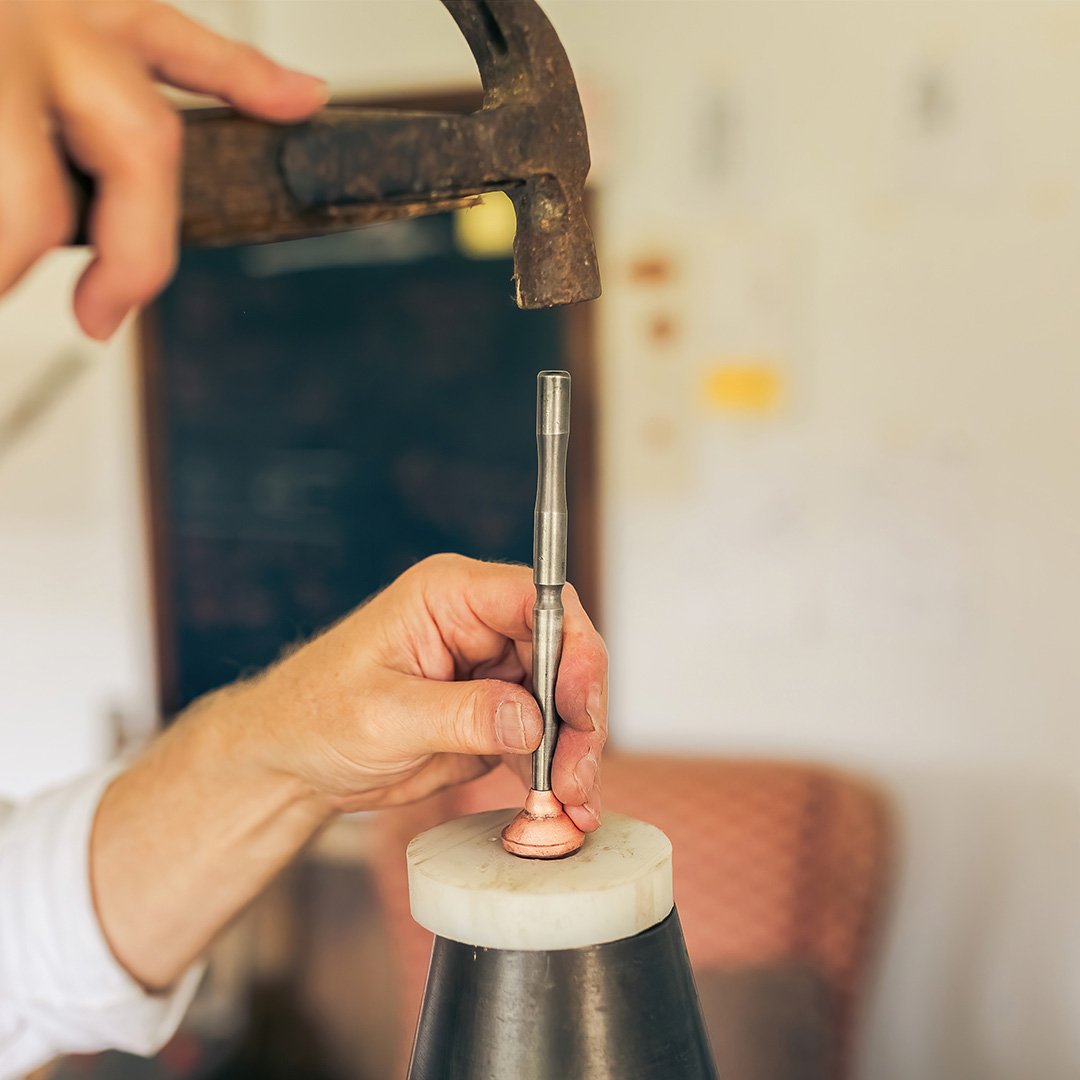
When Carberry punched a hallmark slightly off from where it was wanted into a piece he had spent four days making, he was told to start again. “But it taught me how to hammer really well,” he says. “Everything was made from flat sheets and we hammered it, I don’t think we ever spun anything.”
Carberry likes the elements of challenge and peril in his life and work and this is how he developed his hammering skills into his jewellery practice. “I’m very well known for forging stuff and that really comes out of a conversation, or a laugh really, where we [some fellow students] were saying, OK if I was making a piece what do I want to do and how can I put restrictions on it.
“So I would say to myself, OK I can’t lose any metal. I’ve got to make it from a certain size. Is it possible to get lots of variations; and it appears that it is. I love doing that.”
All these years later, this attitude is what keeps Carberry transfixed by his craft; the unbounded possibilities. It is all about the process, to the point where taking commissions can sometimes be problematic.
“I’m quite spontaneous when I work, I never do detailed drawings. I decide to do a ring, say, and I’ll decide its going to be this way and then off we go. So I’m an absolute nightmare. Someone has commissioned a piece from me through a gallerist friend and I’m saying to him there is no guarantee that it is going to quite look like what we’ve said. My friend’s response is, ‘I’ll convince him’.”
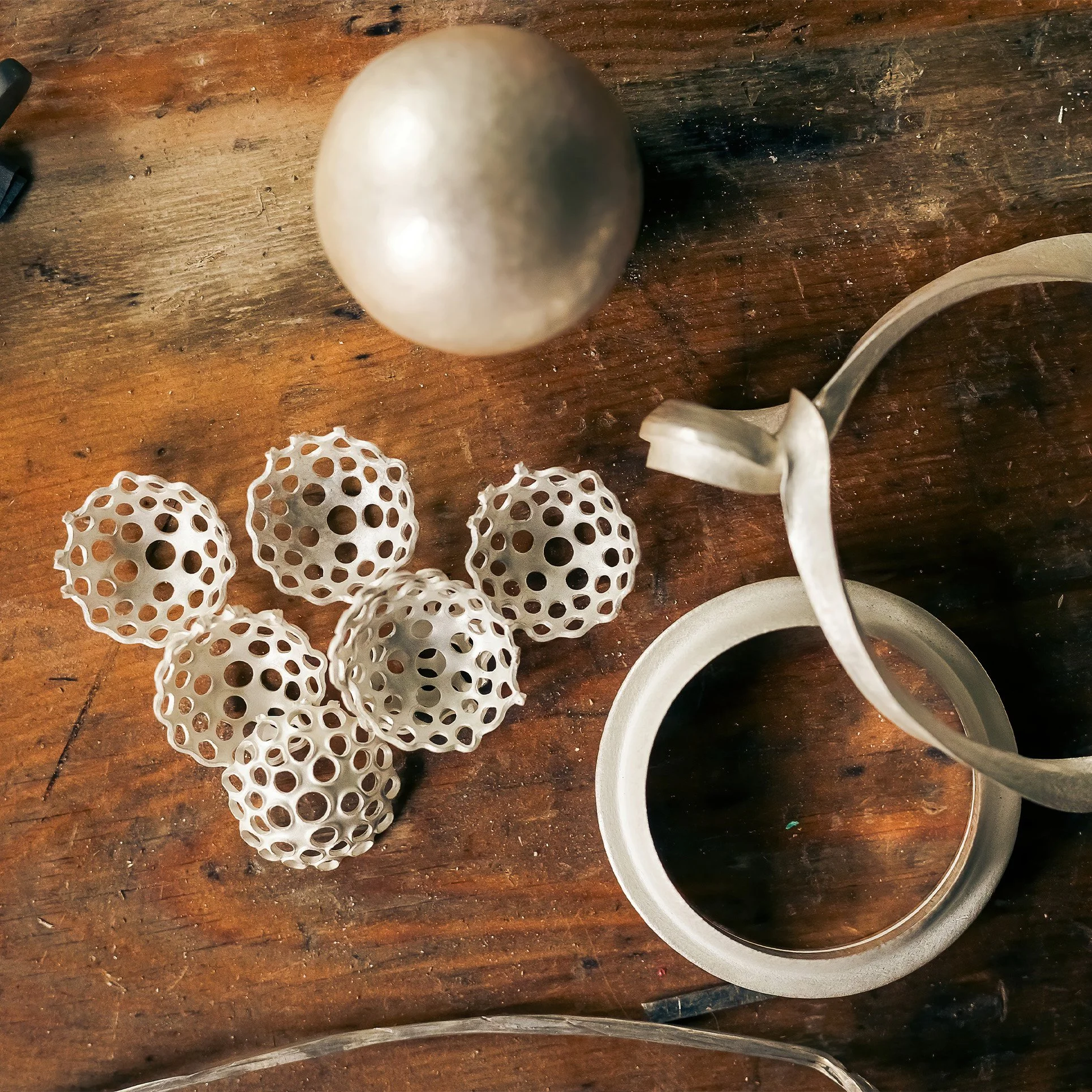
Carberry’s overriding pleasure in the process, in the play, “the mucking around” as he likes to call it, led to some gentle chastisement and what Carberry calls “the best advice” from one of his tutors. “He said to me you are very creative but you will not sit down and finish a piece off. He nailed it on the head. I had to stop mucking around and say this is a finished piece. You can then go and make another one that makes another one and then I’ll think of something else.”
He has always been influenced by his love of sculpture and that is an important aspect of his work. But fondness for sharp edges that characterised some of his early work has been left behind, partly for reasons of practicality. “Somebody is going to have to wear it.”
Also, his adventures in Europe in his student days and later persuaded him that there are limits to pushing the boundaries of wearability and turning jewellery into sculpture. “I went to Austria and met this maker who I have to say was fantastic, he really made me laugh so much. He used to make brooches that people would stand in. It was just completely bizarre. I thought this is less like a brooch and more like a sideboard.”
Carberry is a wonderful raconteur and humour is very important to him, but he believes that one of the reasons he began to be noticed as a maker was when he started to take himself and his work more seriously. And as much as he has appreciated the more performative aspects of his chosen field, in the end it comes down to the simple notion that “I quite like the fact that when I make a piece of jewellery, somebody can wear it and then it has another life”.
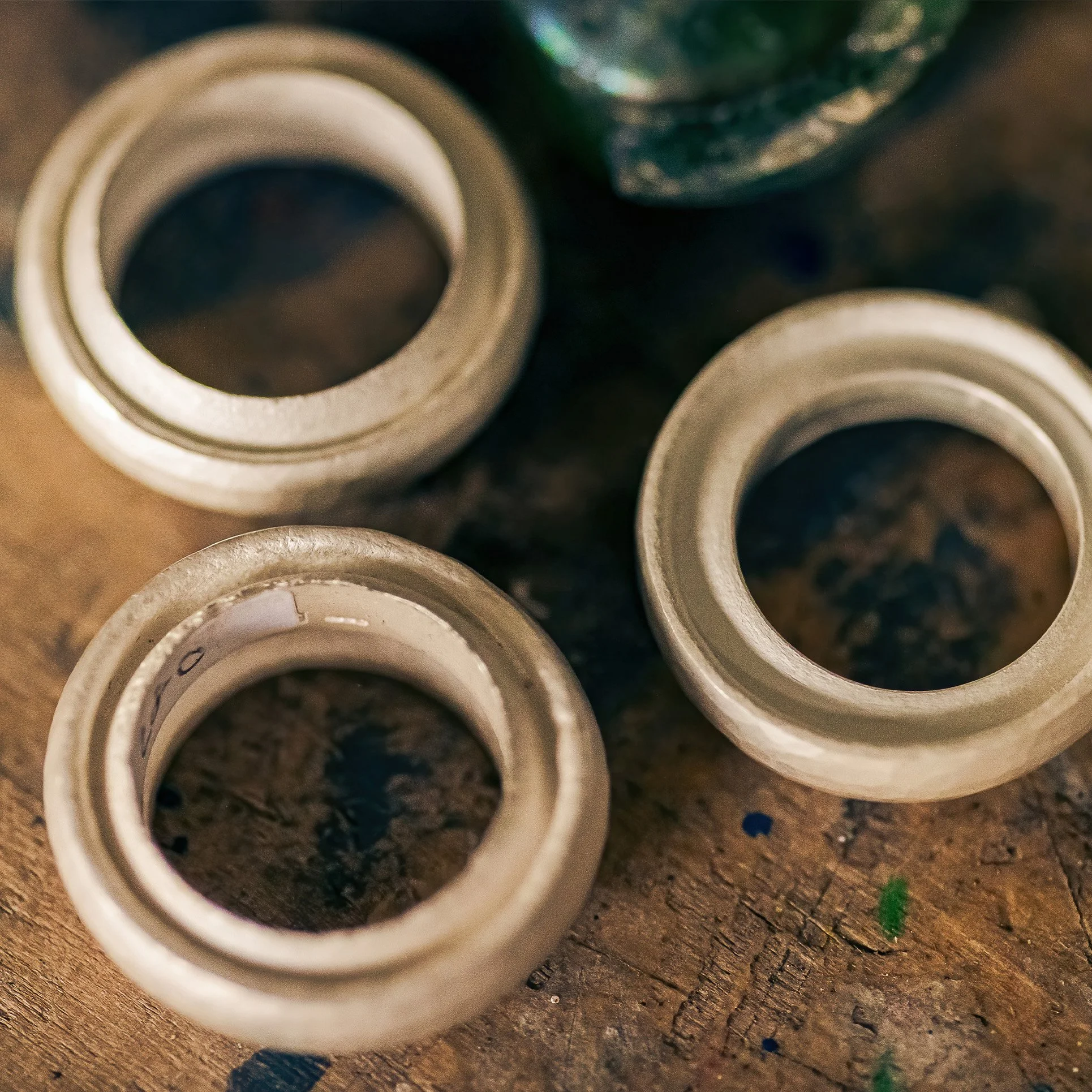
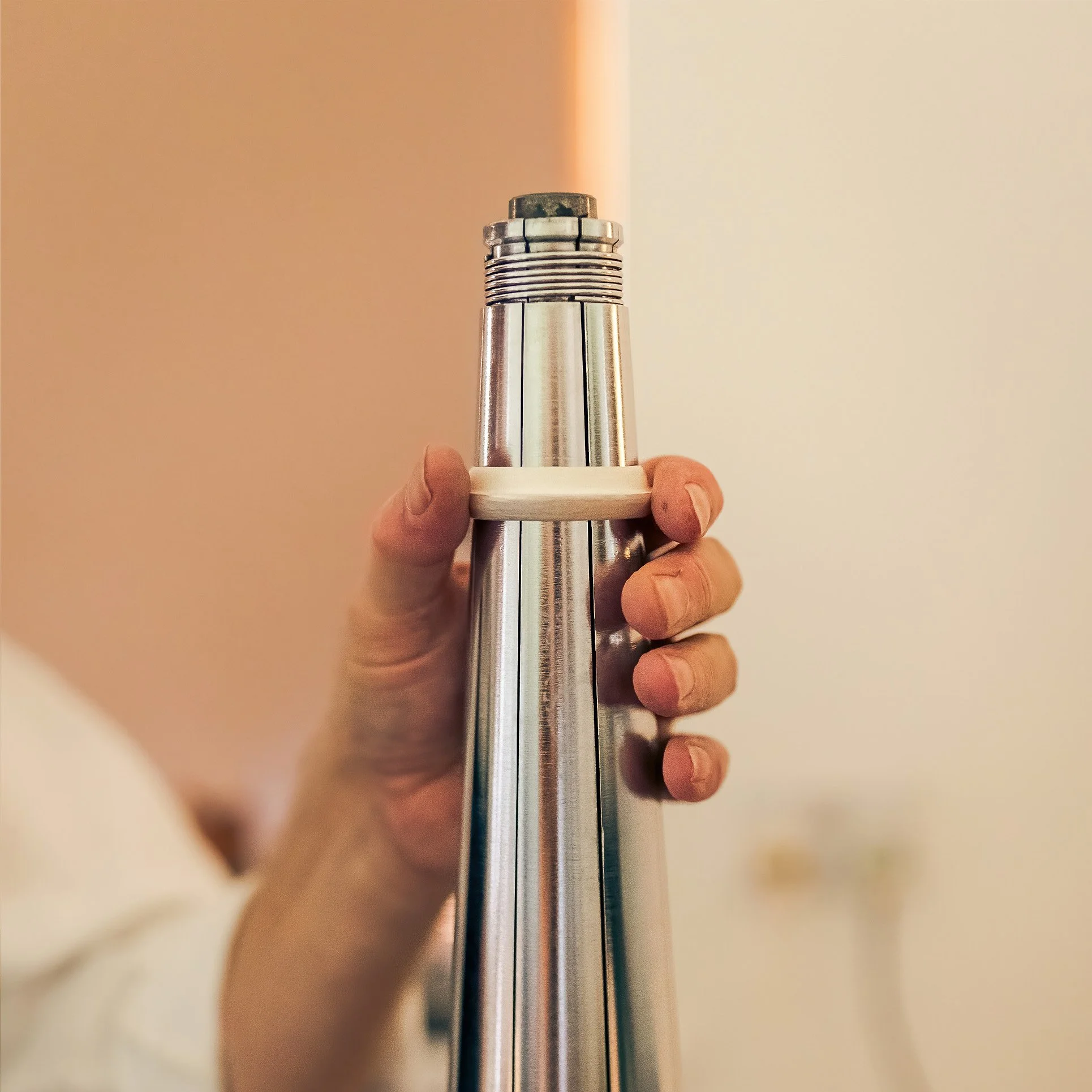
At the moment he is engrossed in a two-year project to see how far he can push a ring through forging from a small starting point. “It’s fraught with danger because every time you make it to a certain point it just breaks. But at the moment I haven’t technically managed to get it to the size I want. I’m using formers in the centre to expand it. I want to find that limit. And then I’m going to turn it into something sculptural to wear.”
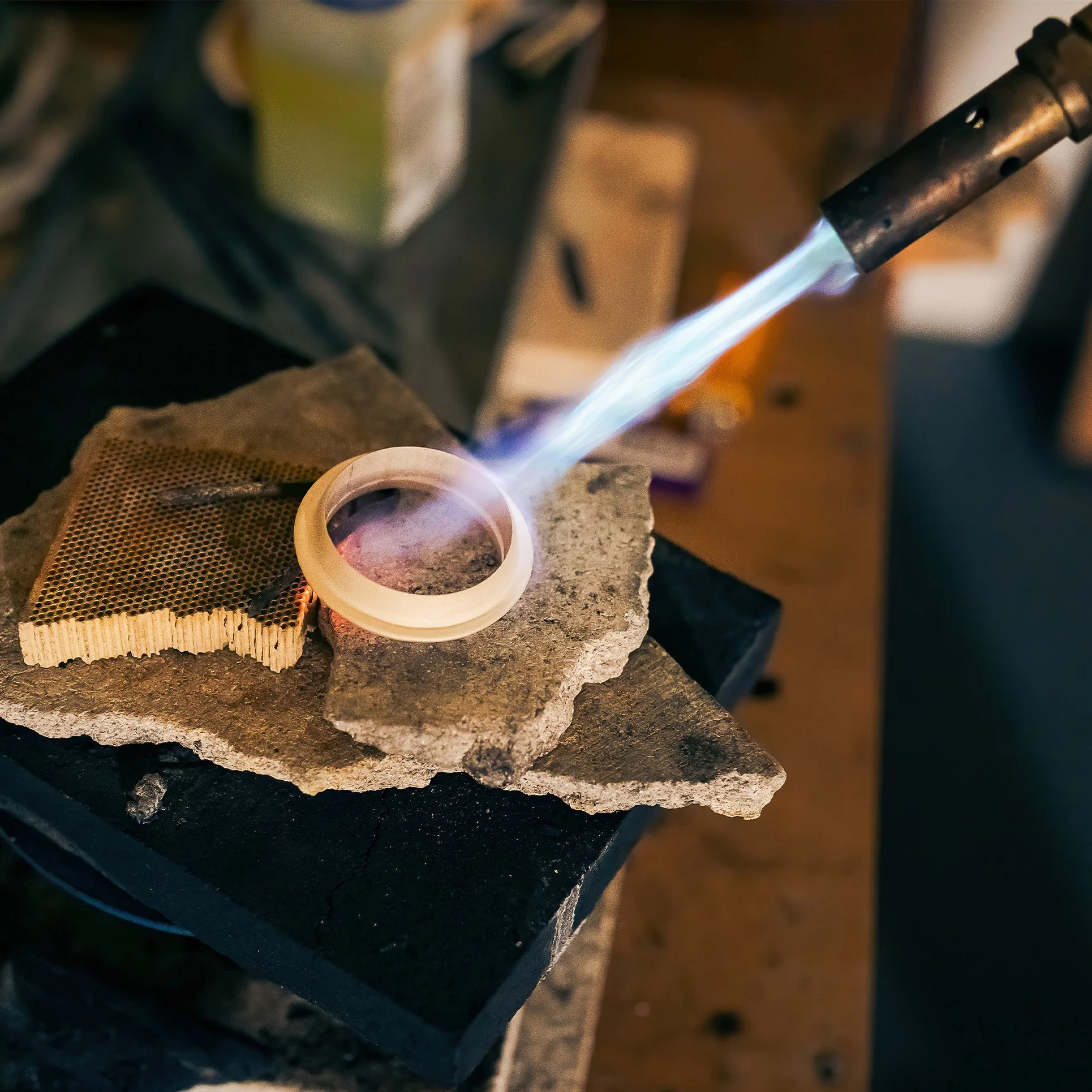
Pushing the process as near to that moment of peril also applies to his approach to soldering. “I got it into my head that if I can make a ring without soldering, what a good idea that would be. Fusing is much more fun, although that guarantees if you get it wrong, you melt it. Yes, it’s a fine line, particularly if you’ve got a chunky piece because you have to use a lot of heat. But you know what, I’m prepared to go right to the edge and I will accept that if it goes wrong I will have lost two days or a weeks’ work. But I’d rather take that bit longer to get it right. And if I solder, I want you to see that it’s soldered. I really don’t care that there is a bit of a mark. To me it is part of the process.”
He has always combined making jewellery with teaching art in schools. At the moment he is teaching part-time at a school for students with a broad range of special needs.
“I went there because I was very curious, having worked in mainstream schools, to see how some kids that have been slightly marginalised produce art. And I also thought it would inspire my work a bit more, and I think in some ways it does, not in the output but in seeing the way they produce it. They are slightly freer, they are not so self-conscious — they don’t overload their work with massive meaning.”
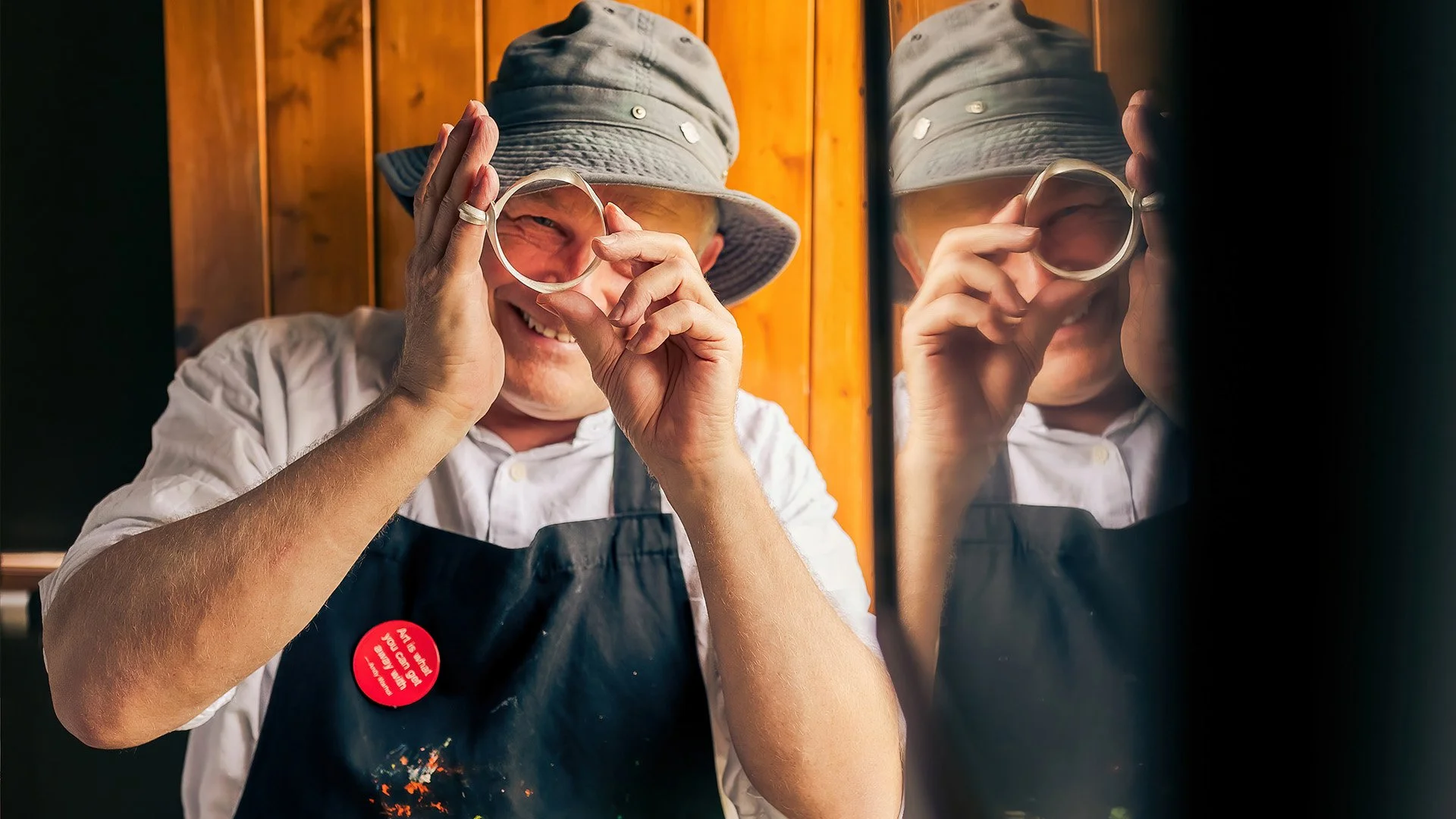
One of his students said to him that he did not want to be seen as someone with special needs: “I want to be an artist or I don’t want to be an artist.” Carberry says, “I thought to myself this is the best definition that I’ve come up with. And I thought yeah, you standing on your own. You are what you are.”
He believes there is a lesson here for jewellers, too. “It’s a bit like making jewellery,” he says. “That’s what you do and you don’t need to be ashamed of it. I remember having these debates with my colleagues. Are we artist jewellers, a sculptor. Look no, [making jewellery] is what you do. Just wear the badge and own it.”
Written by Caroline Palmer | Photography of Michael in his studio by Paul Read