
When it comes to jewellery making, stone setting is a fundamental method. It refers to the process of securing gemstones into metal settings to create stunning pieces of wearable art. This technique, which has been used for centuries, requires precision, skill, and attention to detail to ensure the stones are set firmly and securely.
For Goldsmiths’ Stories, writer Elisa Anniss spoke to accomplished stone setters Sean Sims, Tomasz Solinski, Niall Paisley and Michael Summers about the vital role they play in the jewellery industry.
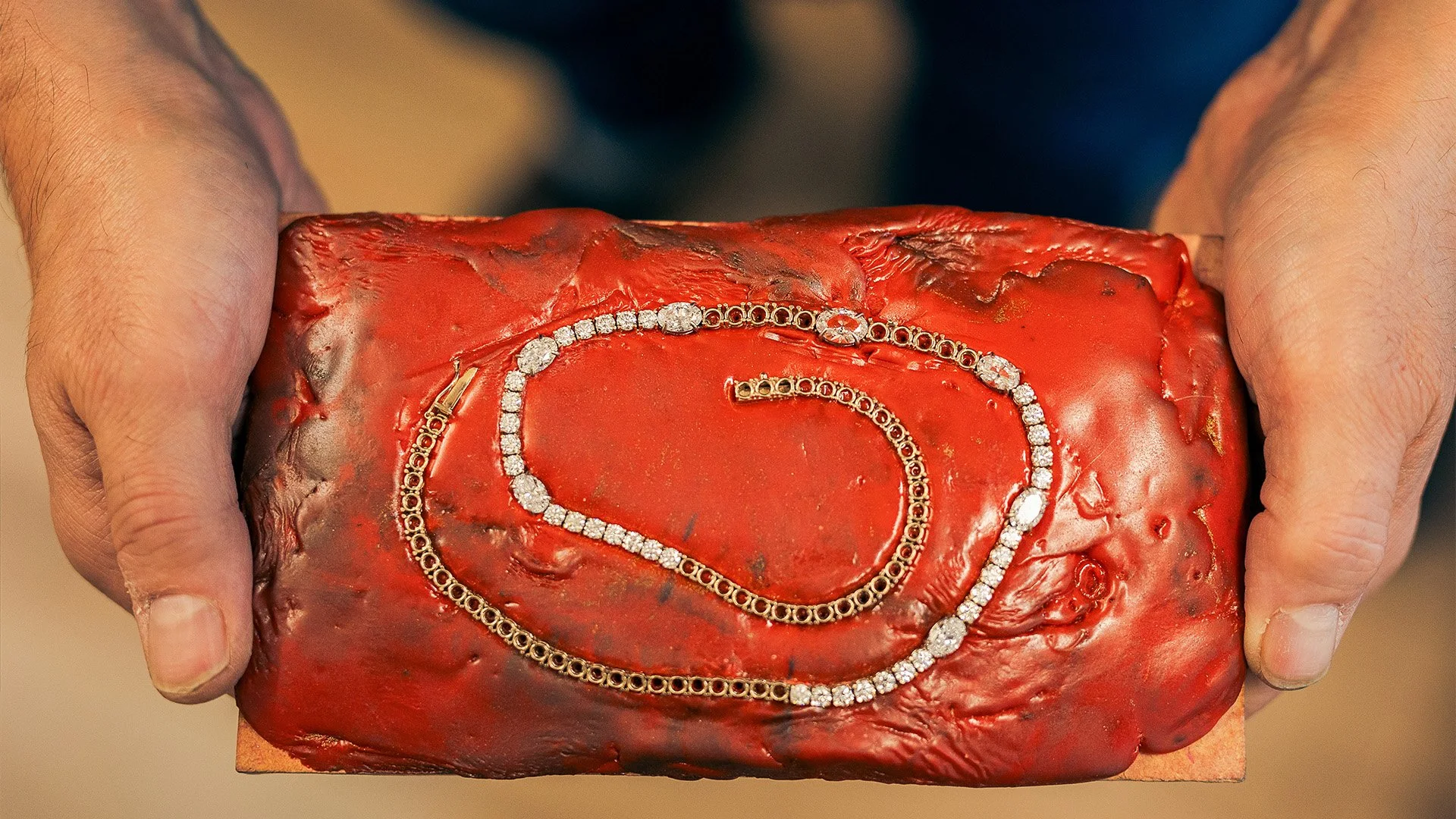
The universe of the stone setter is one of specialist tools and a certain vernacular that includes spit sticks and scorpers. Setters are divided between those who use their hands and those who use air tools, although there is a mutual respect between the two.
Take Sean Sims, an experienced stone setter who teaches short courses at the Goldsmiths’ Centre. He uses scorpers, which are like mini chisels that fulfil the same role as an air tool by cutting the metal. Everything from micro, claw and rub-over settings, Sims does by hand. “It was how it was done five generations back in Victorian times,” he adds. Sims started in 1985 as an apprentice in Hatton Garden at a time when the Job Centre played a pivotal role in placing teenagers in craft positions. Here, he worked in a large workshop that focused not just on jewellery, but also on objets d’art and statues. As a result, Sims is unfazed by the size of the pieces that he may be asked to work on.
Since the demise of large jewellery manufacturers in London, setters, many of whom are self-employed, work hand in glove with mounters and independent jewellery designers who provide them with work. Sims, for instance, shares his workshop in the Goldsmiths’ Centre with two mounters. “It takes less time to set than to mount a piece,” he explains. “We have some shared customers, but working together, communicating, and sharing ideas helps.” These days work is often posted to him from all over the UK, including from one regular customer in the Isle of Man. Other clients include Brooke Gregson and Ellis Mhairi Cameron. “Sean is incredibly talented – he's been an essential part of my work since 2019, when I first introduced diamonds into my designs,” says Cameron. “His depth of experience, plus his instinctive understanding of my erosive setting style, is [truly] invaluable. There is a real, genuine trust in our collaboration.”
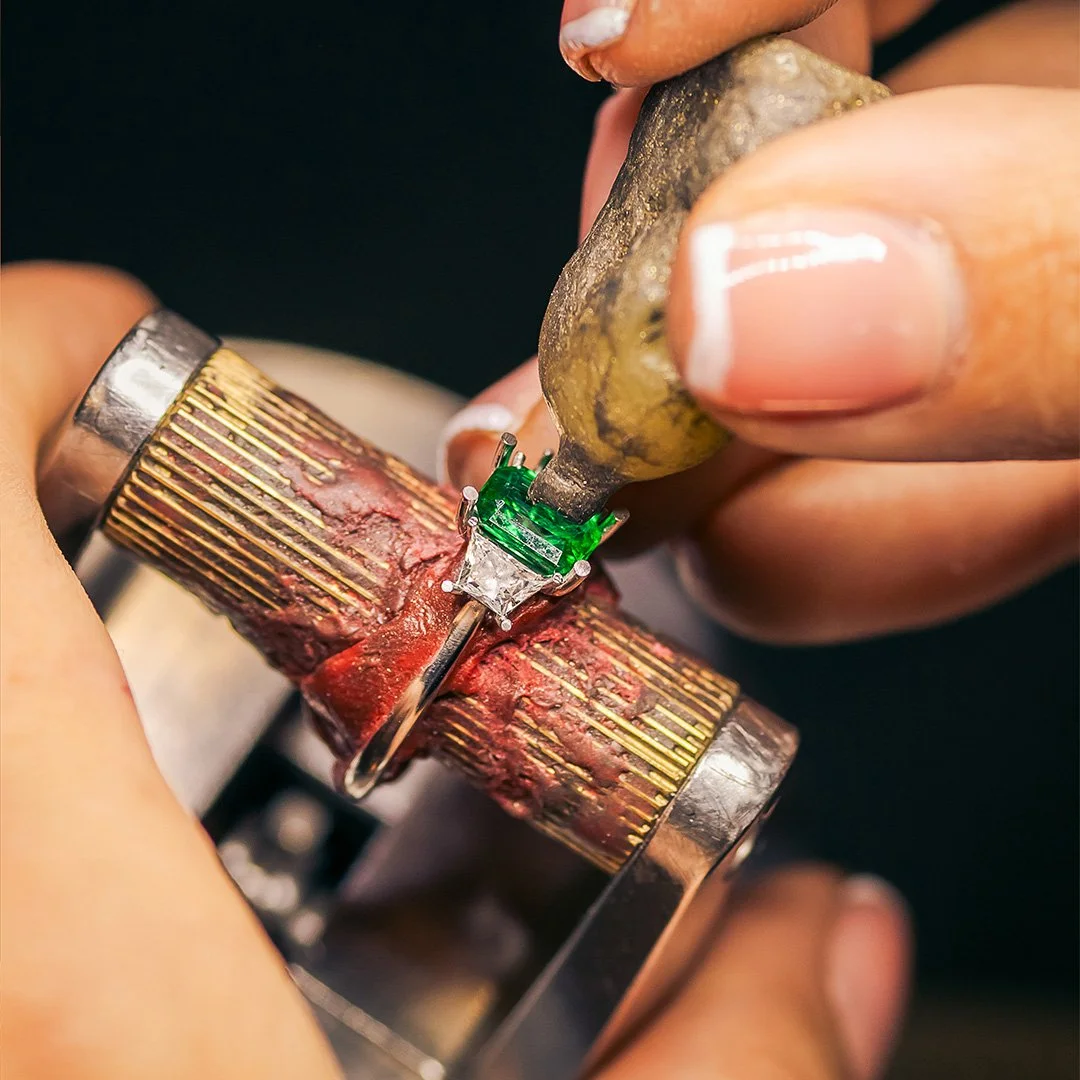
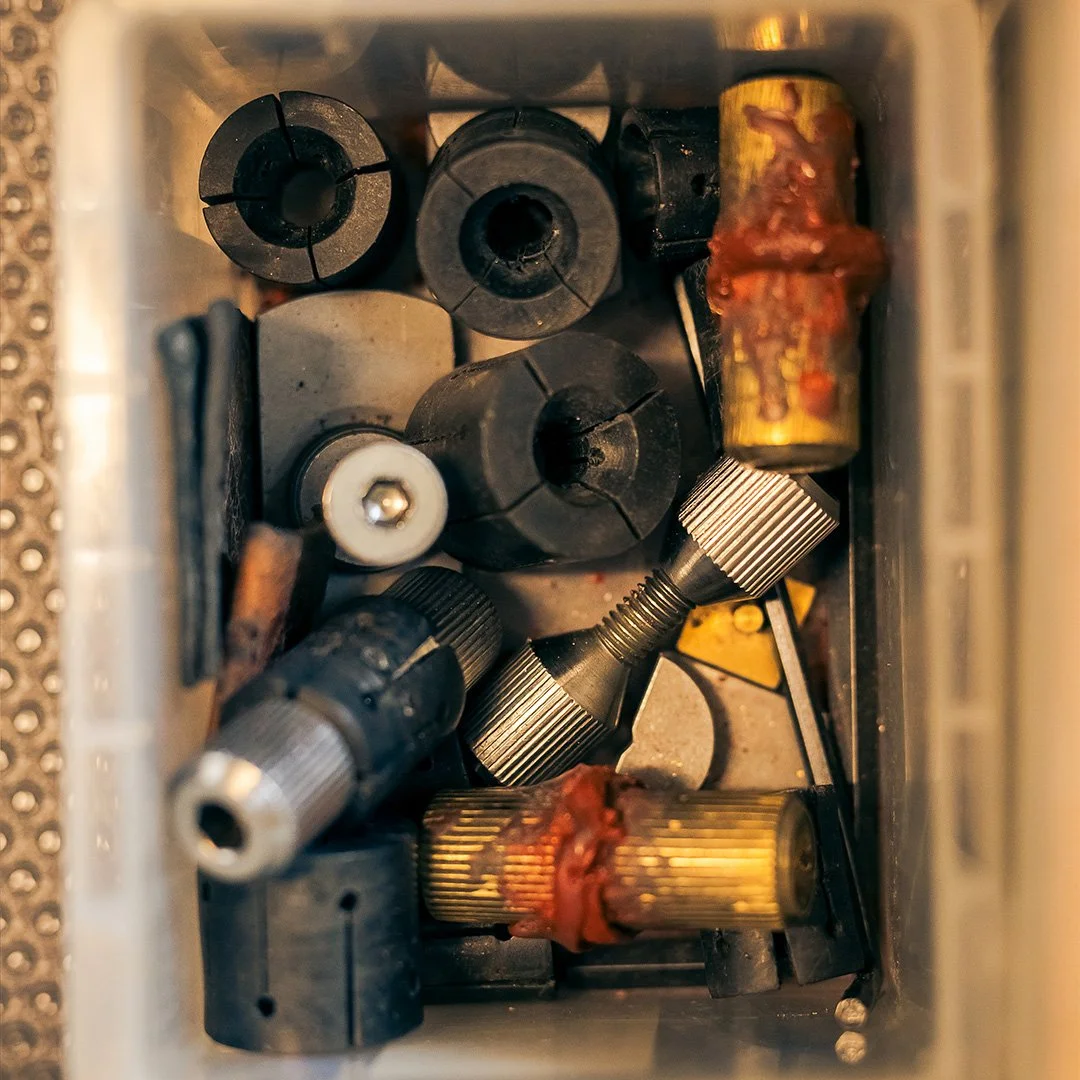
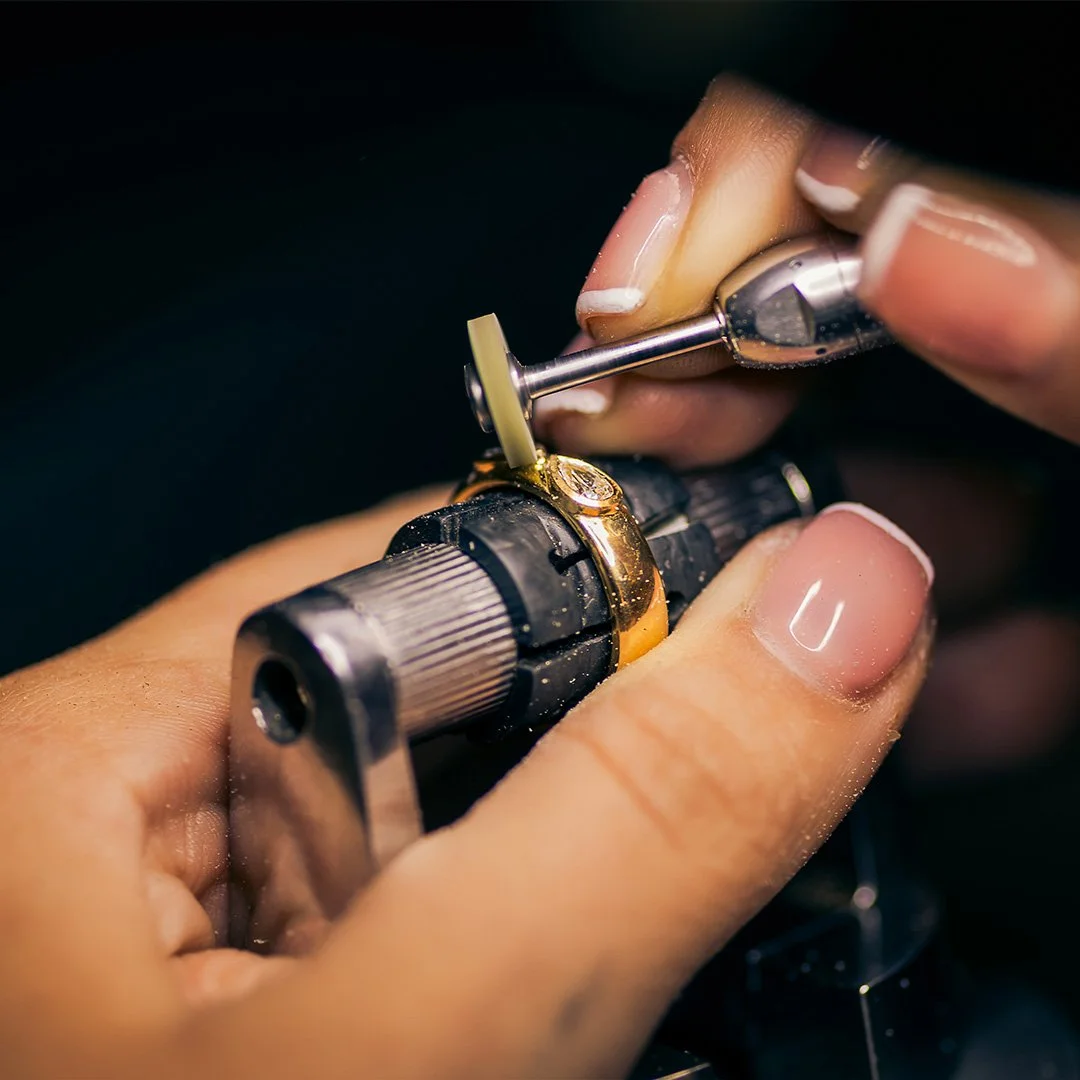
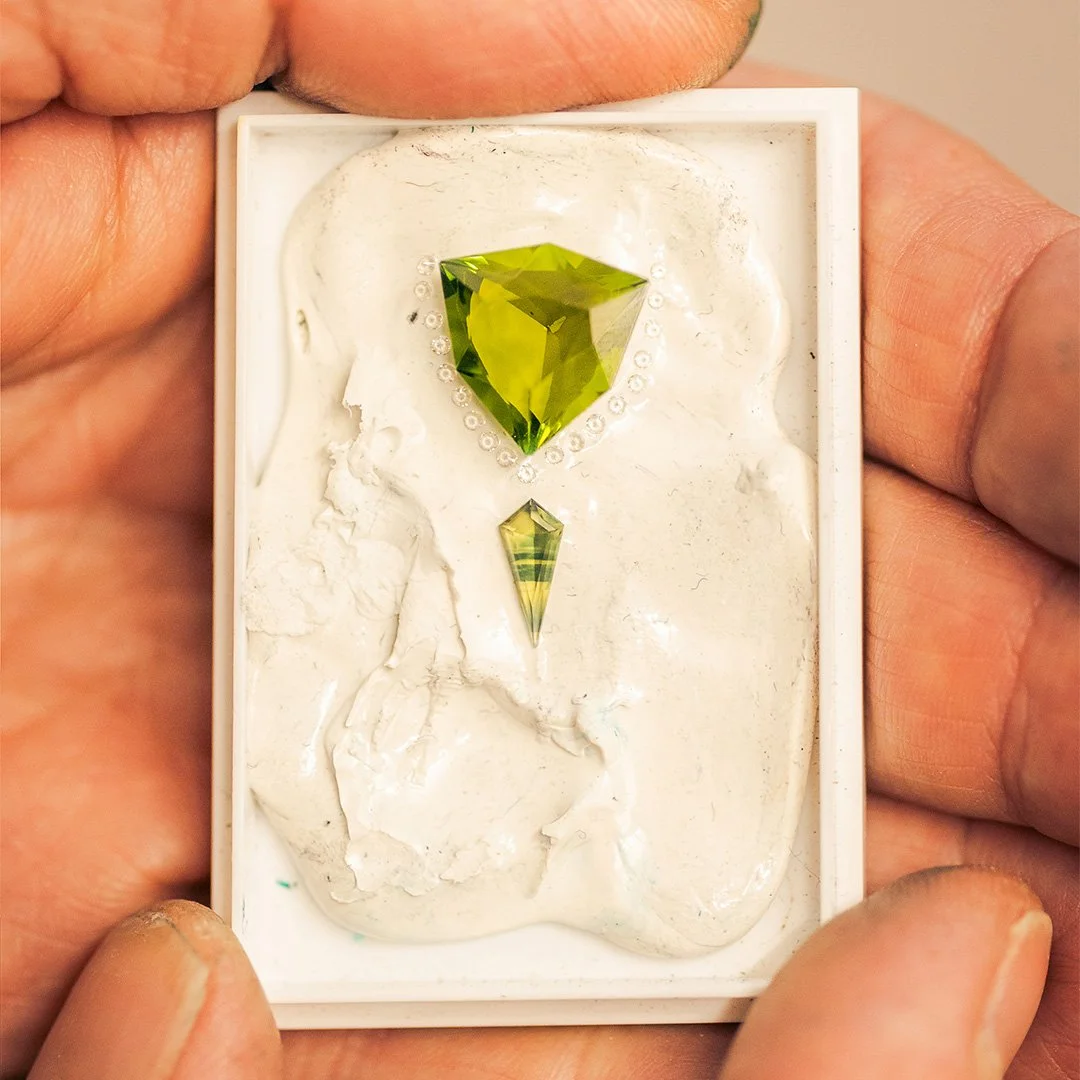
Still, some setters are employed. Pragnell, the sixth-generation family jeweller, employs four full-time stone setters in its workshops in Stratford-upon-Avon and Leicester. According to its managing director, Charlie Pragnell, setters are recruited via trade publications and through word of mouth. The company also follows the tradition of the master/apprentice relationship throughout its organisation. “The process depends on the experience and ability of the apprentice […] even masters never stop learning,” he adds.
Usually, the setter behind a piece remains anonymous, but this isn’t the case for Tomasz Solinski. The Gdansk-born craftsman sets stones by hand and works alone from a small Hatton Garden workshop, where today a couple of hundred burrs are neatly lined up on his bench. “It’s through the process that you innovate and come up with your own way of approaching a setting,” he explains. Picking up a burr with a round head, he continues: “I use a round burr to create a line and make a hole for the stone.”
Solinski stopped using a microscope because he found that his eyes kept tearing up (one of the perils of being a setter) and he now uses magnifying goggles instead. An avatar of Solinski, depicted wearing head-mounted magnifiers while climbing out from a ring, is central to the apologetic piece entitled Sorry, Tomasz. It was created by Richard Farbey and set by Solinski as part of Farbey’s 2023 Central Saint Martin’s jewellery bagraduate collection, which won him the Brian Wood Memorial Medal.
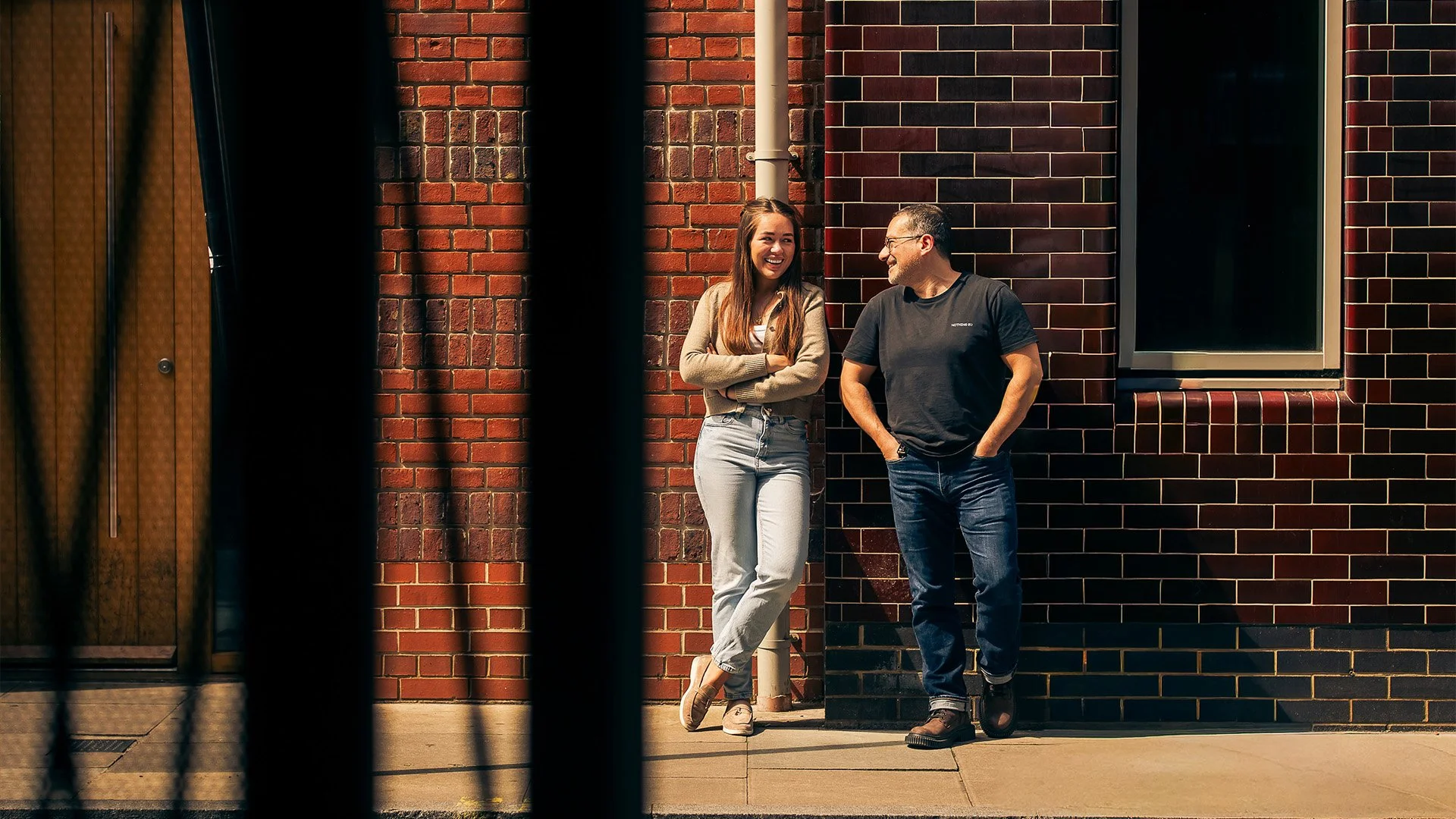
With this piece, Farbey raised the issue of how mounting and stone setting using cad impacts the role of craftspeople such as Solinski. Niall Paisley, a setter for over 30 years who has also taught the craft at the Goldsmiths’ Centre for more than a decade, explains that he considers the introduction of air tools incorporating tungsten carbide (known for its extreme hardness) as probably being even more disruptive than cad to the world of stone setting.“It allowed you to cut brighter, shinier lines into the metal,” he explains. “With an air tool, the body doesn’t need to adapt or have the strength to cut the metal. The air tool does it all for you. You put your foot on the pedal, and you guide the tool, and it cuts in the direction that you hold it in with no physical push necessary.” He adds that when setting by hand, there is a whole human element that must hold the tool, push and control it through the metal. “It's an entirely different approach to setting.”
He continues: “If you go back to the 60s, 70s, 80s or even 100 years ago, we only had our hands to hold those tools.” It was a very physical job. “When you first went to do your apprenticeship, your body physically had to grow. It wasn't just learning how to control a tool to get the results. You had this physical morphing of a jeweller, not just learning the techniques, but his or her physical body grew and changed as a result to be able to do this.” This physicality, he explains, led to more of a personal touch from the setter.
Today, Paisley teaches Foundation Programme students the differences between the two approaches and says the consensus is that setting the traditional way can allow for more “artistic license”.
However, the advent of the air tool has cleared the way for female setters to increasingly come to the fore and shake up what was once a male-dominated world. Take Alysha Strong, a 2021/21 graduate of the Goldsmiths’ Foundation Programme and apprentice to Michael Summers at Summers Diamond Setting. Strong is Summers’s first female apprentice. She started with him in his 300 sq. ft Hatton Garden workshop in 2021. “It’s been a fantastic experience – she’s great company, and I’ve been amazed to see what she’s capable of,” Summers says. Her spectacular Whispering Bloom Ring, featuring 703 stones that took 107 hours to set, was featured in the recent exhibition Apprentice to Masterpiece at The Goldsmiths’ Centre. In 2023, their professional relationship was recognised with the Apprentice and Master Award at the Goldsmiths’ Craft and Design Awards.
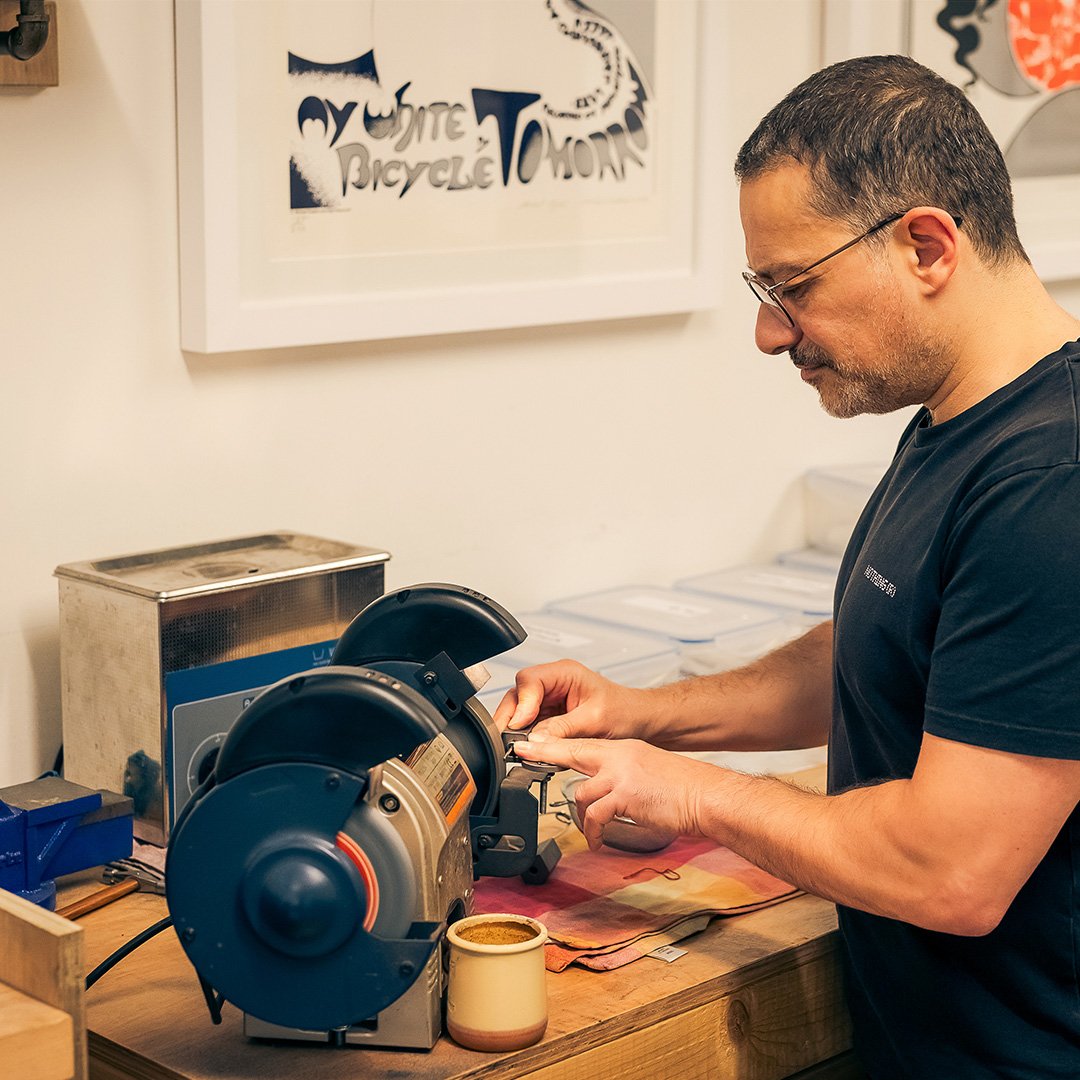
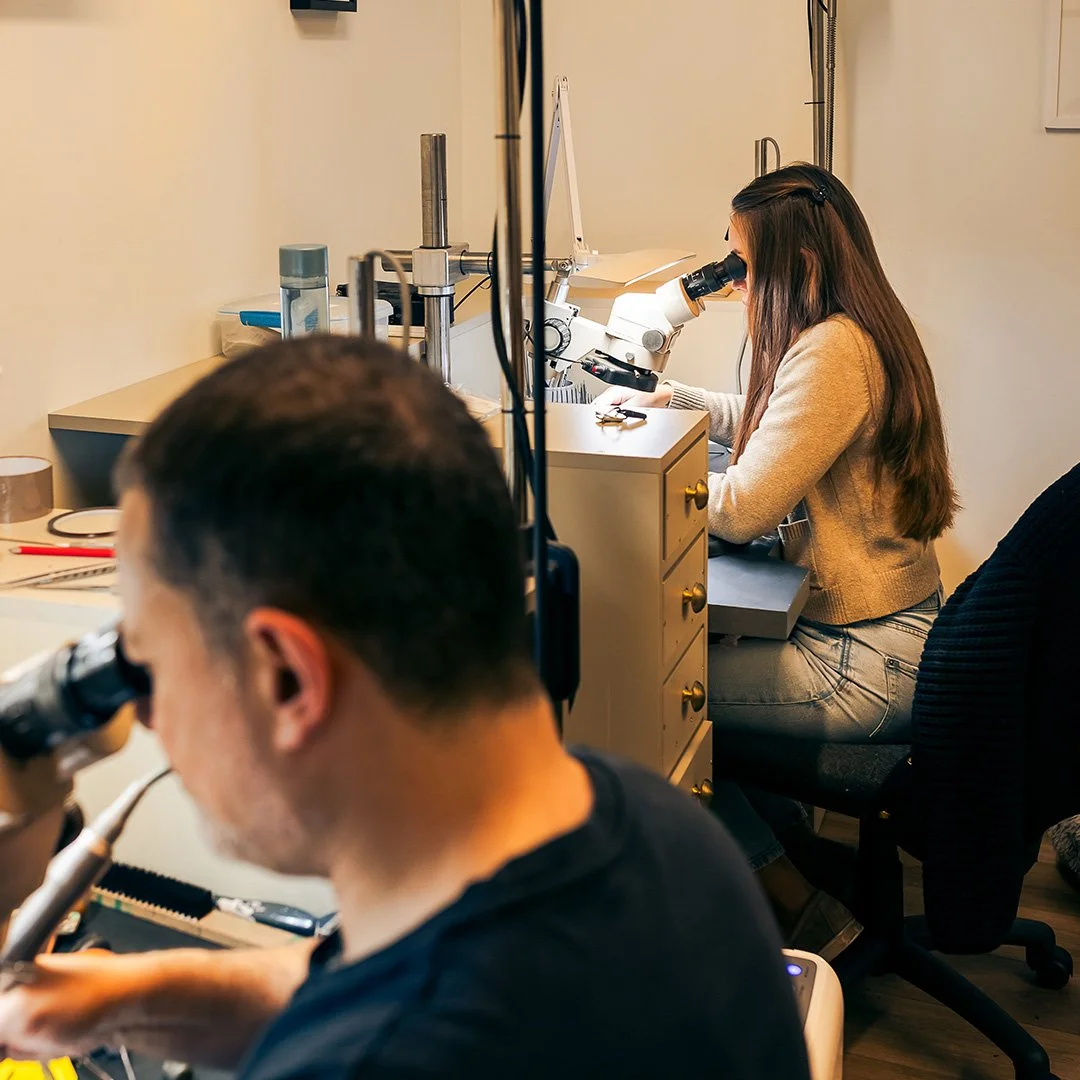
Summers started in jewellery at a setting company, spending time working at Graff as a setter in the 1980s. The turning point in his career came in 2012, when he travelled to Utrecht to learn micro pavé diamond setting under Jura, a Russian former engineer and jazz musician. Jura is widely credited with developing the air tools that allow stones to be set with precision under a microscope. “The techniques and equipment moved things forward for me to become well known and gave me an edge,” says Summers, who also sets traditionally. Today, his clients include independent jewellery designers and brands.
Summers concedes, however, that using air tools isn’t everything and that he uses both methods in his work, concluding that “a lot of setters who may not have made the change are still highly regarded.”
Written by Elisa Anniss | Photography of Michael Summers Diamond Setting by Paul Read